VoxVision: Tech To Empower People With Sight Loss

LARAK YAKTHUMBA & SALIN ADHIKARI
Co-founders, VoxVision
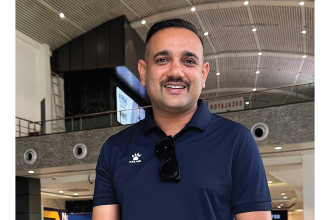
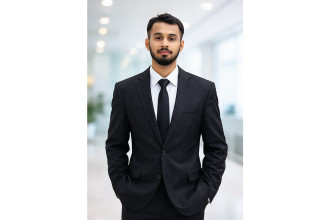
Larak Yakthumba and Salin Adhikari, two youths from Nepal, aim to create a globally recognised and affordable assistive technology brand originating from Nepal. “VoxVision is an innovation-driven startup focused on assistive wearable solutions for low-vision users. VoxVision, currently in development, aims to become Nepal’s first globally competitive smart-glasses solution for visual assistance,” says Salin Adhikari, Co-founder and Lead Coder for VoxVision.
VoxVision which started as a simple idea during a 48-hour hackathon at Kathmandu University became a business venture for the two friends. Though the hackathon was cut short due to funding issues, the two pushed themselves to finish the prototype in the first 24 hours.
The duo shares that the concept for VoxVision took root much earlier in an interschool science expo. “The idea itself was inspired by another hackathon project where a team created a device that displayed surrounding sounds on a screen for people with hearing impairments,” said Yakthumba, Co-founder of VoxVision.
The experience made them realise how meaningful it would be to build something that directly helps people. “Seeing how assistive technology could change someone’s daily life made us think about doing something similar for the visually impaired. That spark led to VoxVision,” shares Yakthumba.
After the hackathon, internal examinations halted their progress. That, however, did not stop them. They returned to the idea, refined the prototype and submitted it for the Rising Star category in the ICT Awards 2025, where it was selected in the top 12. This gave the two more encouragement to turn VoxVision into a proper business.
“We want VoxVision to evolve into a complete ecosystem - glasses, mobile app cloud platform - that supports visually impaired users with confidence and mobility,” mentions Adhikari. “We are actively exploring features that will make the user experience better, such as microprocessors, haptic feedback, gesture or touch controls, and vox locator.”
When developing a prototype, the two made sure to collaborate with visually impaired individuals, who gave positive feedback but also areas for improvement, such as making responses faster and fine-tuning recognition accuracy. The experience, along with broader testing done with more than five users, helped refine the design and understand what features mattered the most for real users. They also plan on working together with hospitals and eye clinics as well as ophthalmologists and optometrists when releasing VoxVision.
“Medical partnerships are essential for a device like ours because they allow us to reach visually impaired individuals directly through trusted professionals. Working with them will also give us expert feedback on usability, comfort and safety, which are crucial for improving the product before large-scale production,” says Yakthumba.
This endeavour is made easier by the fact that they already have a connection with Global Eye Hospital, where they previously conducted an eye camp. It gives them an ideal starting point for early trials, demonstrations and firsthand evaluations from both doctors and potential users. Further they hope to collaborate with bigger institutes like Tilganga Institute of Ophthalmology, scale responsibly, ensure proper medical validation and build credibility among users.
“These collaborations are not just about testing the device but also about creating a reliable distribution channel,” states Yakthumba, adding, “Hospitals and clinics also help spread awareness, reach underserved communities and ensure that VoxVision is delivered in an affordable and accessible way.”
By working together with the medical sector, they want to build a product that is both technically strong and genuinely impactful for people who need it the most.
Their need to make VoxVision affordable is also one of their biggest priorities. Their first prototype took around Rs 18,000 to build. Their aim with VoxVision’s initial launch is to keep the price as low as they realistically can for everyone regardless of economic background.
“Once we build a user base and understand user needs more clearly, we can explore developing more advanced versions in the future. Those upgraded models could be commercially profitable but currently, our main focus is accessibility, affordability and making sure VoxVision truly improve everyday independence of its users,” says Yakthumba.
However, the journey to releasing a product is arduous, and the two have overcome many technical issues through trial and error. “Each failure helped us understand the hardware better and eventually we were able to get consistent image capture and smooth communication with the software,” shares Yakthumba.
“We want to maintain a low cost while delivering advanced features. Dust, humidity and rough handling also need to be taken into account, and most of our potential users are first-time technology adopters so creating clear instructions and training materials are important as well,” states Adhikari.
“Safety and accuracy are also taken into account through a multi-layered approach,” he says, adding, “Rigorous vision-model testing and hardware safety are two of the main approaches.”“VoxVision focuses on fully AI-driven real-time interaction instead of magnification-based enhancements; accessibility and price sensibility, as global products are expensive in Nepal and out of reach for many potential users; and multilingual audio feedback supporting both Nepali and English languages,” says Adhikari.