NICCI identifies Titaura as promising export, urges MSME support

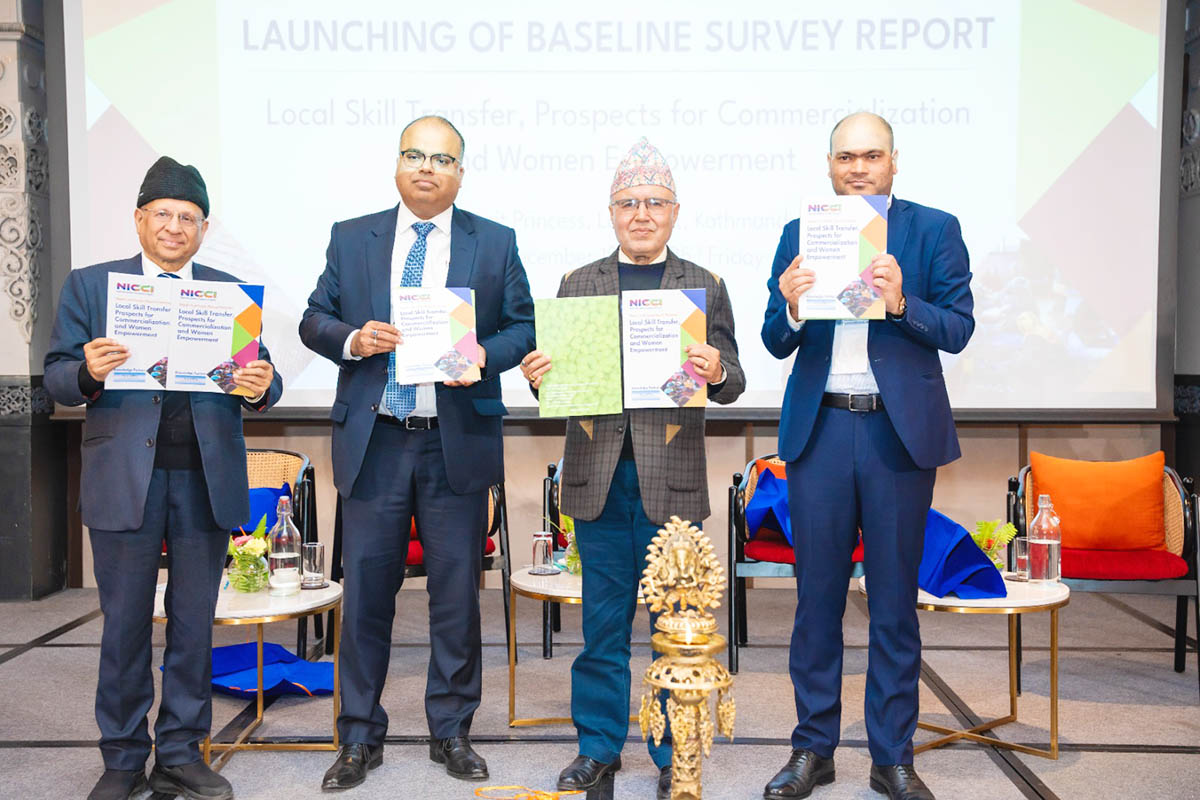
KATHMANDU: Nepal‑India Chamber of Commerce and Industry (NICCI) has unveiled findings from a new research publication that identifies Nepal’s fruit candy, Titaura, as a promising export product and calls for strengthened local skills and MSME support to boost agro‑processing exports.
The study, titled 'Nepal’s Fruit Candy (Titaura) Production — Local Skill Transfer and Export Potential', highlights Titaura’s cultural uniqueness and growing international interest. Through field assessments and stakeholder consultations, NICCI emphasised how targeted skill transfer, capacity building and quality enhancement can raise production standards to meet international food safety and market expectations.
The report recommends strengthening local skills, empowering micro, small and medium enterprises (MSMEs) and providing policy and institutional support to make the fruit candy exportable. The study details opportunities to transfer artisanal expertise into scalable production techniques that retain product authenticity while improving consistency and compliance with export standards, NICCI President Sunil KC said.
Findings also point to significant opportunities for local MSMEs to upgrade operations, access formal marketing channels and integrate into cross‑border value chains, particularly with Indian and regional partners, however KC added that policy and institutional support is key.
The report was launched by Finance Minister Rameshore Prasad Khanal, University of Nepal (UoN) Chancellor Dr Bindu Lohani, Deputy Chief of Mission at the Embassy of India in Kathmandu, Dr Rakesh Pandey, and NICCI President Sunil KC. NICCI urged policymakers, industry stakeholders and development partners to prioritise support mechanisms, including training initiatives, quality certification pathways and access to finance, to enable MSMEs to harness Nepal’s agricultural heritage for economic growth.
“This publication reinforces our belief that Nepal’s cultural and agricultural assets, when paired with skill development and market access strategies, can create meaningful export opportunities and sustainable livelihoods,” the study reads, “Our recommendations are designed to bridge local entrepreneurial strengths with regional and global market opportunities.”
The study, conducted by Asian Institute of Diplomacy and International Affairs (AIDIA) Research Director Kuber Chalise and Programme Director and Research Fellow Sajina Rai, outlines actionable steps to align production with export norms, promote public‑private partnerships and ensure MSMEs have the technical skills and commercial networks required to scale.
NICCI said it will disseminate the full findings to government bodies, bilateral trade partners, MSME networks and relevant industry forums to stimulate dialogue on sectoral development and export diversification.

-1789625607.jpeg)
-1789622920.jpg)