
inDrive to introduce 0.01 pc service fee for driver partners in Nepal
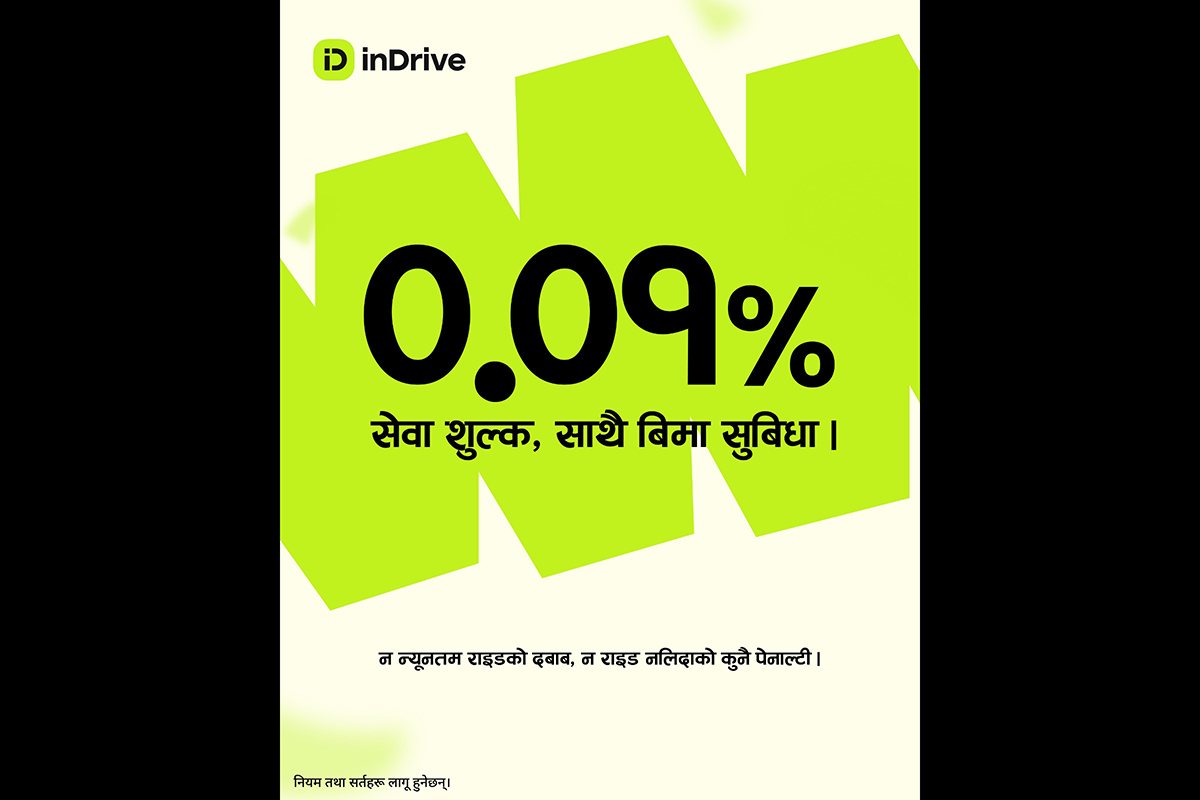
KATHMANDU: inDrive is introducing a near‑zero service fee for driver partners in Nepal, rolling out a time‑bound campaign that charges just 0.01% to reinforce the company’s commitment to fair rides, freedom of choice and driver empowerment.
The global mobility and urban services platform will implement the 0.01% service fee for driver partners in Nepal from February 2026. Complementing inDrive’s peer‑to‑peer approach, which allows drivers and passengers to agree on fares directly, the initiative is intended to protect driver earnings while maintaining platform sustainability. Although retained for essential operational continuity, the 0.01% fee enables drivers to keep almost 100% of their ride earnings.in
inDrive said the campaign is its way of giving back to drivers and easing financial pressure to enable higher take‑home income during the period. The company added that the measure also serves as a learning initiative to assess the impact of near‑zero fees on driver engagement, service quality and long‑term platform sustainability.
“At inDrive, we see ourselves as part of a larger community, and we believe strong communities are built on mutual support,” said Sunita Jeemi Rai, Senior Driver Operations Specialist at inDrive Nepal. “By offering a 0.01% service fee, we want to ensure that our driver partners can earn more while passengers continue to enjoy safe, fair, and affordable rides. This initiative reaffirms our commitment to freedom of choice, fair pricing, and safety for everyone.”
The company said it remains committed to responsible growth, regulatory compliance and fair competition, and to contributing positively to Nepal’s evolving digital and gig‑economy landscape.
inDrive is a global mobility and urban services platform with more than 400 million app downloads. The firm operates in 1,065 cities across 48 countries and offers services beyond ride‑hailing, including intercity transport, delivery and financial services. In 2023, inDrive launched New Ventures, a venture and M&A arm, and said it aims to have a positive impact on the lives of one billion people by 2030.
-1789913682.jpeg)

-1789896705.jpeg)
-1789894983.jpeg)