FNCCI President Dhakal holds meeting with UN Resident Coordinator

- Emphasis laid on extending LDC graduation timeline
KATHMANDU: Federation of Nepalese Chambers of Commerce and Industry (FNCCI) President Chandra Prasad Dhakal has stated that the timeline for Nepal’s graduation from Least Developed Country (LDC) status, currently set for November 2026, must be extended.
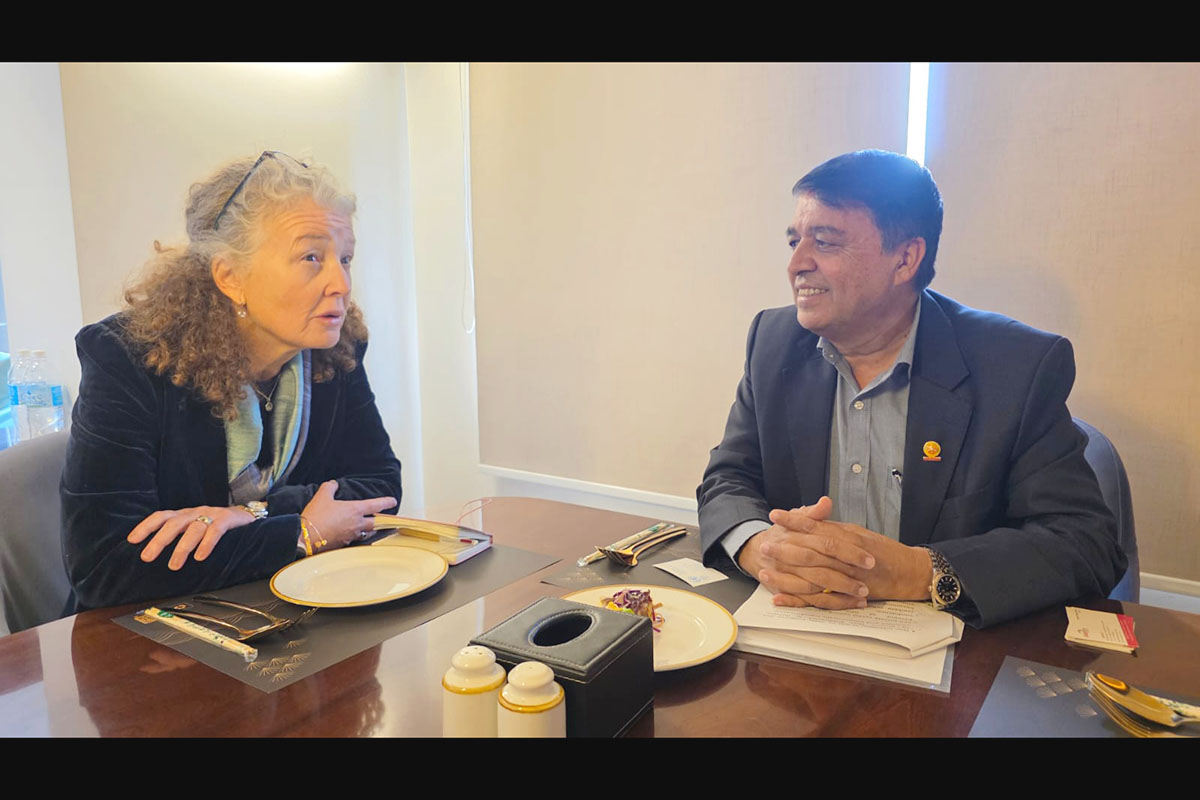
During a meeting with the newly appointed UN resident coordinator, Lila Pieters Yahia, in Kathmandu on Friday, Dhakal said the country is not yet structurally prepared for this transition. He noted that, based on extensive consultations with the business community, the FNCCI has formally requested the graduation be postponed by three years to November 2029.
Dhakal said the FNCCI is ready to collaborate with the United Nations to ensure that Nepal’s graduation is not merely symbolic but sustainable and beneficial for the people. He clarified that the private sector is making this demand because Nepal did not initially meet the per capita income criterion, surpassing it only slightly this year, and economic vulnerability remains high.
“Our goal is not to halt progress but to ensure that the graduation is sustainable and economically transformative,” Dhakal said. “While there is liquidity in banks, the willingness for private investment remains weak. In such a context, a hurried graduation could create obstacles.”
He added that the demand from Nepal’s private sector is relevant, noting that Bangladesh, another LDC, has also requested a three-year extension. Highlighting the challenges faced by small and medium enterprises (SMEs), Dhakal said approximately 300,000 agro-based industries could be adversely affected by rising costs and the loss of preferential treatment in European markets.
On the occasion, UN resident coordinator Lila Pieters Yahia said the United Nations is always positive towards a strong partnership with Nepal’s private sector. Regarding the extension of the 2026 graduation timeline, she suggested that a conclusion could be reached through discussions involving the UN, the World Bank, the International Monetary Fund (IMF), the Government of Nepal and the private sector.
“We want to see Nepal graduate. However, the perspectives of key stakeholders are vital for this. Therefore, let there be a discussion among all stakeholders,” she said.
Yahia emphasised that, since Nepal possesses a young workforce and potential in various sectors, predictable policies and trust in national institutions are essential for policy stability and economic development. She suggested formulating strategies focused on import substitution and export promotion, and expressed interest in the upcoming elections and the subsequent economic landscape.
Dhakal told Yahia that the FNCCI has previously taken initiatives to amend laws to ensure policy stability and an investment-friendly environment. He said that, for the upcoming elections, the Federation has urged all political parties to keep the economy at the centre and ensure that economic priorities remain stable beyond political cycles.
-1788157009.jpg)