Global Money Week 2026 opens under 'Smart Money Talks' slogan
-1773677445.jpg)
KATHMANDU: Global Money Week 2026 opened today in Kathmandu under the slogan 'Smart Money Talks'. The 14th edition of the campaign will run until March 22.
The opening session was organised by Nepal Rastra Bank (NRB) in partnership with the Nepal Insurance Authority (NIA), the Securities Board of Nepal (SEBON) and the Department of Cooperative. About 500 students in grades 8–10 from across Kathmandu attended.
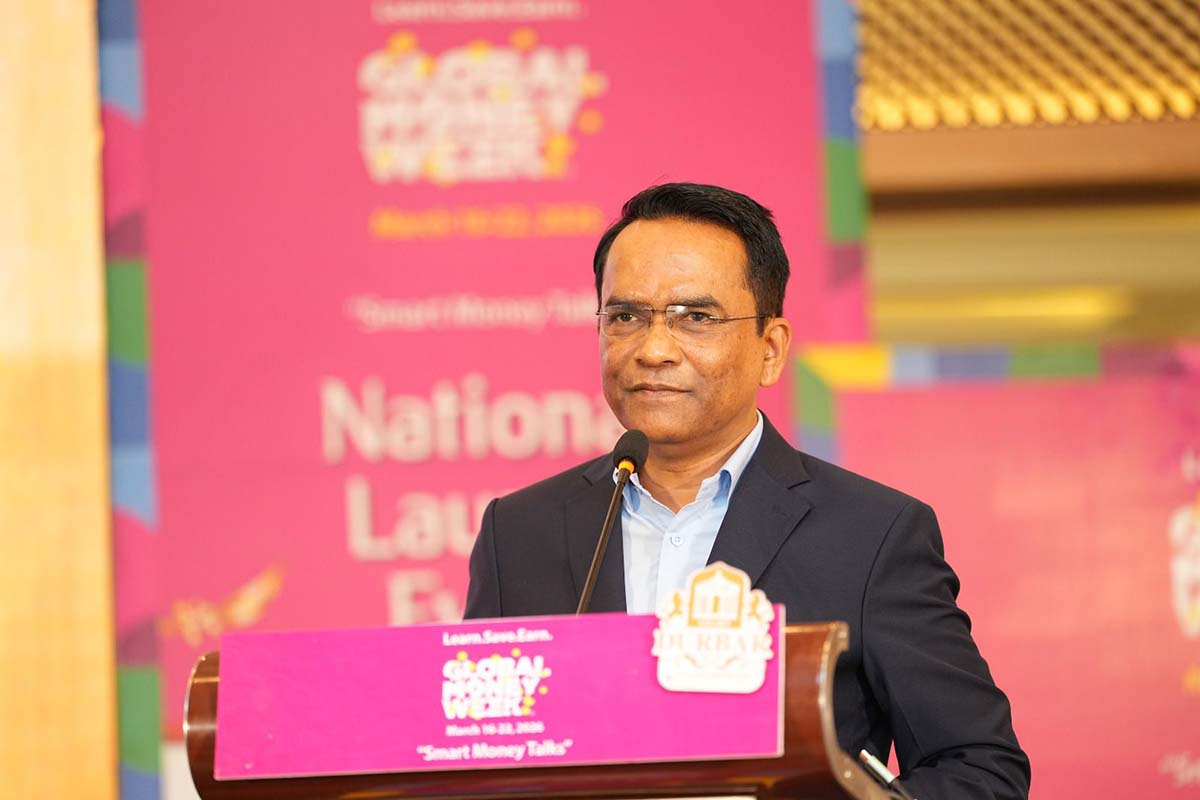
At the event, NRB Governor Dr Biswo Nath Poudel inaugurated the programme. He said families must learn about earning, saving and the proper utilisation of money, and added that people in every profession should pay special attention to managing money.
Meanwhile, Dayaram Sharma Pangeni, Executive Director of the Office of the Governor, delivered the welcome remarks. He said NRB organised the event to teach money management at school and expects it to boost financial literacy and inclusion.
In the second session, NRB Executive Director Ramu Paudel, SEBON Executive Director Dr Nabaraj Adhikari, NIA Executive Director Susil Dev Subedi, Department of Cooperative Sub‑Registrar Shashi Kumar Lamsal and Nepal Bankers' Association President Santosh Koirala outlined their organisations' work.
Shikha Adhikari Regmi, Acting Director of NRB's Financial Inclusion and Consumer Protection Division, led group discussions. Organisers also ran a financial literacy quiz for the students.
-1773677445.jpg "Global-Money-Week-2026-(3)-1773677445.jpg")
-1773677445.jpg "Global-Money-Week-2026-(2)-1773677445.jpg")
Organisers said awareness programmes will be held nationwide under the campaign. Banks, financial institutions, payment service providers, remittance companies and related agencies will target young people.
They added that they would use interactions, competitions, audio‑visual broadcasts and visits to financial service providers to raise awareness of banking, the capital market, insurance and cooperatives.
Global Money Week aims to improve financial education for adolescents and young people worldwide. The campaign has run internationally since 2012, and NRB has coordinated it in Nepal since 2013. Organisers said more than 70 million children and young people in 176 countries have benefited so far.