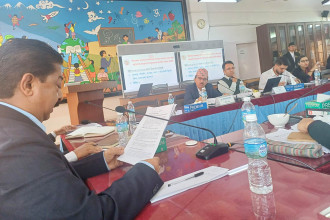
FNCCI to hold 60th AGM on April 12, election on April 13

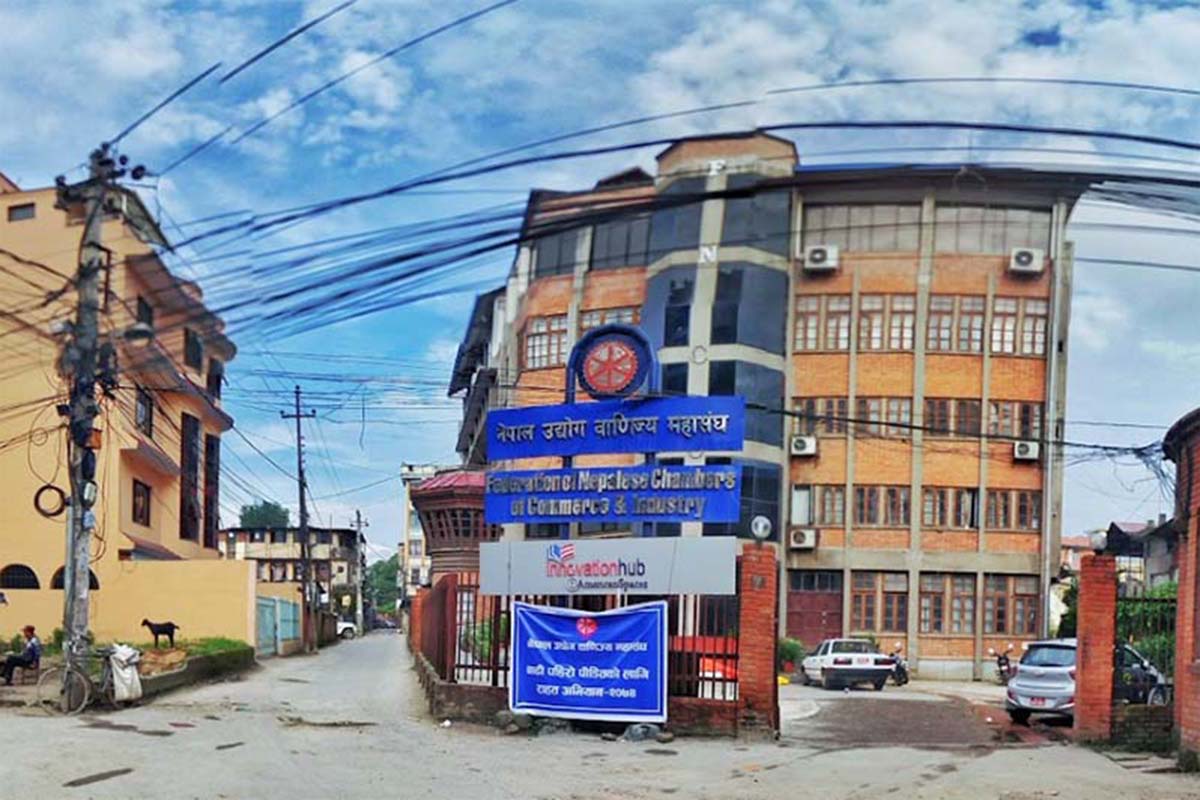
KATHMANDU: Federation of Nepalese Chambers of Commerce and Industry (FNCCI) is set to hold its 60th annual general meeting (AGM) on April 12, followed by the federation’s election programme on April 13, the body has announced. The AGM will take place at Hotel Royal Tulip in Gwarko, Lalitpur, and the election will be held at the Nepal Academy in Kamaladi, Kathmandu.
The opening session is scheduled for the morning of Sunday, April 12, when the annual report, financial report and policy discussions will be presented. Voting for vice presidents and Executive Committee members will follow on Monday, April 13, under the FNCCI Statute of 1992 (seventh amendment). The dates were confirmed by the 15th meeting of the FNCCI Executive Committee.
FNCCI has set strict eligibility and filing rules for associations and organisations wishing to participate. Interested groups must pay membership, representative and candidacy fees through the fiscal year 2025/26 and register nomination papers, representative letters and certified Executive Committee decisions at the FNCCI secretariat by 5:00 pm on April 5. Originals must be submitted by 5:00 pm on April 9, or nominations will be cancelled. All members must complete fee payments by April 10, while organisations fielding candidates must pay by April 5 to keep candidacies valid. Observer member associations may attend the AGM but are not permitted to stand for candidacy or vote.
Representation rules require presidents of district and municipal chambers, commodity associations and bi-national chambers to be the main delegates at the AGM. If a president cannot attend, the member association’s Executive Committee must appoint a representative. District and municipal chambers may send three delegates, commodity associations two, bi-national chambers one, and associate members one main representative. Associate members’ main representatives must hold senior executive ranks such as chairperson, executive director or chief executive officer.
The leadership contest is being framed as a strategic moment for the private sector amid concerns over economic stagnation, falling investment and policy uncertainty. FNCCI’s role in shaping government relations, tax reform, an industry-friendly environment and measures to attract foreign investment has made this election more than a routine organisational process, with observers saying the new leadership could influence economic policy and the investment climate for years to come.
Several candidates and panels have declared slates. Hemraj Dhakal, currently vice president for the commodity sector, announced his candidacy for senior vice president on February 23, saying his bid reflects “a need for experience, continuity, and policy reform.” Dhakal said he would prioritise policy stability, an investment-friendly environment, amendments to impractical laws, a move towards a multi-rate tax system, clearer legal arrangements for debt recovery and development of the digital economy. He also warned that unchecked smuggling threatens domestic industries and urged targeted policies to protect small and cottage industries.
A rival panel led by current senior vice president and incoming presidential candidate Anjan Shrestha has named Shiv Prasad Ghimire for commodity vice president and Prabal Jung Pandey for associate vice president, among other nominees. Ghimire said FNCCI leadership should be used to “solve the problems of the private sector and take initiatives for the improvement of the overall economic and business conditions of the country,” and pledged to focus on transparency, integrated solutions for commodity-sector issues and mandatory private-sector participation in policy-making.
FNCCI’s Executive Committee composition and membership categories are defined in the federation statute. The committee includes the president, the immediate past president, the senior vice president, two vice presidents from the district and municipal sector, one from the commodity sector, one from the associate and bi-national sector, one female vice president and a treasurer. The federation’s broader membership comprises district and municipal chambers, commodity associations and federations, associate members, founding members, foreign members and honorary members.
With the AGM and election days approaching, business leaders and policymakers will be watching closely to see whether the incoming FNCCI leadership can deliver the policy clarity and facilitation the private sector says are needed to revive investment and spur economic growth.
(With inputs from RSS)

-1791368436.jpeg)
-1791367392.jpeg)