TSN hosts AI Summit Nepal 2026, unveils NAIDC, Nepal’s first purpose-built AI compute infrastructure initiative


-1775473146.jpeg)
KATHMANDU: The Startup Network Nepal (TSN) and Oorja World Inc, in partnership with the US Embassy in Nepal, hosted AI Summit Nepal 2026 in Lalitpur on Sunday. The one-day event brought together leaders from government, industry, academia and international partners to map out the country’s AI strategy and priorities.
At the opening keynote, Deepak Rauniar, CEO of Oorja World Inc, unveiled the Nepal AI Data Centre Cluster (NAIDC), the country’s first purpose-built AI compute infrastructure initiative. The NAIDC is intended to provide sovereign, scalable and energy-efficient compute capacity so Nepali startups, researchers and enterprises can train models and store data without routing through foreign jurisdictions.
Dr Sudeep Rauniar, founder of The Startup Network Nepal, framed the moment as a deliberate national choice. “Every nation that leads in AI today made a deliberate choice — to invest, to build, and to believe. Nepal is making that choice now,” he said, adding that the summit marked a turning point: “Nepal is not watching the AI revolution from the sidelines. Today, we stepped onto the field.”
-1775473149.jpeg "AI-Summit-Nepal-2026,-The-Startup-Network-Nepal-(1)-1775473149.jpeg")
-1775473148.jpeg "AI-Summit-Nepal-2026,-The-Startup-Network-Nepal-(7)-1775473148.jpeg")
-1775473148.jpeg "AI-Summit-Nepal-2026,-The-Startup-Network-Nepal-(10)-1775473148.jpeg")
Scott Urbom, Chargé d’Affaires a.i. at the US Embassy, attended as guest of honour and told delegates that open, trustworthy and inclusive AI development is important to broader democratic and strategic ties.
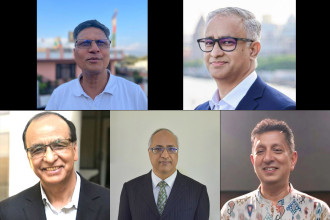
Session I, “AI & Compute Infrastructure for Nepal,” explored whether the country has the backbone to support large-scale AI work. Samhita Shah, Global Head for Marketing, Energy and Utilities at Amazon Web Services, set a global benchmark. Panellists, including Dileep Agrawal of WorldLink, Deepak Shrestha of DataHub and Shailendra Raj Giri of the AI Association of Nepal, highlighted gaps in GPU capacity and fibre backbone density, while pointing to strengths such as a young, digitally literate workforce, an engaged diaspora and abundant renewable energy. Several speakers said NAIDC could act as an anchor investment.
Turning to social implications, Session II, “AI & Nepali Society,” addressed ethics, inclusion and social consequences. Arun Kumar Subedi warned that “AI is not politically neutral,” and panellists discussed how datasets and algorithms can concentrate power and reproduce inequalities across geography, language and caste. The session emphasised that policy must centre marginalised voices, data protection and media ethics in an era of AI-generated content.
-1775473149.jpeg "AI-Summit-Nepal-2026,-The-Startup-Network-Nepal-(11)-1775473149.jpeg")
-1775473148.jpeg "AI-Summit-Nepal-2026,-The-Startup-Network-Nepal-(9)-1775473148.jpeg")
Following that, Session III, “AI & the New Economy,” explored economic opportunities and workforce readiness. Keynote addresses from Atul K Thakur, Senior Secretary of PHDCCI, and Birendra Raj Pandey, President of the Confederation of Nepalese Industries, were followed by a panel urging rapid investment in AI education, vocational reskilling and Nepali-language models. Speakers noted that Nepal’s linguistic diversity — more than 120 languages and dialects — could be a competitive advantage for localised AI applications.
-1775473145.jpeg)
Likewise, Session IV, “AI at Scale — Leveraging Energy & Finance,” focused on financing and energy strategies for AI infrastructure. Dushyant Thakor of WAIPA and panellists from banking, industry and the energy sector highlighted Nepal’s hydropower potential as an advantage for hosting sustainable, energy‑intensive AI data centres.
-1775473148.jpeg "AI-Summit-Nepal-2026,-The-Startup-Network-Nepal-(8)-1775473148.jpeg")
-1775473147.jpeg "AI-Summit-Nepal-2026,-The-Startup-Network-Nepal-(6)-1775473147.jpeg")
-1775473146.jpeg "AI-Summit-Nepal-2026,-The-Startup-Network-Nepal-(4)-1775473146.jpeg")
The programme combined keynote addresses, panel discussions and audience interaction, and concluded with a set of national priorities aimed at accelerating Nepal’s AI readiness. Organisers said the summit’s priorities include establishing a national AI policy framework with multi‑stakeholder consultation; accelerating sovereign infrastructure investment anchored by NAIDC; investing in AI education and workforce reskilling; developing Nepali‑language datasets and models; building ethical and inclusive governance mechanisms; leveraging renewable energy to position Nepal as a regional hub for sustainable AI infrastructure; and deepening international partnerships to access knowledge, capital and markets.
Event staff reported strong attendance from private sector leaders, academics and municipal officials, and an engaged atmosphere in which technical briefings prompted pointed questions from practitioners and entrepreneurs. The programme also featured audience Q&A, felicitation of speakers and networking after each session.
In closing remarks, The Startup Network Nepal and Oorja World Inc pledged to turn the summit’s dialogue into concrete action. Diwas Ghimire, Head of Marketing at The Startup Network Nepal, said, “This is not the end of a conversation — it’s the beginning.”