Nepal, Russia mark 70th anniversary of diplomatic relations

-1776865672.jpeg)
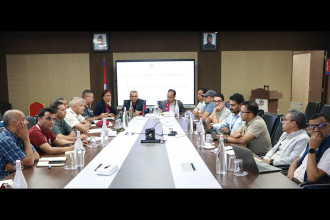
KATHMANDU: Nepal and Russia marked the 70th anniversary of their diplomatic relations on Tuesday at the Russian House in Kathmandu. At the event, senior diplomats and former officials held a high‑level discussion on the future trajectory of bilateral ties.
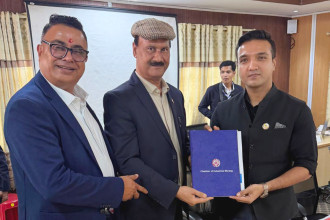
The programme, convened to commemorate seven decades since formal relations were established in 1956, brought together prominent participants including Ramesh Nath Pandey, former minister for foreign affairs of Nepal; Ganesh Prasad Dhakal, joint secretary (Europe-Americas Division) at the Ministry of Foreign Affairs; Rinchen Rakshaev, chargé d’affaires of the Embassy of the Russian Federation in Nepal; and Hiranya Lal Shrestha, former ambassador of Nepal to Russia. The programme was chaired by Swaraj Shakya, general secretary of Nepal-Russia Friendship and Cultural Association, with Sugat Ratna Kansakar serving as an executive member of the association.
-1776865672.jpeg "Nepal,-Russia,-70th-anniversary-of-diplomatic-relations-(2)-1776865672.jpeg")
-1776865673.jpeg "Nepal,-Russia,-70th-anniversary-of-diplomatic-relations-(7)-1776865673.jpeg")
-1776865672.jpeg "Nepal,-Russia,-70th-anniversary-of-diplomatic-relations-(4)-1776865672.jpeg")
-1776865672.jpeg "Nepal,-Russia,-70th-anniversary-of-diplomatic-relations-(5)-1776865672.jpeg")
-1776865672.jpeg "Nepal,-Russia,-70th-anniversary-of-diplomatic-relations-(6)-1776865672.jpeg")
-1776865671.jpeg "Nepal,-Russia,-70th-anniversary-of-diplomatic-relations-(1)-1776865671.jpeg")
Speakers at the programme said the 70th anniversary was more than a ceremonial milestone and called it a strategic opportunity to recalibrate the partnership towards practical, results-oriented cooperation. They reflected on Russia’s sustained contributions to Nepal’s national development through technical assistance, academic scholarships and infrastructure projects in hydropower and healthcare.
In her opening remarks, Anastasia Khokhlova, director of the Russian House, emphasised the humanitarian and people-to-people foundations of the relationship. She said, "The strength of Nepal-Russia relations lies not only in diplomatic continuity but in the sustained cultural and educational exchanges that connect our peoples across generations."
Meanwhile, Joint Secretary Ganesh Prasad Dhakal outlined Nepal’s expectations for the partnership in a modern context, stressing the need for "meaningful international friendships that contribute to national development priorities, particularly in technology transfer and capacity building." He also commended the Russian House for its role in promoting science and providing scholarships for Nepali students.
Delivering the keynote, Ramesh Nath Pandey highlighted the historical resilience of the bilateral bond and urged a modernisation of diplomatic tools. "True friendship between nations is tested by its continued relevance to the aspirations of their people," he said, calling for expanded engagement with the youth.
Furthermore, speakers pointed to underutilised areas for cooperation. Sugat Ratna Kansakar identified tourism and cultural connectivity as sectors with untapped potential, arguing that direct air links and increased visitor flows would raise the partnership’s visibility and economic impact, and that regular human contact often builds trust faster than policy alone.
In his closing remarks, Rinchen Rakshaev reaffirmed Moscow’s commitment to the principles of equality and mutual respect and recalled long-standing cooperation in key development sectors. Swaraj Shakya said the 70th anniversary should act as a catalyst for a more dynamic, public-diplomacy-driven partnership aligned with Nepal’s current development goals.