NAST seminar finds EV conversion not yet cost-effective in Nepal

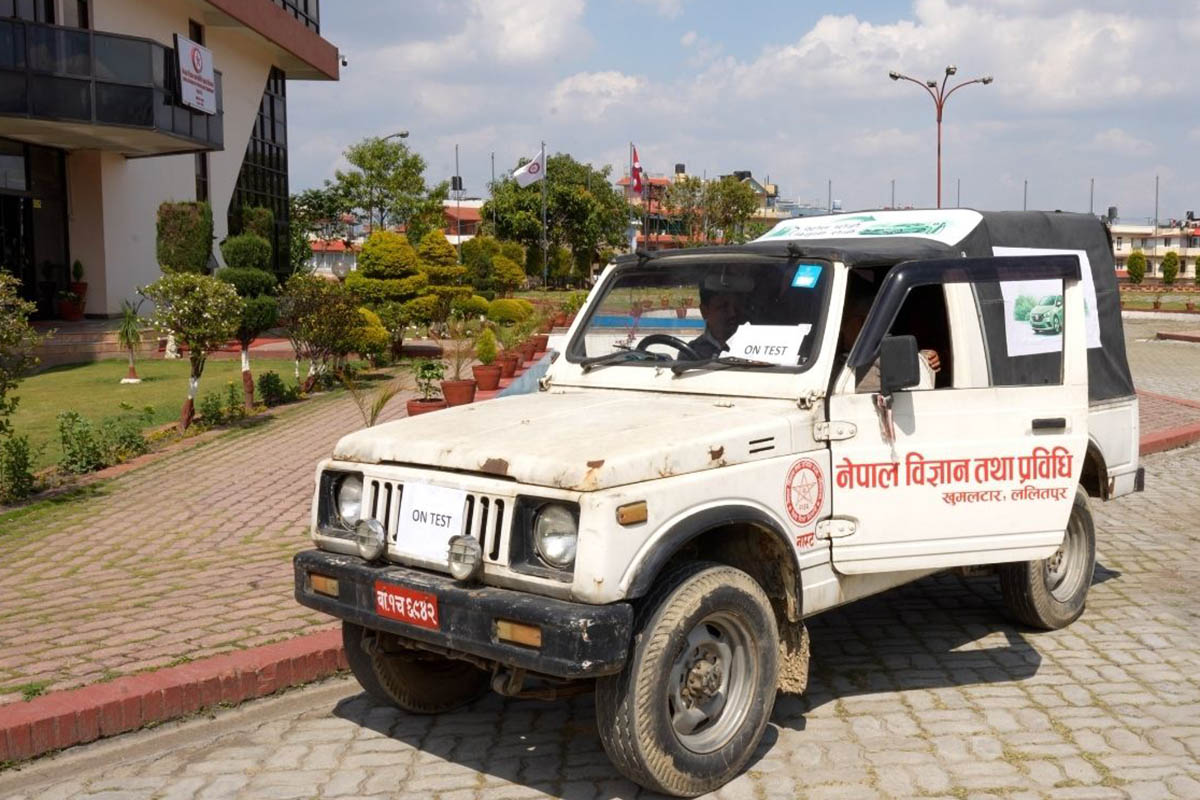
LALITPUR: Academicians, policymakers, automotive engineers, researchers and industry stakeholders met in Lalitpur on Wednesday to discuss electric vehicle conversion research and Nepal’s readiness to move away from internal combustion engines.
The seminar, organised by the Nepal Academy of Science and Technology (NAST), was themed "The Prospects of EV Conversion in Nepal: Opportunities and Challenges", NAST said.
Four institutions — Pulchowk Campus, Thapathali Campus, Kathmandu University (KU) and NAST — presented research covering the full spectrum of EV conversion, from policy and imports to technical specifications and economic feasibility.
The opening presentations traced the growth of EV imports in Nepal and outlined key policy milestones shaping the sector, before moving into the technical dimensions of retrofitting — the process of converting internal combustion engine (ICE) vehicles to electric powertrains — covering component selection, system sizing and comparative cost analysis.
A representative from Pulchowk Campus addressed safety considerations in the retrofitting of two- and three-wheelers and flagged heightened risks associated with four-wheeler conversions, underscoring the need for standardised safety protocols before any commercial-scale rollout.
The Thapathali Campus presentation stressed the importance of consistency and standardisation in the conversion process, arguing that a domestically developed, uniform conversion framework could reduce dependence on expensive proprietary kits currently supplied by international manufacturers.
KU pointed to encouraging market trends, noting that rising global demand for EVs and batteries has driven down the cost of conversion by approximately 40% compared with previous levels, citing the conversion of a Maruti Suzuki 800 as a reference case.
The most consequential finding of the seminar came from the NAST presentation, which revealed that the total cost of converting an ICE vehicle to electric does not yet offer a clear economic advantage over purchasing a new EV of comparable specifications already on the market.
The research concluded that EV conversion, in its current form, would require meaningful government funding, institutional support and targeted subsidy allocation to become a financially viable option for the average Nepali consumer or fleet operator.
In his closing remarks, the Secretary of NAST acknowledged the research as meaningful progress in Nepal’s EV conversion journey and, situating the work within the global urgency to reduce fossil fuel dependence, emphasised that the findings provide important groundwork for the next phase of research and development.
Opening remarks were made by Roshan Pandey, head of the Faculty of Technology at NAST, while NAST senior technical officer Ishwor Bajracharya shed light on the present financial viability of electric vehicles in Nepal.
The presentations were followed by an open discussion panel featuring responses and queries from invited participants across sectors.
(With inputs from RSS)