ECONOMIC RESET: THE INTEGRITY MANDATE


For decades, Nepal’s economic story was one of “resilient stagnation.” Buffered by a steady stream of remittances and anchored by a traditionalist business elite, the nation seemed content to grow at the speed of bureaucracy. But the dawn of the 2026 post-Gen Z movement has shattered that equilibrium. This was not just a political shift; it was a demographic demand for a new social contract. Today, the streets of Kathmandu are no longer just the site of ancient heritage but the epicenter of a radical experiment in transparency.
The current administration’s aggressive crackdown on corruption has sent shockwaves through the corridors of power. We find ourselves at a critical inflection point: the “old guard” of patronage-based capitalism is being dismantled, yet the “new guard” of technocratic, FDI-friendly growth has yet to fully take root. The air is thick with the tension between the pursuit of absolute integrity and the mechanical necessity of economic momentum.
As Nepal prepares for its upcoming budget, the stakes have never been higher. The nation is grappling with a “brain drain” that has become a “brain hemorrhage,” an investment climate clouded by regulatory uncertainty, and an external world that is increasingly volatile. Yet, in this chaos lies a generational opportunity. Can Nepal leverage its newfound commitment to governance to become a regional hub for clean energy and digital services? Or will the crackdown lead to a “frozen economy” where fear of investigation stifles all innovation?
In this special feature, Business 360 tries to determine if Nepal is merely experiencing a temporary tremor, or if we are finally witnessing the birth of a Himalayan Tiger with Suman K Joshi, Founder & Chair, True North Associates, Dr Paras Kharel, Executive Director, South Asia Watch on Trade, Economics and Environment (SAWTEE) and Anup Raj Upreti, Managing Partner, Pioneer Law Associates.
They share their perspectives on corruption reforms, budget priorities, foreign investment, economic diplomacy, export competitiveness, remittance dependency, youth employment and the structural reforms needed to transform Nepal into a production-oriented and globally competitive economy.
The post-Gen Z movement government has prioritised a visible, aggressive crackdown on corruption, including within the business elite. While this addresses long-standing public grievances, the private sector has expressed concerns over ‘regulatory overreach’ and psychological fear. How do we institutionalise transparency without paralysing the entrepreneurial spirit, and is Nepal ready to pay a short-term ‘integrity premium’ if it leads to temporary capital flight?
Suman K Joshi: The Gen Z movement already forced the answer. Yes, Nepal must consciously choose to pay an ‘integrity premium’. In addition to getting rid of the old guard, last year’s protests triggered a quieter but equally consequential shock – an economic setback that has caused investment confidence to falter. Yet, the country has avoided macroeconomic instability. This systemic resilience is the buffer within which the ‘premium’ can be paid. The risk of not going through with it is now a larger political risk than temporary pain of having to reset and recalibrate. We have gathered so much dirt over last few decades that if we do not attempt to clean house now, we perhaps never will. But not all apples are rotten. The key is to make it transparent and predictable, not open-ended and arbitrary. You certainly do not want to suffocate the private sector.
Dr Paras Kharel: The Gen Z protests were largely an expression of frustration with corruption and nepotism that have deepened over the past two decades. The government’s zero-tolerance policy on corruption and investigation into the wealth of high public officials is welcome. Those who feel unfairly targeted still have the freedom to seek justice through the courts. At the same time, issues like capital flight, trade misinvoicing and informal remittance inflows should also be tackled seriously.
Anup Raj Upreti: The primary reason for psychological fear among entrepreneurs is the recent incidents of arresting individuals before the investigations have been completed. To institutionalise transparency without killing the entrepreneurial spirit, we must advocate for a shift toward investigation without incarceration. In the context of white-collar crime, the rule of law should prioritise evidence-based inquiry over immediate physical custody. By implementing provisions for anticipatory bail and ensuring that detention is a measure of last resort, Nepal can protect the dignity of business leaders while still pursuing accountability. When the legal process is predictable and respects due process, the climate of fear is replaced by a culture of compliance.
This shift is a technical necessity given Nepal’s current standing on the global stage regarding the Financial Action Task Force (FATF) grey List. To avoid the severe economic repercussions of being grey-listed, Nepal must demonstrate an effective anti-corruption and anti-money laundering framework and enforcement. Nepal’s effectiveness is measured by successful prosecutions and financial intelligence. Recent high-profile cases have seen prominent business figures taken into custody during the earliest stages of investigation. Unlike violent crimes, white-collar offences are documented through paper trails, audit reports and digital footprints. Therefore, custodial interrogation may not be a technical necessity for gathering evidence; rather, it often functions as a pre-punishment.
When an entrepreneur is detained for a commercial decision that was made in good faith but later scrutinised, they become risk-averse resulting in slower investments.
With the upcoming budget, there is immense pressure to satisfy the high expectations of a politically awakened youth while maintaining the fiscal discipline lauded by the IMF and World Bank. In your view, what specific ‘structural pivot’ should this budget make to move Nepal from a consumption-led, import-heavy economy to a production-oriented one?

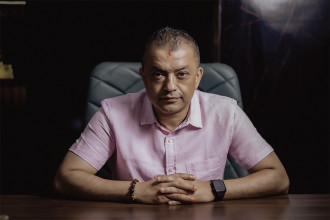
Suman K Joshi, Founder & Chair, True North Associates
Suman K Joshi: Nepal’s fiscal trap is well-known. The budget has historically been heavy on current expenditure (salaries, subsidies, handouts), chronically underspending on capital and excessively reliant on remittances to paper over the trade deficit. The ‘structural pivot’ required is not just sectoral reallocation. We need a change in the incentive architecture of how money flows through the economy. This budget is the first test of whether the post-revolution rhetoric translates into structural design. Our economy can accept some fiscal deficit if the budget is investment oriented and designed to create jobs. What we cannot afford is another year of current expenditure crowding out capital formation.
Here is a suggestion: Implement production-linked incentive mechanisms (similar to India’s model but calibrated for Nepal’s scale) that target activities and businesses like agri-processing, hydropower equipment manufacturing (what happened to Balaju Yantra Shala by the way?), IT services exports, etc, where we are beginning to have reasonable capacity. Tie tax incentives not to investment amounts but to employment generation and export earnings.
It is good to see that reforms in procurement frameworks have already been initiated. Can we complement these by penalising ministries that under-execute capital budgets by reducing their next-year allocation?
Dr Paras Kharel: The real issue is not what is announced in the budget but how effectively it is implemented. Wasteful public spending should be reduced and more resources should go toward productive sectors like agriculture, manufacturing and tourism. Tax reforms should incentivise productive investment rather than speculative activities like share trading. Nepal also needs stronger export promotion, improved testing and certification systems, better vocational training aligned with private sector needs and accelerated development of industrial zones and special economic areas.
Anup Raj Upreti: The structural pivot Nepal needs in the upcoming budget must first address the reality of premature de-industrialisation. Despite a decade of growth, our industrial sector has shrunk to just 12.8% of GDP, with manufacturing contributing a meager 5.4%. This stagnation occurs while the service sector has climbed to 62%, creating an economy that trades and consumes rather than produces. To satisfy a politically awakened youth and meet the standards of the ambition Nepal aspires to, the budget must move away from the current model where we export our labour and use the resulting 37.7% surge in remittances (Rs 1.45 trillion) to simply import finished goods. This cycle has left us with a structural trade deficit where imports are much larger than exports.
To reverse this trend, the budget should implement CNI’s recommendation for a Two-Tier Customs Policy, ensuring that raw materials are taxed at least one grade lower than finished goods, as already provisioned in our Industrial Enterprises Act. Currently, high production costs and a 25% trade-to-GDP deficit make local manufacturing uncompetitive. By aligning the Finance Act with the Industrial Enterprises Act, the government can lower the cost of doing business, which our Finance Minister Swarnim Wagle notes is currently higher in Nepal than in many Latin American or African nations. We must move beyond the export illusion where 42.2% of our exports are merely re-exported edible oils and instead provide specialised concessions like duty-drawback schemes to genuine value-adding industries. Furthermore, the government should adopt a plug and play industrial model by allowing the private sector to operate industrial zones under public-private partnerships. By removing land ceiling restrictions for manufacturing and investing in world-class testing labs and cold chains, the budget can help Nepal link into regional value chains.
Recent legislative shifts aim to bring private-sector activities under the scope of anti-corruption bodies like the CIAA. Some argue this safeguards the economy, while others say it kills FDI. How can Nepal rebrand itself as a safe, predictable destination for foreign investors when the domestic legal framework for businesses is undergoing such a volatile transformation?
Suman K Joshi: Bringing private enterprises under the CIAA’s investigative jurisdiction is a bad idea. In the current context of deep apprehension amongst the business community, this move could further stifle investment. Given how this body has functioned historically, the CIAA sword can be counter-productive in case of business operations where good faith decisions are made as per market dynamics and those can sometimes go wrong. When you are a hammer, everything looks like a nail.
Rebranding Nepal as an attractive investment destination is certainly the most acute paradox right now. While we work on regulatory and bureaucratic reforms, we need a few quick wins to assuage the foreign investors that this time we mean business. Imagine a global big tech firm being invited to establish a large data centre next to one of our hydroelectric plants. Serious economic diplomacy backed by policy ring-fencing can potentially fast-track such investments.
-1779616762.jpg)
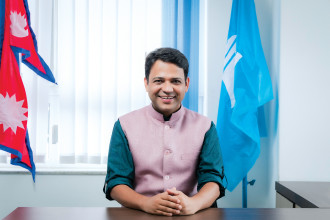
Dr Paras Kharel, Executive Director, South Asia Watch on Trade, Economics and Environment (SAWTEE)
Dr Paras Kharel: Nepal must send clear signals that it is committed to improving competitiveness and policy predictability. One important step would be preparing a roadmap to address the loss of export competitiveness caused by the current exchange rate regime. The government should also strengthen sectors with export potential, such as textiles and clothing, while improving border controls to reduce unauthorised trade that weakens formal economic policies.
Anup Raj Upreti: The inclusion of private enterprises within anti-corruption frameworks is common in international law. Globally, these rules often govern export activities to ensure that market success is driven by quality and competitive pricing rather than bribery or improper regulatory influence.
However, the key question for Nepal is not whether the private sector should be accountable, but whether the CIAA is the right tool for this task right now and at this stage of maturity of investigation authorities. Currently, domestic laws, such as employment regulations, already provide ways to handle bribery through immediate termination and internal disciplinary action. Addressing corruption through these existing, sector-specific policies is a more practical approach than a sudden expansion of oversight powers right now.
With Nepal ranking 108th in the Transparency International Corruption Perceptions Index, the primary focus should remain on improving the integrity of public administration. FDI is naturally drawn to environments where the regulators themselves are transparent and reliable. Until corruption within regulatory authorities is effectively managed, attracting significant new investment will be a challenge.
To rebrand Nepal as a safe and predictable destination, we must address the specific structural hurdles that currently hamper our investment climate. Firstly, general ease of doing business starts with removing the human bottlenecks in our bureaucracy. We need to move beyond paper-based digitalisation to a truly integrated system. This means a single-window portal where a foreign investor can get all the services needed (from registration to repatriation). Secondly, in Nepal, we often see regulations change with leadership shifts, creating a wait and watch culture among investors. Policy stability must be the foundation of our risk assessment. This requires a commitment to legislative consistency, where fiscal incentives, and sector-specific rules (like those for hydropower or IT) remain stable for a guaranteed period. Thirdly, to attract foreign investment, our courts must provide consistent and prompt rulings. When an investor knows that a contract dispute will be resolved with legal certainty and technical expertise, rather than becoming an indefinite liability, Nepal becomes a safe destination for global business.
Over the last decade, Nepal has been buffeted by everything from the 2015 earthquake and the 2016 blockade to the recent digital-era social upheavals. Given our strategic position between two giants and a global shift toward protectionism, what should Nepal’s ‘Economic Diplomacy 2.0’ look like to ensure our supply chains and energy exports remain resilient?
Suman K Joshi: Nepal’s geopolitical sandwich position between India and China has historically been treated as a vulnerability. Economic Diplomacy 2.0 must reframe it as a value-added corridor opportunity.
Nepal’s hydropower potential is the single greatest asset for regional diplomacy. The Bangladesh power export deal was a proof-of-concept. Nepal must now pursue a South Asia Power Grid diplomacy locking in long-term purchase agreements with India, Bangladesh and eventually Pakistan, treating power exports as a sovereign revenue stream.
Instead of oscillating between Beijing and New Delhi, the 2.0 strategy should involve simultaneous deepening of economic ties with both neighbours but be smart about their individual sensitivities. Consider connectivity infrastructure (roads, rail) serving as the physical channel through which Nepali goods reach Chinese markets, while India remains the primary manufacturing and services integration partner. As global companies diversify away from China, we can leverage lower labour costs, a young workforce and access to Indian ports to position ourselves as a sub-regional manufacturing hub for India-anchored supply chains in garments, herbal products and light electronics.
Dr Paras Kharel: Nepal’s economic diplomacy should focus on improving export competitiveness and strengthening supply chains. This requires investment in market intelligence, branding, testing and certification, and export financing. Nepal also needs stronger industrial infrastructure, including special economic zones and industrial parks developed in collaboration with multinational companies.
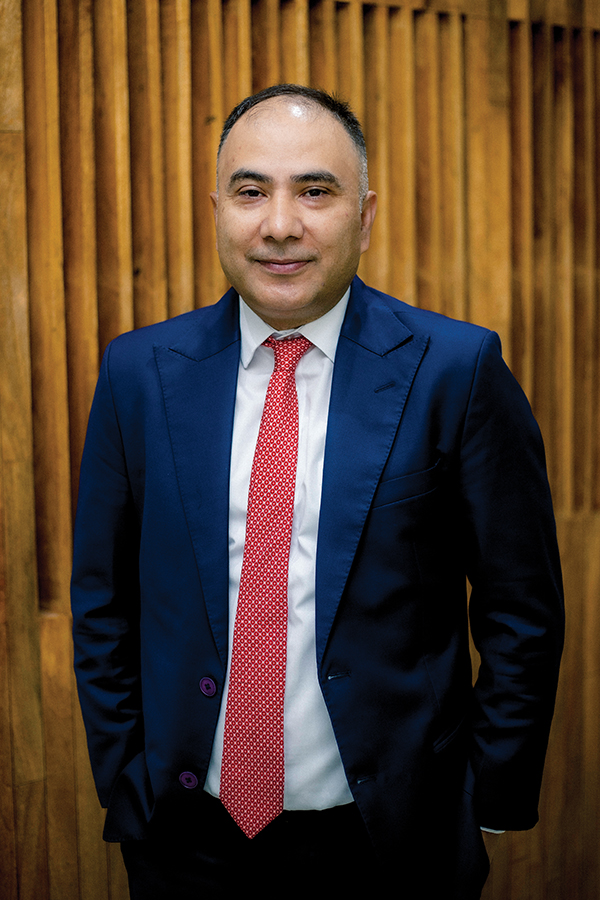
Anup Raj Upreti, Managing Partner, Pioneer Law Associates
Anup Raj Upreti: As we look toward 2035, our ‘Economic Diplomacy 2.0’ must evolve to match our energy ambitions, transforming from a defensive posture to a proactive, regional strategy.
Our economic future is now inextricably linked to the Energy Development Roadmap 2081. This is an audacious blueprint that aims for a total generation capacity of 28,500 MW by 2035. This isn’t just about domestic self-sufficiency; it is about regional integration, with a targeted 15,000 MW for export to neighbouring markets. This volume of energy would position Nepal as a pivotal battery for the South Asian grid.
Nepal has reached a historic milestone, becoming a net exporter of electricity with earnings reaching approximately Rs 17.06 billion in the last fiscal year. However, headline figures can be deceptive. A granular look at our energy balance reveals a seasonal paradox- in the wet season, we export hundreds of millions of units, in the dry season, we still import a massive volume of energy to bridge a 220 MW capacity gap and around 35% of our dry season energy is still imported from India.
Economic Diplomacy 2.0 must prioritise formal energy banking. Instead of a buy-and-sell relationship, we need a store-and-return agreement with India that acts as a stabiliser. Furthermore, we must diversify our energy mix. By integrating solar PV and peaking reservoir projects, we can reduce our over-reliance on run-of-river (ROR) hydropower, which currently leaves us vulnerable to high seasonal fluctuations.
While the technical capability is there, the policy hurdles remain significant. Currently, Nepal’s export capacity is limited by project-by-project approvals from Indian authorities with roughly 1,200 MW cleared to date. To ensure resilience, our diplomacy must push for a shift from project-specific to programmatic or source-neutral approvals.
Investment Origin & Market Access: Resilience requires that electricity generated in Nepal be treated as a neutral commodity. Protectionist policies that restrict market access based on the origin of a project’s investment must be addressed through high-level diplomatic dialogue to ensure a truly competitive regional market.
Transit Rights & Third-Country Trade: To reach Bangladesh, Nepal requires guaranteed Permanent Transit Rights through the Indian grid system. Electricity should be viewed as a transit commodity, akin to goods moving through a port, governed by stable, long-term treaties rather than ad-hoc clearances.
The physical manifestation of our diplomacy lies in our transmission lines. The slow pace of cross-border transmission infrastructure construction remains a primary ‘speed limiter’. Diplomacy 2.0 must accelerate these projects through joint-investment frameworks and the harmonisation of technical grid codes. Without synchronised technical standards, regional cooperation remains a theoretical goal rather than a functional reality.
Ensuring energy resilience in an era of protectionism requires more than just engineering; it requires a new geopolitical consensus. Nepal must frame regional energy cooperation as a shared security asset. By resolving the policy hurdles on project approvals, securing permanent transit rights, and stabilising our dry-season gap through energy banking, we can move from being a yam between two boulders to the powerhouse of South Asia.
Nepal’s economy remains tethered to remittances, yet the Gen Z movement was largely fuelled by a lack of domestic opportunity. Beyond the rhetoric of ‘creating jobs’, what radical policy reform is required to incentivise returnee migrants and local youth to invest their skills and capital into high-growth sectors like IT and agribusiness rather than real estate?
Suman K Joshi: The remittance-to-real-estate funnel is Nepal’s most self-defeating economic cycle. It has inflated asset prices, generated no productive employment and perpetuated the very scarcity of domestic opportunity that drove out-migration in the first place.
Breaking this cycle requires bold reforms. Here are a few possible initiatives that can help:
Nepal Rastra Bank regulated venture debt instrument (Diaspora Bonds) offering slightly above market returns with government guarantees can specifically be channelled into IT and agribusiness.
Land pooling mechanisms that allow smallholders to contribute land as equity in commercial farming enterprises, receiving dividend rather than wage income. This transforms subsistence land into productive capital.
The choice between real estate and productive investment is largely that of risk-adjusted return. The government must therefore pursue policy to rebalance that equation, like additional annual tax on second home or idle land above a ceiling but zero income tax for 10 years on foreign-currency IT service exports or import substituting agri-processing, light manufacturing, etc.
Dr Paras Kharel: Nepal must align technical education and vocational training with the actual needs of the private sector. Tax policies should encourage investment in productive sectors such as IT, manufacturing, agribusiness and tourism instead of speculative investments. The government should also expand industrial zones and create reliable mechanisms to measure and support real job creation.
Anup Raj Upreti: One of the biggest mistakes we make when talking about Nepal’s economy is reducing the conversation to ‘job creation’ alone. Young people are not leaving Nepal just because salaries are low. Many are leaving because they do not see long-term opportunity, stability or trust in the system. If Nepal genuinely wants returnee migrants and local youth to invest their skills and capital in sectors like IT and agribusiness, then deeper structural reform is essential.
A critical component of this reform involves deepening Nepal’s financial markets by unlocking access to finance for the enterprises that are too large for microfinance but struggle to meet the land-centric collateral requirements of traditional banks. Furthermore, the state should actively incentivise the conversion of remittances into productive national capital through the issuance of project-specific bonds. By directing the national savings pool toward equity for high-growth startups in IT and agribusiness, Nepal can create a self-sustaining investment cycle.
This environment is particularly conducive to impact investment, where global funds seek both financial returns and social progress. By positioning youth-led ventures in organic exports or digital services as prime targets for impact capital, Nepal can provide the high margins and professional dignity, ultimately transforming the ‘brain drain’ into a productive ‘brain gain’ for the national economy.
In the IT sector, one major reform needed is trust in the government. No one is going to build a serious tech company in Nepal if the digital ecosystem feels insecure. Nepal is still ranked in Tier 3 of the Global Cybersecurity Index, and the country still lacks a fully operational national CERT mechanism. In recent years, more than five million personal records have reportedly surfaced on the dark web. When the Ministry of Education suffered a 1.4-terabyte data breach, the response showed just how weak accountability mechanisms still are.
In the agribusiness sector, Nepal should recognise and institutionalise contract farming as a core agribusiness model through dedicated legislation, tax incentives, subsidised credit and infrastructure support for irrigation, storage, logistics and digital payments. Alongside this, targeted incentives for high-value agribusinesses such as organic exports, medicinal herbs, specialty crops and eco-farms, sectors already gaining traction in Nepal, can make agriculture commercially attractive and scalable for returnee migrants and local youth to invest in.
Looking back at the volatility of the last 10 years, from the 2015 Constitution to the 2025 ‘Social Media Revolution’, it is clear that the old economic models are failing. If you were to set one non-negotiable economic ‘North Star’ for Nepal to reach by 2030, what would it be, and who, the state or the private sector, must take the lead in driving it?
Suman K Joshi: If forced to choose one North Star, it would be this (and it is not too ambitious): Nepal becomes a net exporter of energy and IT services, earning at least $2 billion annually in foreign exchange from these two sectors by 2030, reducing remittance dependency from 25% of GDP to below 15%.
It is the one target that, if achieved, would structurally transform everything else: the current account deficit narrows, domestic employment expands in technical fields, youth see viable domestic career paths and Nepal’s geopolitical leverage increases.
Who must lead? Neither the state alone nor the private sector alone. But the state must go first, and then get out of the way.
The state must complete the transmission infrastructure, negotiate the international power purchase agreements and reform the licensing regime. In fact, in case of IT infrastructure, get down on our knees to get a big tech firm to set up shop in Nepal. If pitched smartly and ringfenced from the policy and societal risk, I strongly believe they will be happy to utilise Nepal’s green energy to fuel their computing capacity, for example.
Once such a stage is set, the private sector can and will build and operate the projects and new enterprises. There are large pools of capital available – domestic and foreign – to grow these sectors rapidly. The state’s role then shifts to regulator and revenue collector.
The cost of not having a North Star is what we have seen for decades: fractured economy, half built infrastructure and a generation voting with its feet by boarding planes to Qatar, Malaysia and beyond.
Dr Paras Kharel: Nepal’s non-negotiable economic goal should be transforming the country from a remittance-driven, consumption-based economy into a competitive, production-oriented and export-driven economy. The state must create a stable policy environment and invest in institutions and infrastructure, while the private sector must lead investment, innovation and job creation.
Anup Raj Upreti: To chart a definitive course for Nepal by 2030, the non-negotiable ‘North Star’ must be the growth of per capita income to $3,000. To reach this, Nepal requires an estimated $150 billion in investment, with the expectation that two-thirds of that capital will be driven by the private sector (both domestic and foreign). While the last decade focused on political restructuring, the next five years must prioritise economic liberation through a clear division of labour between the state and market.
In this model, the private sector must take the lead as the primary driver of job creation and capital efficiency. History has shown that state-managed projects may result in inefficiency since they are not equipped to handle complicated projects. Conversely, a market-driven mindset allows for the rapid scaling of high-potential sectors like IT, hydropower and high-value agriculture. But for the private sector to flourish, reforms should be implemented. Reform efforts should target structural issues within specific sectors, such as optimising public-private partnership models in infrastructure and addressing systemic bottlenecks in the manufacturing industry. Further, legitimate business activities should not face disproportionate criminal exposure and tax evasion should be addressed under appropriate laws.
While the private sector drives the engine, the state must take the lead in specialised regulation and enforcement. The government must systematically dismantle the regulatory overreach that currently stifles the entrepreneurial spirit. This means simplifying FDI entry barriers at the Department of Industry, streamlining company liquidation processes, etc. Deregulation in Nepal shouldn’t mean a lack of rules but the removal of unnecessary hurdles that invite corruption.
We need a change in the incentive architecture of how money flows through the economy. This budget is the first test of whether the post-revolution rhetoric translates into structural design. Our economy can accept some fiscal deficit if the budget is investment oriented and designed to create jobs. What we cannot afford is another year of current expenditure crowding out capital formation.