NIICE holds discussion on Nepalis recruited into Russian military

-1780302074.jpg)
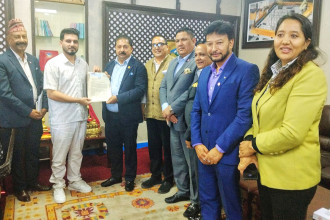
LALITPUR: Nepal Institute for International Cooperation and Engagement (NIICE) held a discussion in Hattiban on Thursday to address the growing trend of Nepali citizens being recruited into the Russian military during the Russia-Ukraine war. The event also discussed whether those involved should be regarded as mercenaries or victims of human trafficking.
Opening the session, Pramod Jaiswal, NIICE associate, underlined Nepal’s approach to the conflict, saying the country’s stance is guided by long-standing commitments to sovereignty, territorial integrity and independence. He noted Nepal’s diplomatic conduct at international forums and said the country’s support for Ukraine reflects adherence to core foreign policy principles rather than external pressure.
According to Maria Tomak, a Ukrainian human rights expert and member of Truth Hounds, ongoing research into recruitment of foreign nationals by the Russian military estimates that about 28,000 foreign nationals from at least 130 countries have been recruited, with numbers rising sharply since 2023.
-1780302074.jpg)
"Many Nepali recruits are driven by financial hardships and social vulnerability to apply for employment opportunities in Russia," Maria said. "But they are tricked and sent to the front line of the war. They are coerced and deceived, and their socio-economic situation is taken advantage of."
Tomak added that recruitment takes place through several channels, including direct recruitment in home countries, recruitment via third countries, and recruitment of migrants already in Russia. She outlined a typical recruitment pathway beginning with first contact through friends, relatives or intermediaries, followed by promises of employment and financial gain, contracts signed without informed consent, minimal military training and eventual front-line deployment.
The discussion also addressed the status of Nepali prisoners of war captured during the conflict. Tomak noted that under international humanitarian law, foreign nationals serving in the Russian armed forces are treated as combatants regardless of nationality. Those captured on the battlefield are recognised as prisoners of war and are to be held in accordance with the Geneva Conventions, with access for organisations such as the International Committee of the Red Cross and the United Nations.
Tomak said that Nepal is among the South Asian countries most affected by predatory recruitment and urged continued vigilance. She said that although Nepal has taken steps to curb recruitment activities, Russia’s ongoing demand for manpower could prompt renewed efforts to target vulnerable Nepali citizens, and called for stronger awareness, monitoring and preventive measures to protect individuals from exploitation and trafficking.
The event concluded with a question-and-answer session in which audience members raised concerns about the welfare of prisoners of war, the legal and humanitarian complexities surrounding foreign recruits, and the role of international organisations in such cases.