Budget for upcoming FY marks start of new era of economic prosperity: NCC president

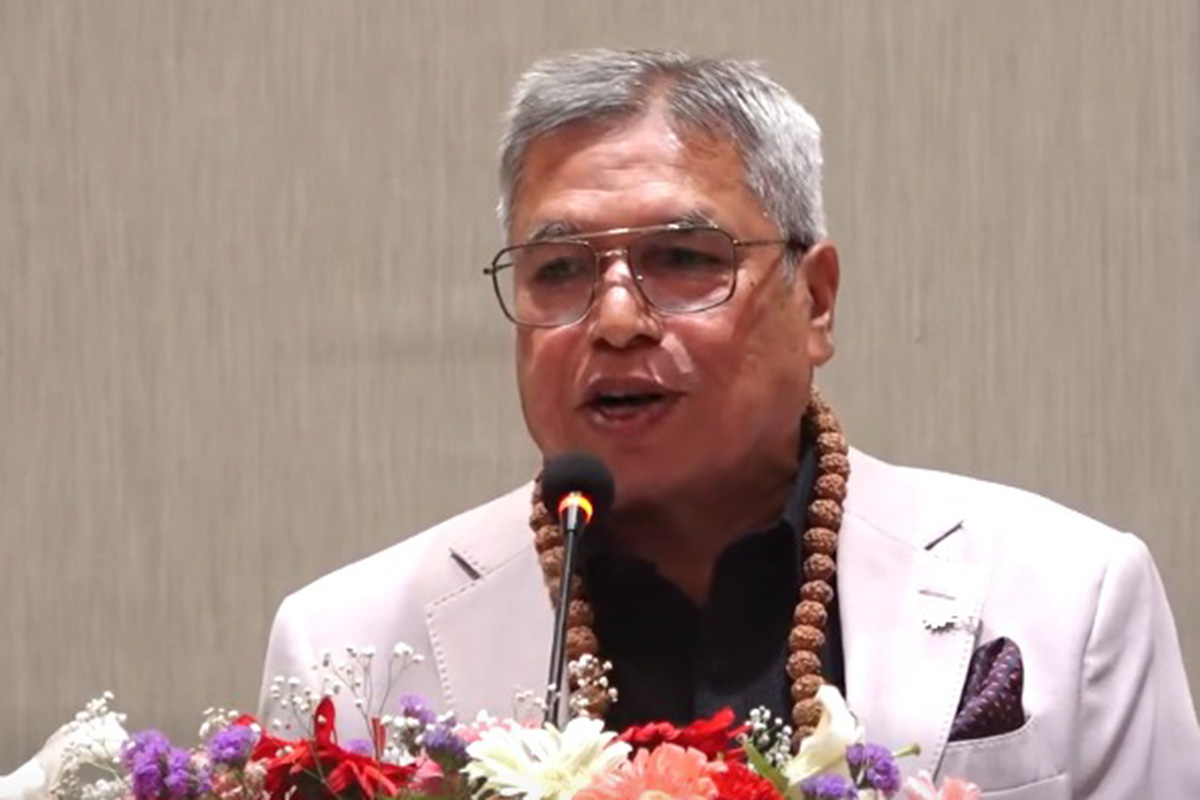
KATHMANDU: Nepal Chamber of Commerce (NCC) President Kamlesh Kumar Agrawal said the government’s annual budget for fiscal year 2026/27 marks a starting point for a new era of economic prosperity.
Speaking at an interaction titled 'Post Budget Discussion' organised by Nepal Association of Financial Journalists (NAFIJ) in Kathmandu on Monday, Agrawal said, “This budget serves as a starting point to give a new dimension to Nepal's destiny, which has long been entangled in the quagmire of policy and intent, and to enter a new era of economic prosperity.” He added that the budget’s policy foundations, the government’s commitment to good governance and a clear development roadmap will determine the country’s future.
Agrawal called the budget ambitious but said its successful implementation would boost private sector confidence and provide a foundation for recovery after a prolonged slowdown. He noted that Nepal is rich in natural resources and potential but has been held back by weak policy‑making and governance. “Our economy has the potential to achieve the highest growth rate in South Asia. However, due to past weaknesses in policy‑making and good governance, we could not achieve the expected accomplishments,” he said, and congratulated the Finance Minister for presenting the budget.
Many of the NCC’s recommendations were reflected in the budget, Agrawal said. He welcomed tax reforms, calling the increase in the individual income tax exemption limit to Rs 1 million annually a significant step towards a more transparent economy. He also praised the plan to abolish or restructure excise duties on 360 goods, saying it would relieve entrepreneurs burdened by a complex excise system.
He highlighted the reduction of customs duties on 273 raw materials as a move to encourage industrial production, boost domestic competitiveness and accelerate industrialisation. He said the private sector also supported the introduction of a multi‑rate concept in the Value Added Tax system.
However, Agrawal raised concerns about several measures. He urged reconsideration of the proposal to impose 5% VAT on electricity services and on consumers using more than 50 units per month, arguing that Nepal’s abundant water resources should make domestic production cheaper and more competitive. He warned that higher capital gains tax rates and extra taxes and fees on electric vehicles could increase costs for investors and undermine efforts to promote clean energy and green transport.
He criticised the plan to levy 3% tax on services provided by privately operated educational institutions, saying such institutions play a key role in building human capital and that extra taxation could hinder development and quality improvement. He pointed to South Korea’s emphasis on education as a model for economic advancement.
He welcomed the tax clearance scheme to resolve post‑COVID19 tax disputes and retrospective tax issues, noting that waiving fines and penalties in exchange for 1% tax payment could raise government revenue while providing relief to businesses. He also called for legal reforms to remove ambiguities in capital gains tax provisions and prevent dual interpretations.
Recalling the NCC’s 75‑year history and its role in economic policy‑making, Agrawal said the current government presented the budget soon after taking office and urged policy continuity over the next five years to achieve economic transformation. He expressed optimism that if the government maintains its recent operational momentum, economic growth could exceed 7% in the coming fiscal year.
NCC president concluded that effective implementation of the budget’s positive measures would promote investment, lift private sector morale, simplify the tax system and expand overall economic activity, while stressing that strong government capacity will be essential to meet revenue targets.