FNCCI urges govt to act as facilitator, coordinator to boost investment

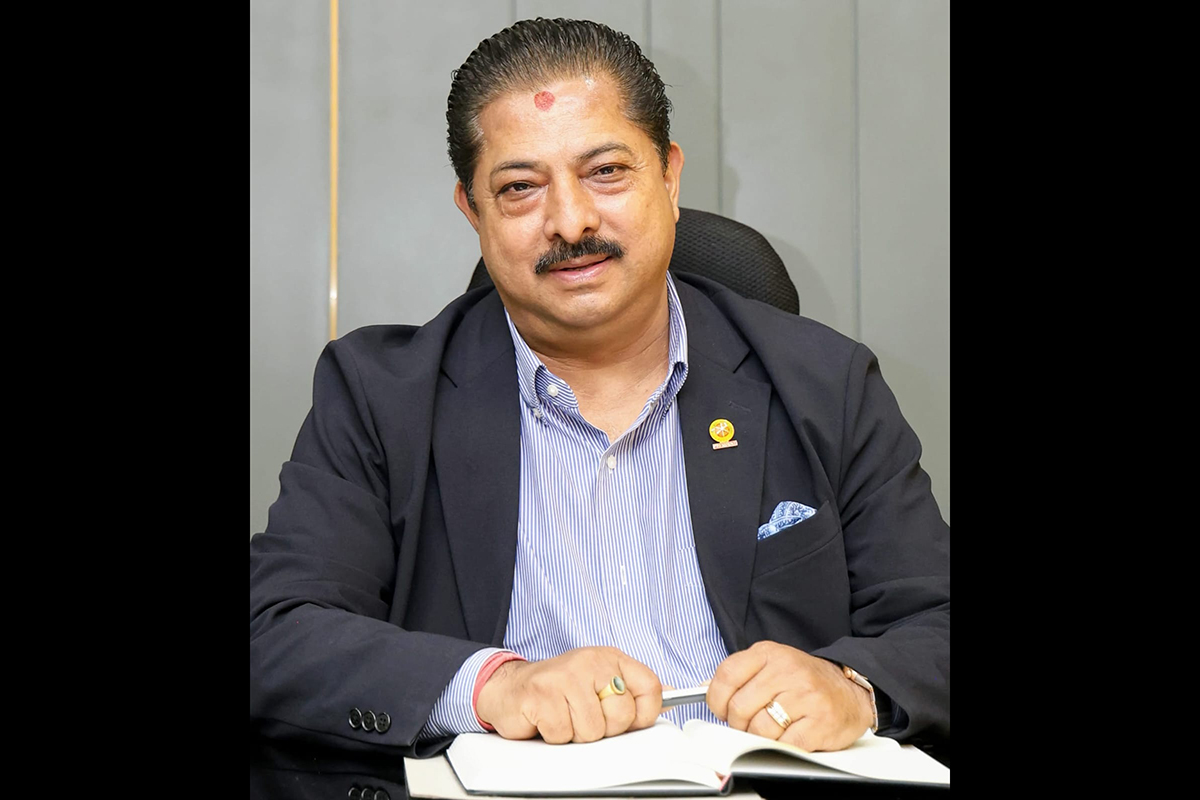
KATHMANDU: Federation of Nepalese Chambers of Commerce and Industry (FNCCI) has urged the government to act as a facilitator and coordinator rather than a strict regulator to promote investment and economic development.
In a meeting with Prime Minister Balendra Shah at the Office of Prime Minister and Council of Ministers in Singha Durbar on Wednesday, FNCCI President Anjan Shrestha emphasised the need for bold decisions to break the cycle of protectionism, the informal economy, and administrative hurdles.
Shrestha highlighted that private sector contributes 81% to the economy and 86% to job creation, and said business morale has weakened because of low market demand, investment slowdowns and excessive regulatory pressure. Prime Minister Shah conveyed his readiness to collaborate and acknowledged the private sector’s vital role in the country’s prosperity.
“We openly discussed issues concerning the private sector, the current state of the economy, and possible solutions with the Prime Minister during the meeting,” Shrestha said. “The Prime Minister mentioned that the government will undertake infrastructure development while the private sector will handle economic development, and he expressed a commitment that the government is ready to facilitate this. In addition, he stated that such meetings will continue. The private sector has taken this positively.”
FNCCI welcomed government targets of achieving a 7% economic growth rate, reaching a per capita income of $3,000, creating 1.2 million jobs and building a Rs 15 trillion economy; however, Shrestha warned of the difficulty of escaping the credit, liquidity and asset trap needed to reach those goals. He also expressed concern over the country’s 70% reliance on imports and called for policies prioritising local production, encouraging contract manufacturing and classifying industries based on raw material usage.
The umbrella organisation of the private sector requested the prompt repeal of 15 outdated laws, including the Black Marketing Act, and the introduction of a special restructuring package for crisis-hit small and medium-sized enterprises. For the banking sector, it proposed full compliance with limited liability provisions, expanded soft loans, flexible dividend policies to increase market liquidity and a review of working capital guidelines. The FNCCI also suggested a contract farming policy and the development of agricultural pocket zones near major diversion projects.
The delegation recommended developing special economic zones (SEZs), dry ports and tourism centres under a Public-Private Partnership (PPP) model. It opposed a requirement for private sector representatives on government boards to submit details of personal property, arguing that institutional representatives do not hold offices of profit and should not be compelled to disclose private assets.
Other demands included addressing financial sector errors through fines rather than criminal charges, halting media trials and implementing a Unified Tax Code by integrating federal, provincial and local taxes to reduce business costs. Shrestha also sought land-ceiling exemptions for industries, simplified environmental assessments, the immediate release of approximately Rs 5 billion in pending export incentives and rapid implementation of the Private Sector Protection and Promotion strategy.
READ ALSO:
- PM Shah meets private sector reps to discuss industry, economic reforms
- FNCCI, WHEF sign MoU to cooperate on 2027 summit to be held in Nepal
- FNCCI says monetary policy is 'positive and balanced' and will boost private sector morale
- FNCCI calls for monetary policy to prioritise investment, capital mobilisation
-1791630230.jpeg)
-1791623099.JPG)