Engineering a Drone Revolution

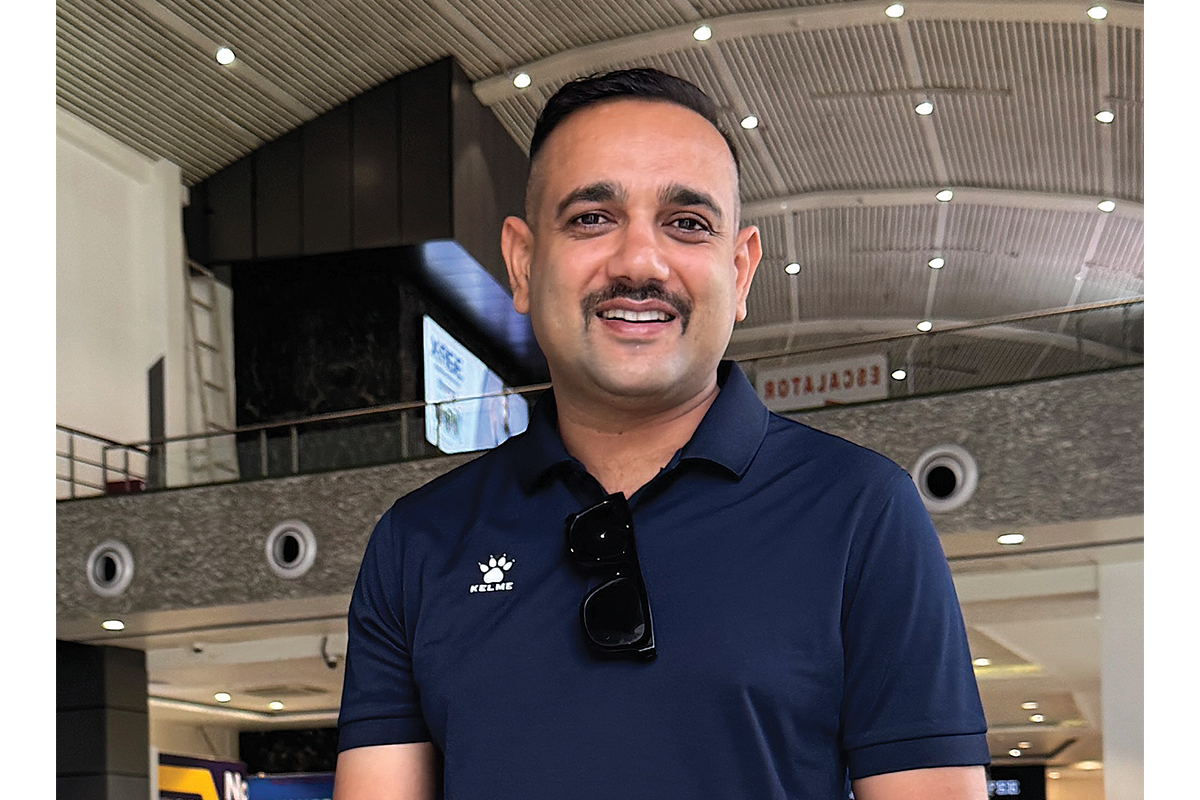
PRABIN BHATTARAI
Founder & Managing Director Drone Hub Nepal
“I want to make Nepal the capital of drones. Our dream is simple but powerful: to see drones solve real Nepali problems, built and operated by Nepali hands,” says Prabin Bhattarai, Founder and Managing Director of Drone Hub Nepal.
As drone technology emerges as a transformative solution for navigating Nepal’s rugged terrain and remote settlements, Drone Hub Nepal has established itself as one of the country’s pioneers in the sector. Based in Kathmandu, the company is applying drone technology across a wide range of industries from mapping mountain landscapes and inspecting infrastructure to supporting disaster response and humanitarian operations.
“There were no clear rules, no local experts and very few people who even saw drones as a serious tool. But that is exactly what pulled me in,” recalls Bhattarai.
He recognised that Nepal’s geography made even routine activities such as land surveying and disaster response slow, expensive and often dangerous. Rather than viewing drones as devices for aerial photography or videography, he saw them as practical tools capable of solving real-world challenges.
“In villages where there are no hospitals, drones could help deliver essential medical supplies for pregnant women or accident victims. They could mean the difference between recovery and losing a life on the long journey to the nearest health facility. That thought stayed with me, and it became the reason I chose to build something in a space where almost nothing existed.”
That conviction continues to shape Drone Hub Nepal’s approach. Bhattarai believes drone innovation must be designed around Nepal’s realities rather than imported without adaptation.
Across industries, difficult terrain, limited accessibility, fragmented data, labour-intensive fieldwork and resource constraints continue to slow development. By studying these challenges firsthand, the company develops solutions that are safer, faster, more efficient and cost-effective.
The company is equally mindful of Nepal’s infrastructural and regulatory limitations. Rather than viewing them as obstacles, Bhattarai sees them as design constraints that encourage practical, scalable innovation.
Balancing innovation with practicality begins with understanding the local context, he says.
“We focus on innovations that can be implemented within Nepal’s realities and provide clear value to users. At the same time, we closely follow global technological developments and assess how they can be adapted to our environment. By combining local knowledge with emerging technologies, we are able to identify opportunities that are both practical and impactful.”
That philosophy underpins the company’s growth. According to Bhattarai, Drone Hub Nepal’s approach is straightforward: listen carefully, understand local challenges and build solutions that deliver measurable value for communities, businesses and Nepal’s growing technology ecosystem.
Before establishing Drone Hub Nepal, Bhattarai worked as a UAV expert with Trans Atlantic Cargo Transportation, where he gained first-hand experience in cargo logistics and learned how weather, terrain, accessibility and local infrastructure shape transportation decisions. Those lessons continue to influence the company’s approach to developing reliable, user-friendly technology capable of delivering meaningful outcomes.
Rather than applying global trends indiscriminately, Drone Hub Nepal works closely with clients and stakeholders to understand local realities before designing solutions. By combining advanced technology with deep local insight, the company aims to deliver innovations that are practical, sustainable and accessible across Nepal.
Bhattarai sees enormous potential in emerging technologies such as artificial intelligence, machine learning and autonomous systems to redefine the capabilities of drones.
“These technologies are making drones smarter, faster, more efficient and capable of performing increasingly complex tasks with minimal human intervention.”
He believes AI and machine learning will enable drones to process vast amounts of data with greater speed and accuracy. From object detection and crop monitoring to disaster response and defence applications, intelligent systems can dramatically reduce analysis time while improving operational efficiency and decision-making.
Autonomous systems, meanwhile, are reshaping the future of the industry. According to Bhattarai, next-generation drones will be able to plan flight paths, avoid obstacles and complete missions with far less manual intervention.
“Another important development is the integration of drones with cloud computing and real-time data processing,” he says. “This will allow users to receive insights and results much faster, enabling quicker responses in areas such as emergency management, agriculture and infrastructure monitoring.”
Together, AI, autonomous navigation and cloud-based analytics will significantly expand what drones can achieve, creating new applications while enabling industries to extract greater value from aerial data.
Building, Not Just Buying
Despite the rapid growth of Nepal’s drone sector, it remains heavily dependent on imported technology. While Drone Hub Nepal also relies on foreign-built drones because they are proven, commercially available and immediately deployable, Bhattarai believes that dependence exposes structural weaknesses.
Imported drones are expensive, spare parts are difficult to source and technical support is often unavailable in remote parts of the country. A malfunction in a remote district can leave equipment grounded for weeks.
“The technology is borrowed, not owned.”
For Bhattarai, local innovation, not imports, will ultimately determine the industry’s long-term sustainability.
“Companies like Drone Hub Nepal are already trying to design, build and provide drone training inside Nepal. The challenge is that the government still has no system to test or register locally made drones, so even a fully functional Nepali-built drone cannot legally fly.”
In his view, Nepal’s engineers are ready. The regulatory ecosystem is not.
While imported technology will continue to play an important role in expanding the industry, he believes long-term competitiveness will depend on developing local design, manufacturing and technical expertise. Nepal’s geography presents challenges unlike those of almost any other country, making locally engineered solutions inherently more relevant and effective.
Rather than framing the issue as a choice between foreign and domestic technology, Bhattarai advocates a hybrid approach.
“We should use imported technology to generate revenue, gain experience and accelerate learning while investing in local engineers, local manufacturing and stronger research capabilities. We don’t need to choose global technology over local innovation. We should use global technology as a bridge to build our own.”
For him, that bridge is the pathway to a self-sustaining drone ecosystem, one where Nepal moves beyond being a consumer of technology to becoming its creator.
Solving Nepal’s Hardest Problems
“Nepal is a country where the land itself creates challenges. Remote villages are cut off by mountains, farms sit on steep hillsides and disaster zones are often unreachable by road. Drones are proving to be one of the most practical answers to these problems.”
For Bhattarai, drones are not simply flying machines, they are development tools capable of addressing some of Nepal’s most persistent logistical and geographical challenges.
In disaster situations, drones can rapidly survey affected areas, identify hazards, support search-and-rescue teams, deliver essential supplies and locate people in need of immediate assistance. In agriculture, they enable farmers to monitor crop health, spray fertilisers and pesticides with greater precision, deter wildlife and detect plant diseases before they spread across entire fields.
Their impact extends even further. Drones can map large areas of land in a fraction of the time required by conventional field surveys, accelerating infrastructure planning and development projects. Equipped with thermal imaging, they also support wildlife conservation by tracking animal movement, locating injured wildlife and monitoring protected areas that are otherwise difficult to access on foot.
Building Public Trust
Despite the growing opportunities, public concerns around privacy, safety and the ethical use of drones remain significant. Bhattarai acknowledges these concerns and believes responsible deployment is essential to earning public confidence.
“From the very beginning, we made it clear that our work is about solving problems, not invading privacy. Every flight we operate has a defined purpose, whether it is mapping land, surveying disaster zones or supporting agriculture.”
“We do not fly over private homes or crowded spaces without proper clearance, and every operation is conducted within the permissions granted by local authorities before a drone takes off.”
For Bhattarai, public trust is built through transparency, accountability and strict adherence to operational standards.
Regulation as an Enabler
While technology continues to evolve rapidly, Bhattarai believes regulation has not kept pace.
He argues that clearer policies could unlock the next phase of growth for Nepal’s drone industry. Among his priorities are a streamlined approval process, well-defined privacy standards, government-backed training and certification programmes, and formal systems for testing and registering drones designed and manufactured within Nepal.
“Government-supported training and certification programmes would help build a skilled domestic workforce instead of relying on foreign expertise. At Drone Hub Nepal, we have seen firsthand how regulatory gaps continue to slow work that could genuinely benefit people.”
His argument is not for fewer regulations, but for smarter ones, policies that safeguard public interests while encouraging innovation, supporting local manufacturers and enabling technology to address real-world challenges safely and responsibly.
Building an Industry
Launching Drone Hub Nepal was far from straightforward.
During its early years, the company operated in an environment where drone technology was still unfamiliar to most organisations. Beyond developing the business itself, the team found itself educating government agencies, clients and industry stakeholders on the practical value of drones.
Import restrictions, evolving regulations and administrative complexity created additional hurdles.
“Drone regulations were still evolving, and obtaining flight permissions often involved lengthy procedures, multiple layers of approval and uncertainty regarding compliance requirements. Project timelines were frequently affected by delays in approvals and administrative processes, making planning and execution far more difficult.”
Those challenges demanded resilience, patience and constant innovation. Today, Bhattarai believes the landscape has changed considerably.
Interest in drones, robotics and advanced technologies is growing among young Nepalis, while educational institutions, government agencies and private organisations have become increasingly receptive to integrating drone technology into their operations.
Looking Ahead
Bhattarai envisions a future where drones routinely deliver medicines to remote mountain communities, monitor landslide- and flood-prone regions, enable precision agriculture and support rapid post-disaster response, capabilities that became painfully relevant during the 2015 earthquake.
His ambition extends beyond expanding Drone Hub Nepal. He wants to create world-class opportunities for young Nepalis to learn, innovate and lead in the drone industry without leaving the country.
He believes Nepal has a genuine opportunity to establish itself as a global leader in drone applications among developing economies within the next five to ten years.
Advice to Entrepreneurs
For aspiring entrepreneurs, Bhattarai’s advice is simple: focus less on technology itself and more on the problems it can solve.
“Technology is never the goal. The goal is to create solutions that improve people’s lives, increase efficiency and solve challenges faced by industries and communities.”
Building a technology company in Nepal, he says, requires persistence as much as innovation.
“One thing I have learned is that building a technology business in Nepal requires resilience. You will face limited resources, regulatory challenges, market scepticism and delays that are often beyond your control.”
“There will be times when your ideas are not immediately understood or accepted, and progress may feel slower than expected. During those moments, stay committed to your vision while remaining flexible enough to adapt when needed.”
That philosophy reflects not only Bhattarai’s entrepreneurial journey but also his broader vision for Nepal’s technology sector: one where innovation is measured not by the sophistication of the technology itself, but by its ability to solve real problems and create lasting national value.