The Karobar Effect


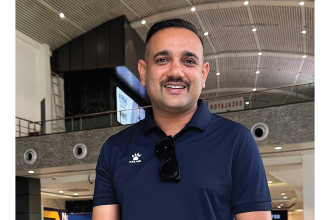
From a Village Grocery to 300,000 Businesses: How Karobar Is Rewriting Business Management for Nepal’s MSMEs. At its centre is Samir Phuyal, the Founder and Chief Executive Officer of the Karobar App
Karobar did not begin with a business plan, venture capital or a startup incubator. It began inside a small neighbourhood grocery store in Gothgaon, Morang.
“My parents run a small shop called Hamro Pasal, and I grew up behind the counter, helping out whenever I could,” recalls Samir Phuyal, Founder and Chief Executive Officer of Karobar. “One day, I watched my father lose money he was owed simply because he couldn’t find a customer’s record in his paper ledger. That moment stayed with me. It is really where Karobar began.”
At 19, Phuyal wasn’t trying to build a company. He was trying to solve one problem for one shop. Today, that solution serves more than 300,000 businesses across Nepal.
The opportunity, he realised, wasn’t simply to digitise bookkeeping. It was to rethink business software for a market global platforms had largely overlooked.
Existing accounting systems were expensive, desktop-based and built around assumptions that rarely reflected the realities of Nepali entrepreneurs. Mobile applications were available, but few understood the day-to-day needs of local businesses. Meanwhile, smartphones were becoming commonplace.
Phuyal believed the answer was already in people’s hands.
“We have built Karobar with simplicity in mind from the very beginning. We want it to be usable by every kind of shopkeeper, regardless of their accounting background or how comfortable they are with technology.”
That philosophy shaped every design decision.
Instead of accounting jargon such as debit, credit and trial balance, Karobar uses familiar terms like sales, purchases and inventory. It supports the Nepali language, integrates the Bikram Sambat calendar and is designed for entrepreneurs who have never formally studied accounting.
Simplicity, in this case, became a competitive advantage rather than a design preference.
For Nepal’s small businesses, record keeping has traditionally relied on notebooks, paper ledgers and memory. Customer credit, inventory, sales and expenses were often managed manually, making information difficult to retrieve and business decisions dependent on estimation rather than evidence.
“With the Karobar app, that has changed. Their entire business is now in their pocket. They can instantly access customer records, track outstanding payments, monitor sales and expenses, and see how their business is performing in real time. They no longer have to rely on guesswork.”
For Karobar, digitisation is not simply about replacing paper. It is about giving entrepreneurs the confidence to make better decisions through real-time business data.
Product development remains deeply founder-led. Phuyal continues to spend time with users through customer support interactions, field visits and product usage patterns. More importantly, he looks beyond the features customers request to understand the problems they are actually trying to solve.
“We do our best to identify the root problem and build something that creates lasting value for our users.”
That same philosophy extends to localisation.
“A lot of global solutions quietly assume things that simply are not true for most Nepalis: reliable internet, a user who is comfortable with English business software, English dates and familiarity with formal accounting norms,” says Phuyal. “When those assumptions do not match reality, people simply do not use the product.”
Those realities shaped Karobar’s architecture. The app works offline, supports the Nepali language and Bikram Sambat calendar, and uses terminology that feels natural to local entrepreneurs rather than imported accounting language.
Building a product proved easier than building a business.
Like many founders, Phuyal initially prioritised growth over revenue, keeping Karobar free during its first two years while funding development through client-service projects. Eventually, however, he realised that meaningful impact required financial sustainability alongside user growth. The company subsequently introduced monetisation strategies that supported both expansion and long-term viability.
“I think one of the biggest reasons many businesses remain informal is because formalisation is often seen as a burden. Business owners associate it with more paperwork, more rules, more costs and having to learn unfamiliar systems.”
Karobar therefore avoids leading with formalisation. Instead, it focuses on simplifying everyday business operations. As entrepreneurs become comfortable managing inventory, customer credit and business records digitally, adopting formal business practices often becomes a natural next step.
Trust, meanwhile, has become one of the company’s most valuable assets.
Handling financial information demands more than functionality. It demands confidence. Karobar incorporates features such as app lock, privacy mode and user-access controls, giving business owners ownership over their data while strengthening confidence in the platform.
Phuyal’s own entrepreneurial journey was anything but linear.
“I had built a few other products before Karobar and they had all failed. So honestly, I did not have many expectations for Karobar either. I just wanted to solve a problem for my parents’ shop.”
When the app first appeared on the App Store, users began calling not to complain, but to encourage, suggest improvements and ask for new features. Those conversations convinced him that the product had found genuine market demand.
The company’s toughest test came later.
Rapid adoption exposed the limits of the backend infrastructure that Phuyal had originally built himself. At the time, Karobar lacked the resources to recruit experienced engineers or invest in larger server infrastructure.
“Remember, the app was still free, so we were not generating any revenue to fall back on. That was genuinely the moment I questioned whether we would make it.”
What kept the company moving, he says, was accountability to customers, employees and everyone who had placed their trust in the platform.
That growth also required a personal transition.
Coming from an engineering background, Phuyal spent years writing code and reviewing every technical decision. Eventually, he realised that his greatest contribution was no longer as a developer.
“Building a product is one thing; growing a product is another, and they demand very different things from a founder. I eventually had to let go. I shifted my focus to customer acquisition, building systems across the company, managing partnerships, and the broader work of growing the business rather than perfecting the code behind it.”
He credits that transition to the design and engineering team that assumed ownership of the product’s technical evolution. “I would genuinely like to give them a shoutout for being there and taking such good care of the Karobar app: Shankar Lamichhane, Kedar Karki, Ruzan Tandukar, Roshan Kunwar, Nitesh Rajbanshi, Yogesh Raya and Santosh Adhikari.”
Karobar’s original mission was to help Nepal’s micro, small and medium enterprises manage and grow their businesses. Today, Phuyal is pursuing the second half of that mission through Briz, a local commerce platform that connects nearby buyers and sellers.
“Briz is a local commerce app that works a bit like inDrive but for shopping. Instead of a customer going store to store looking for something, they simply post what they want, and Briz notifies nearby shops that someone within a certain distance is looking for that item.”
The ambition remains the same as it was inside a small grocery shop in Morang.
“If Karobar helped them run their businesses, I want this next chapter to be about helping them truly grow and, in doing so, playing a real part in shaping the future of digital commerce in Nepal.”
Karobar was born from a missing customer entry in a paper ledger. Today, it has become part of Nepal’s digital transformation, helping hundreds of thousands of entrepreneurs replace notebooks with real-time business intelligence. For Phuyal, the mission has never changed. Only its scale has.