Deepak Thapaliya on Building Trust and Nepal’s Automotive Future

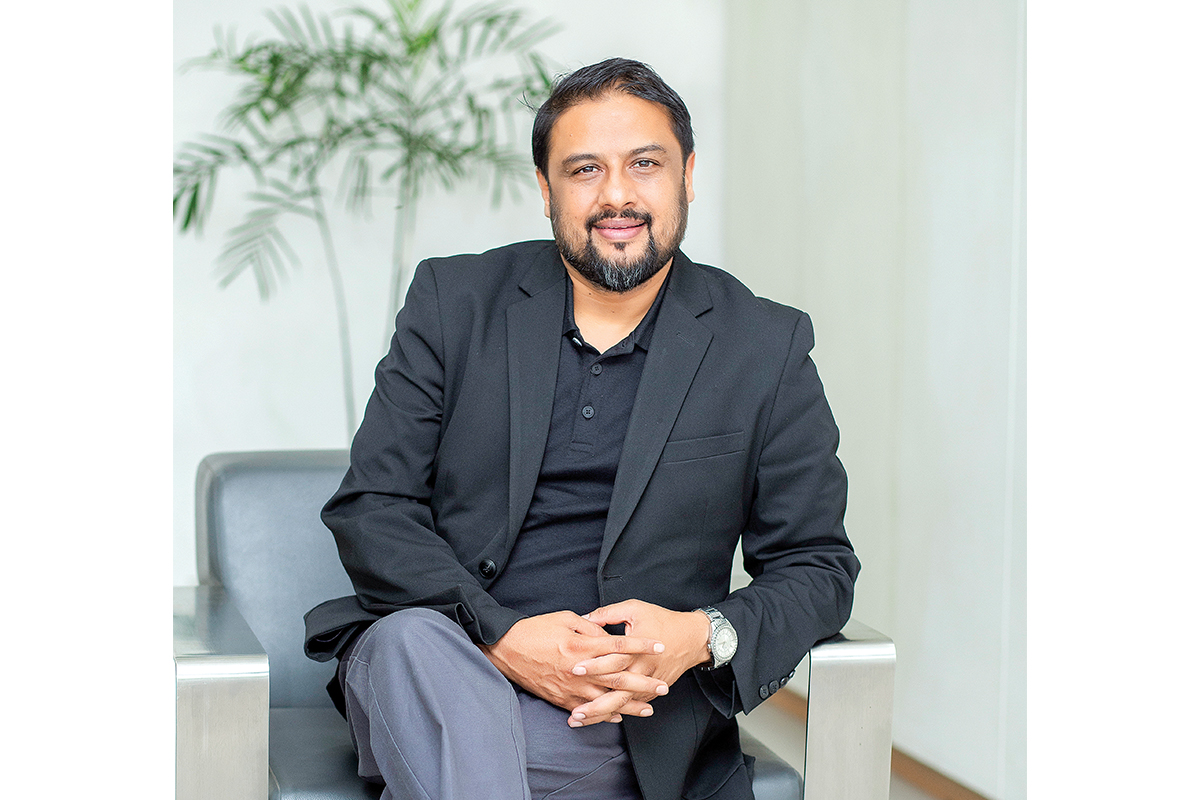
“Sales are important, but trust is what keeps customers coming back. We never chase numbers at the cost of customer satisfaction. Instead, we focus on delivering a complete ownership experience through quality service, transparency and after-sales support. When customers trust us, they become our strongest ambassadors”
Deepak Thapaliya, General Manager – Passenger Vehicle Division, Laxmi Intercontinental
Integrity has been the constant throughout Deepak Thapaliya’s two-decade career in Nepal’s automobile industry. “One principle has remained unchanged – honesty,” says the General Manager of the Passenger Vehicle Division at Laxmi Intercontinental. “Every achievement is the result of our leadership’s vision and the dedication of our entire team. Together, we are working towards a larger purpose: building Nepal’s automotive future through local capability, innovation and manufacturing.”
Thapaliya began his career in 2004 as a service engineer, building a strong technical foundation before moving into advisory roles where he managed everything from mass-market vehicles to luxury brands. Those early experiences shaped his belief that precision, accountability and customer trust are the cornerstones of sustainable business leadership.
After joining Laxmi Group in 2012, he steadily rose through the ranks. Today, he leads the company’s passenger vehicle portfolio, overseeing brands including Hyundai, BMW, Kaiyi, Forthing and upcoming entrants such as BAIC, Arcfox and Jetour. As Nepal’s automotive sector undergoes a profound transformation driven by electrification, changing consumer expectations and increased competition, Thapaliya shares his perspective on leadership, market evolution and the opportunities shaping the industry’s next chapter.
Leading a portfolio that spans mass-market and premium automotive brands requires different strategies. How do you ensure each brand maintains its unique identity while contributing to the company’s overall growth?
Every brand has its own identity, customer expectations, and purpose. Hyundai customers value reliability and innovation, and BMW customers expect premium experiences, while our new energy vehicle brands are attracting a new generation of buyers. We never apply one strategy across all brands. Each has dedicated teams, customer engagement plans, and marketing approaches that respect its individual positioning.
At the same time, our values as an organisation remain consistent – customer satisfaction, operational excellence and long-term trust. While the brands operate differently in the market, they all contribute to one shared vision of delivering exceptional ownership experiences and sustainable business growth.
The automotive industry is undergoing one of its biggest transformations in decades. What management qualities do you believe are essential for navigating this period of rapid change?
Today’s leaders must be adaptable, open to learning and willing to embrace change. Technology is evolving quickly, customer expectations are changing and the industry is moving towards electrification and digitalisation.
For me, honesty, transparency and continuous learning are the most important leadership qualities. A leader does not need to know everything but must create an environment where people are comfortable sharing ideas and solving problems together. Strong leadership is about building confidence during uncertain times while remaining focused on the long-term vision.
How do you balance short-term sales targets with the long-term strategic goal of building customer trust and brand loyalty?
Sales are important, but trust is what keeps customers coming back. We never chase numbers at the cost of customer satisfaction. Instead, we focus on delivering a complete ownership experience through quality service, transparency and after-sales support. When customers trust us, they become our strongest ambassadors. Short-term sales naturally follow when long-term relationships are built with honesty and consistency.
Managing multiple international automotive brands means working with diverse teams and global partners. What management principles have helped you build alignment across different stakeholders?
Clear communication and mutual respect are the foundation. Every stakeholder has different expectations, whether it is a global principal, dealer partner or internal team.
I believe in listening first before making decisions. Once everyone understands the common objective, alignment becomes much easier. Transparency, accountability and delivering on commitments have helped us build long-term relationships with our global partners.
The transition towards electric mobility is reshaping the automotive landscape. How is Laxmi Intercontinental preparing its organisation and workforce for this shift?
Electric mobility is not simply about introducing EVs. It requires new technical skills, infrastructure, customer education and service capability.
We have invested heavily in technician training, specialised equipment and are preparing our service network for electric vehicles. At the same time, we are continuously educating customers and adapting our internal systems. Our goal is not just to sell electric vehicles but to build confidence in electric mobility for Nepal.
Can you share an instance where a difficult business decision tested your leadership and what did that experience teach you?
One of the biggest decisions has been supporting local vehicle assembly in Nepal. Financially, it is a challenging investment and in the short term it may not always deliver maximum returns. However, we believe this is an investment in Nepal’s future. Someone has to take the first step. We now have Nepal’s first and only four-wheeler assembly facility, and although there are challenges, we remain committed because we believe building local capability is the right direction. This experience reinforced my belief that leadership is about making decisions based on long-term value rather than immediate gains.
How do you identify and develop future leaders within your organisation, particularly in an industry where technology and customer expectations are constantly evolving?
I look for attitude before experience. Skills can be developed but honesty, responsibility and willingness to learn come from within.
I encourage team members to take ownership, make decisions and learn from challenges. We invest in continuous training, mentoring and exposing our people to new technologies. Future leaders are built by giving them responsibility, guidance and trust.
As General Manager, how do you encourage your teams to experiment with new ideas while maintaining operational discipline and consistent performance?
Innovation should always be encouraged but it must be supported by proper planning and accountability. I encourage my team to share ideas openly and test new approaches. At the same time, we have clear processes and measurable goals. Good systems provide the discipline needed for innovation to succeed without affecting operational performance.
Looking ahead, what is your long-term vision for Laxmi Intercontinental’s passenger vehicle division, and what strategic priorities will be critical to achieving that vision?
I would rephrase it this way. Our vision extends far beyond simply becoming the market leader. We want Laxmi Intercontinental to actively shape the future of Nepal’s automotive industry.
We will continue strengthening our passenger vehicle portfolio, expanding electric mobility, investing in people, improving customer experience and supporting local manufacturing. Our journey with Nepal’s first four-wheeler assembly facility reflects this commitment. We believe Nepal has the talent to build, innovate and manufacture. Although the path is challenging, we are preparing today for the future. Labour costs will continue to rise globally and countries that develop local capability early will have a strong advantage. We want to be part of that transformation.
Our purpose has never been only to generate profit. We want to contribute to Nepal’s industrial growth, create skilled employment and leave behind an automotive ecosystem that future generations can proudly build upon.