
THE BUSINESS OF KAILASH

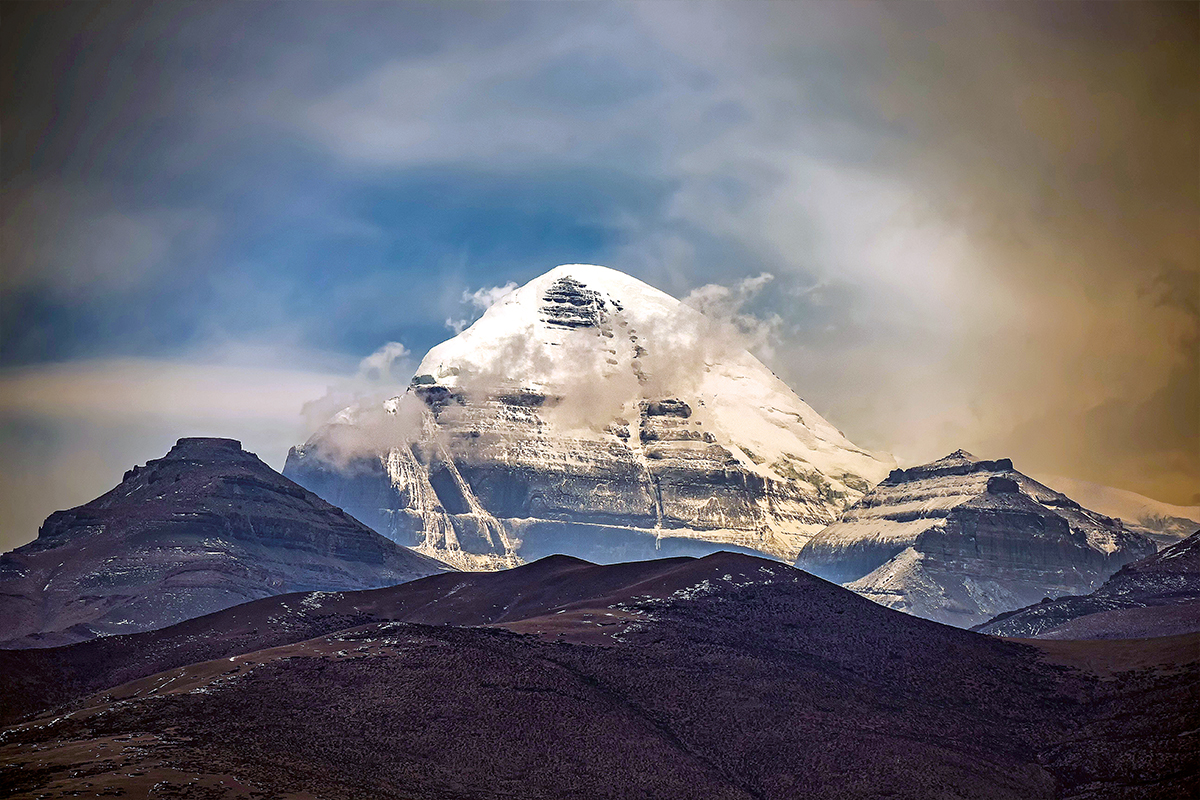
Thousands of pilgrims. Millions of dollars. One vulnerable gateway. The Rasuwa disaster has exposed the concentration risk in Nepal’s Kailash economy and the business case for building multiple routes to the sacred mountain.
The destruction of the Rasuwa corridor has disrupted far more than a pilgrimage route. It has exposed the scale and vulnerability of a multimillion-dollar tourism economy stretching from Kathmandu’s hotels to Himalayan border towns, airlines, transport operators and hundreds of small businesses. For Nepal, rebuilding may no longer be enough. The bigger opportunity lies in redesigning the business.
For centuries, Mount Kailash and Lake Mansarovar have drawn pilgrims across the Himalayas in pursuit of something that cannot be measured in money. Yet around that spiritual journey, Nepal has built an increasingly valuable commercial ecosystem.
A pilgrim arriving in Kathmandu sets in motion a chain of economic activity that can begin with a five-star hotel room and extend to buses and jeeps, tour operators, guides, restaurants, porters, airlines, helicopter companies, religious-goods sellers and small businesses scattered across the Nepal-China borderlands.
That ecosystem has now suffered a major shock.
The August 26 glacier-related flood and mudslide devastated the Nepal-China border area, destroying the Gyirong border crossing and critical infrastructure around Rasuwagadhi. The disaster killed and displaced people on both sides of the border and disrupted one of the principal trade and pilgrimage gateways between Nepal and Tibet. The once-busy Gyirong port was virtually obliterated, including its five-storey customs building.
For Nepal’s Kailash pilgrimage industry, the timing could hardly have been worse. Its business is concentrated in a relatively narrow window - from late spring through early autumn - when thousands of pilgrims use Nepal as a gateway to Tibet.
The immediate challenge is restoring connectivity. The bigger business question is more consequential: How much of Nepal’s Kailash economy is at risk—and should the country continue depending so heavily on one corridor?
From Pilgrimage Route to Economic Corridor
The economics of Kailash begin long before a pilgrim sees the mountain.
For many international visitors, Kathmandu is the first major stop. They arrive by air, check into hotels, visit religious sites, complete permits and documentation, buy clothing and medicines, exchange currency and meet tour operators.
The traditional overland journey then moves through Trishuli and Rasuwa to Rasuwagadhi before crossing into Tibet through Gyirong and continuing towards Saga, Lake Mansarovar and Darchen, the base for the Kailash circuit.
A typical overland itinerary lasts around two weeks. Packages sold by Nepal-based operators generally range from about $2,200 to $3,000 per person, with premium options costing more.
But the package price is only the visible part of the economy. Behind it sits an extensive supply chain encompassing hotels, buses, jeeps, border accommodation, Tibetan transport, guides, guesthouses, food and permits. During the Kailash parikrama, pilgrims may also hire horses, porters and other support services.
Rajan Simkhada, President of Kailash Mansarovar Yatra, describes the pilgrimage as an important pillar of Nepal’s summer tourism economy.
“The Kailash Mansarovar trip is a huge part of Nepal’s tourism, particularly during the rainy season,” he says. “When nearly 30,000 tourists make the trip, the economic value runs into billions of rupees when you consider five-star hotels, other hotels, transport, porters, guides, local shops, flowers and garlands sold around Pashupatinath, and the rudraksha business.”
Its economic footprint also extends well beyond the direct route.
“Even priests and temples benefit,” Simkhada says, pointing to Chandragiri Hills, Dakshinkali and Budhanilkantha in and around Kathmandu, as well as destinations such as Muktinath and Manakamana. “Kailash Mansarovar tourism is one of the few activities that activates several other tourism sectors during the summer.”
That timing is particularly important.
Sangay Gurung, Director of Richa Treks, says Kailash effectively brings business into Nepal during what would otherwise be a quieter period for the industry.
“May to September is generally the off-season in Nepal, when the spring and autumn seasons are over,” he says. “During this period, the arrival of pilgrims provides hotels, transport operators and other tourism businesses with much-needed activity.”
A $30 Million-Plus Market
The numbers begin to reveal the scale. According to data from the Rasuwagadhi Immigration Office, 7,523 pilgrims travelled towards Kailash Mansarovar through Rasuwagadhi between May 14 and September 10 in one recent season.
More recent official data shows 13,523 religious tourists and pilgrims travelled through Rasuwagadhi towards Kailash Mansarovar in fiscal year 2025/26, up from 11,381 the previous year.
Industry operators say the wider market can be considerably larger. In a full, uninterrupted season, total pilgrim arrivals across available routes can reach as high as 30,000.
Consider the economics. If 13,500 pilgrims purchase packages averaging $2,500 beginning in Kathmandu, the gross package value is approximately $33.75 million. At 15,000 pilgrims, it approaches $37.5 million.
Those numbers do not, however, represent Nepal’s earnings. A significant portion of each package is spent in Tibet on permits, vehicles, accommodation, guides and other services. Some packages are also purchased through Indian or international companies, meaning additional revenue may never enter Nepal.
Gurung estimates that roughly 65% of expenditure goes to Tibet. “For Nepali pilgrims, the cost is around Rs 150,000 to Rs 170,000 for a 10-day journey. For Indian tourists, it can be around Rs 300,000, while foreign tourists pay a similar amount,” he says. “But about 65% of the expenditure goes to Tibet because pilgrims need permits, vehicles and hotels there.”
What remains in Nepal is nevertheless distributed widely: Kathmandu hotel nights, transport, trekking staff, border accommodation, restaurants, porters, religious goods, insurance, domestic aviation and helicopter services.
The Kailash pilgrim mage, in other words, is not a single tourism product. It is an interconnected market.
Kathmandu Wins. So Does the Border Economy.
Kathmandu arguably captures the most diversified share of this spending.
Pilgrims from India and other countries commonly spend several nights in the capital before departure. Packages typically include airport transfers, accommodation, meals and briefings, while premium itineraries can include five-star hotels.
The resulting demand flows into restaurants, transport companies, travel agencies, money changers, pharmacies, outdoor-equipment retailers and religious tourism businesses. A single large pilgrimage group can fill dozens of hotel rooms.
Tour operators, meanwhile, begin spending months before the pilgrims arrive - processing Chinese visas and permits, reserving accommodation and transport, and arranging guides, cooks, support staff and emergency equipment.
Further north, the impact becomes more local and more visible.
Syabrubesi, Dhunche, Timure and surrounding settlements have benefited from pilgrim traffic. Hotels and guesthouses accommodate travellers; restaurants feed them; local vehicles move them; mechanics service those vehicles; and fuel stations, porters and retailers participate in the resulting economy.
“There are small hotels at the border and when we travel from Kathmandu, we stop along the way for food,” Gurung says. “Goods also have to be carried from the Nepal side to the other side, often by porters. So, indirectly, a large number of local businesses and workers benefit.”
Rasuwagadhi had therefore become much more than a customs point. It was an economic node connecting tourism, trade and local livelihoods.
That concentration was also its weakness.
The August 26 disaster simultaneously disrupted pilgrimage, tourism, trade, transport and employment.
“Unfortunately, Rasuwa was the most popular route and the current disaster is on a massive scale,” Gurung says. “On August 26, there were a small number of tourists in the area and some of our staff were also there. Unfortunately, some are still missing.”
The disruption may not be temporary. Gurung says information available to operators suggests the route could remain closed from the Chinese side for an extended period because of the scale of reconstruction required.
If that happens, Nepal’s pilgrimage industry faces a strategic question it can no longer postpone.
Can Simikot-Hilsa Take the Traffic?
There is an alternative. The Simikot-Hilsa corridor has previously served Kailash pilgrims, particularly after the 2015 earthquake disrupted the Tatopani route. Travellers fly from Kathmandu to Nepalgunj and then to Simikot, with many taking helicopters onwards to Hilsa before crossing into Tibet.
That route has created an economic ecosystem of its own, generating business for airlines, helicopter operators, hotels and travel companies.
Its problem is cost.
Helicopter-based packages can run from around $3,200 to $4,200 or more, compared with roughly $2,400 to $3,000 for many overland packages. That price differential limits the market.
Simkhada believes Hilsa and Karnali can become a viable alternative, but only with significant infrastructure investment. “The Simikot-Hilsa corridor has serious problems,” he says. “The roads are in poor condition; many are single-track and follow river corridors exposed to landslides.”
Accommodation is another constraint. But the opportunity is substantial.
“Simikot to Hilsa is around 100 kilometres, so if the road is properly developed, there is significant potential,” Simkhada says. “Helicopters are expensive, and a good road would create a much more viable route.”
Gurung sees the Nepalgunj-Simikot connection as another bottleneck. A journey currently dependent on flights and difficult roads could become significantly more accessible if road infrastructure were upgraded to allow buses and jeeps to make the trip reliably within a day.
But replacing Rasuwa with Hilsa may be the wrong strategic objective. The stronger proposition is diversification.
Nepal Needs More Than One Gateway
For decades, the economics of Kailash tourism benefited from convenient access. The Rasuwa disaster has exposed the danger of confusing convenience with resilience.
Nepal has other potential gateways. Simkhada points to Mustang and Korala, as well as the possibility of direct air connections to Taklakot.
“Mustang could be another viable alternative if the necessary infrastructure is developed,” he says. “I have long advocated opening the Korala route. There is also immense potential if direct flights from Pokhara to Taklakot or Kathmandu to Taklakot become possible.”
Gurung similarly argues that Nepal should develop multiple access points, including Surkhet-Simikot and Korala, while improving the Araniko Highway and restoring the traditional Kodari connection.
For policymakers, this changes the question from which route should replace Rasuwa? to what should a resilient national pilgrimage network look like?
Rasuwa could remain a principal overland gateway once reconstructed to stronger disaster-resilience standards. Simikot-Hilsa could operate as a western corridor. Kodari and Korala could add redundancy.
The economic benefits would also become geographically broader. Rasuwa and Kodari could retain their tourism economies. Humla could capture greater aviation, hospitality and transport spending. Nepalgunj and Pokhara could emerge as staging points for western routes. Kathmandu would continue to function as the principal international gateway.
In business terms, Nepal would be diversifying both its infrastructure risk and its revenue base.
The Missing Number: What Does Nepal Actually Earn?
There is another weakness in Nepal’s Kailash economy: the country does not appear to have a comprehensive annual accounting of what the pilgrimage is actually worth domestically.
The distinction matters.
A $2,500 package sold for a journey beginning in Kathmandu does not mean $2,500 enters the Nepali economy. If approximately 65% is spent in Tibet, as operators estimate, that money belongs outside Nepal. If an overseas company sells the package, another portion may remain abroad.
Gross package value, therefore, is a poor substitute for tourism revenue.
Nepal needs a dedicated accounting framework for religious tourism that measures pilgrim arrivals, length of stay, domestic expenditure, hotel nights, domestic flights, helicopter movements, road transport, insurance purchases, foreign-exchange conversion and employment.
Without that data, policymakers are trying to develop a potentially valuable tourism segment without knowing precisely where the value is created—or where it leaks out.
Better measurement could also lead to a more ambitious question: How can Nepal capture a greater share of each pilgrim’s spending? Longer stays, better religious-tourism circuits, stronger domestic aviation, improved accommodation, wellness and cultural products, and more efficient transport connections could all increase the amount retained within the country.
From Reconstruction to Resilience
The Rasuwa disaster has exposed a problem that extends well beyond tourism.
Gurung argues that stronger early-warning systems and cross-border coordination are essential, particularly given the strategic importance of Nepal’s transport connections with China.
“On the Bhotekoshi River in Rasuwa, several hydropower projects were affected, including major investments,” he says. “Our main link with China is important for both business and tourism, so we need early-warning systems and better coordination between Nepal and China.”
He also argues that Nepal’s exposure to Himalayan climate risks strengthens the case for greater international support for climate resilience.
For the tourism industry, however, the immediate priorities remain humanitarian relief, connectivity and business continuity. The longer-term challenge is ensuring that reconstruction does not simply reproduce the vulnerabilities that existed before the flood.
Roads matter. Airports matter. Border infrastructure matters. So do early-warning systems, accommodation capacity, route redundancy and the quality of services available to travellers.
The Kailash pilgrimage itself is unlikely to disappear. Faith has drawn people towards the mountain for centuries and will continue to do so.
The commercial question is where those pilgrims will enter, how they will travel, how long they will remain in Nepal, and how much of their spending Nepal can retain.
For years, Nepal benefited from being a convenient gateway to Kailash. The destruction at Rasuwa has shown the limits of a business model built around a dominant corridor.
Rebuilding that corridor can restore what Nepal had. Building Rasuwa, Simikot-Hilsa, Kodari and Korala into a connected portfolio of viable gateways could create something considerably more valuable: a pilgrimage economy designed not merely for access, but for resilience.
-1792068242.jpg)

-1789290954.jpg)
-1786437470.jpg)