'Nepal Must Build Diplomatic Sophistication to Navigate a Multipolar World'

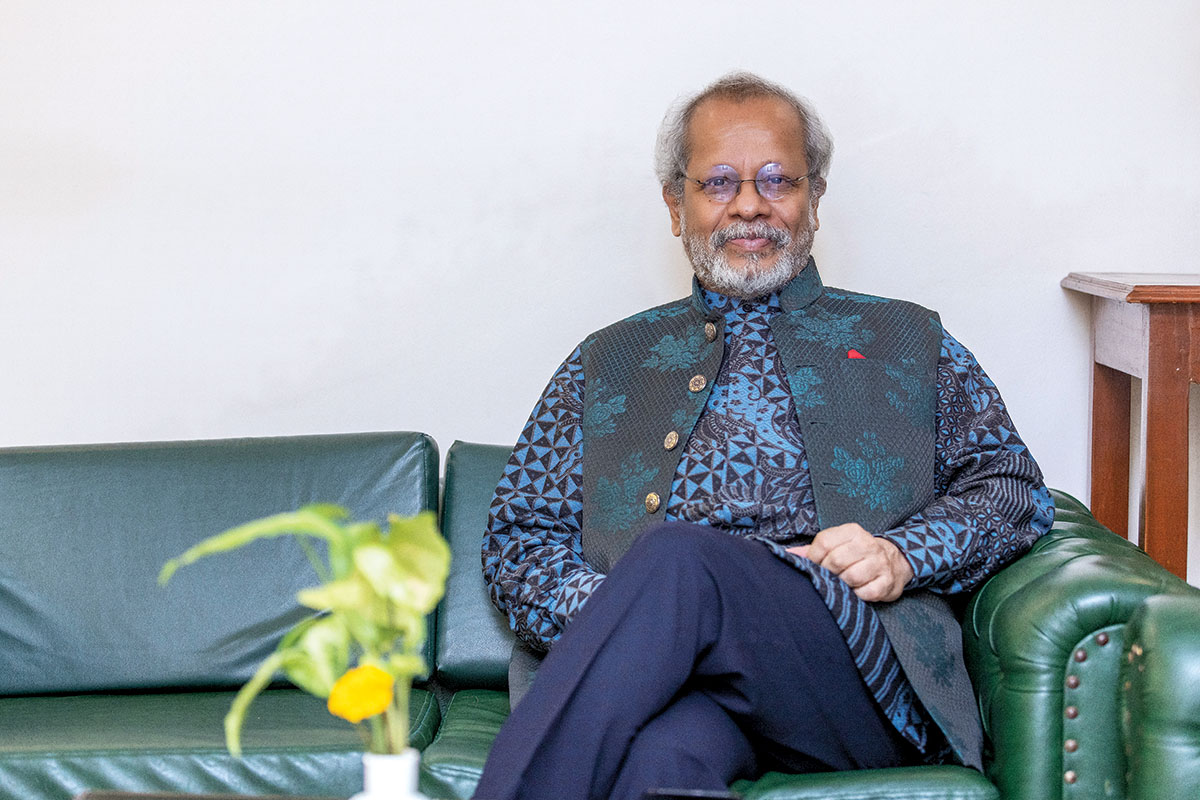
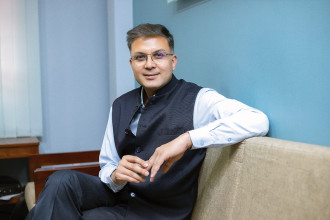
Prof Dr Imtiaz Ahmed
Dean, Masters in International Affairs, Economy & Diplomacy
Asian Institute of Diplomacy and International Affairs and Kathmandu University
The Asian Institute of Diplomacy and International Affairs (AIDIA) has officially appointed Professor Dr Imtiaz Ahmed as the Dean of its Master in International Affairs, Economy and Diplomacy (MIAED) graduate programme. Delivered in academic partnership with Kathmandu University, the two-year interdisciplinary programme represents a significant institutional shift for AIDIA as it transitions from a policy think tank into an institution offering applied higher education.
A prominent scholar in International Relations and former Professor at the University of Dhaka, Prof Dr Ahmed brings extensive academic leadership to the MIAED programme. His appointment aims to strengthen the programme’s core pillars, decolonising international relations, multipolarity, Asian futures and artificial intelligence in digital diplomacy, while offering an updated framework tailored for both seasoned practitioners and emerging policy professionals.
As Dean, Prof Dr Ahmed will oversee curriculum development, build cross-border academic partnerships and guide students in connecting theoretical statecraft with real-world foreign policy challenges. Discussing the strategic vision behind the curriculum, regional economic dynamics, and Nepal’s evolving role on the global stage, in a conversation with Business 360, Prof Dr Ahmed shares key insights. Excerpts:
AIDIA has launched the Master in International Affairs, Economy and Diplomacy (MIAED) programme in academic partnership with Kathmandu University. Given that MIAED integrates traditional diplomacy with international political economy and emerging global challenges, how does the curriculum specifically bridge high-level policy theory with hands-on practice to prepare students for fast-evolving regional dynamics?
The design of AIDIA’s Master in International Affairs, Economy and Diplomacy (MIAED) programme, in partnership with Kathmandu University, is built to bridge abstract geopolitical theory and practical statecraft through four foundational pillars, which are decolonising international relations, multipolarity, Asian futures, and artificial intelligence.
These four components address the specific capabilities required to operate in today’s diplomatic landscape. Traditional international relations curricula often focus heavily on historical Western statecraft, leaving a gap when applied to modern multipolar dynamics. By grounding the core coursework in these four areas, the programme ensures that academic theory directly informs applied skills. Understanding multipolarity and Asian futures gives students the context needed to analyse trade flows, economic statecraft and regional security alignments. Concurrently, examining artificial intelligence prepares them for modern digital diplomacy, cyber governance and technology-driven negotiations.
Whether a graduate enters foreign service, an international organisation or the non-governmental sector, this structural framework transforms theoretical knowledge into actionable strategy. It equips candidates to evaluate complex regional dynamics, assess risk and execute diplomacy effectively on the global stage.
The programme targets a diverse cohort, ranging from foreign service officers and corporate leaders to journalists and mid-career professionals. How is the course structured to cater to both seasoned practitioners looking to upgrade their strategic skills and recent graduates seeking entry into international governance and corporate public affairs?
The cohort structure addresses a systemic gap in traditional international relations education. Most mid-career professionals, foreign service officers and corporate leaders currently operating in the field were trained under traditional, Western-centric academic frameworks. While they possess practical experience, many have not had formal exposure to the non-Western discourses that now drive global geopolitics.
This programme bridges that gap by offering a re-examination of global affairs focused on the rise, and historical re-emergence, of Asia. During the 18th century and earlier, Asian economies accounted for a major share of global output. In the 21st century, the region has returned to the centre of global trade and political power, led by major economies such as China and India, alongside dynamic technological and economic centres like South Korea, Japan and Singapore.
For seasoned practitioners, the curriculum provides an opportunity to update their analytical toolkits, contextualise their ongoing work within non-Western geopolitical frameworks and understand the shifting architecture of global governance. For recent graduates, it delivers a comprehensive foundation in statecraft, public policy and international political economy.
By bringing these two demographics together into a single cohort, the programme creates an environment where entry-level scholars gain insight from real-world practitioner experience, while mid-career professionals engage with contemporary academic research and emerging strategic models.
The programme highlights decolonising international relations and placing Asian ideas and experiences at the centre of global affairs. What does this mean in practical terms and how can countries like Nepal contribute to shaping rather than simply responding to the global agenda?
Decolonising international relations addresses the persistent intellectual frameworks that remained long after physical colonialism ended in the mid-20th century. While political independence was achieved across much of the world, global higher education, economic models and diplomatic studies continued to rely almost exclusively on Western paradigms. As a result, centuries of rich diplomatic, strategic and civilisational traditions across South Asia, China, Korea and Southeast Asia were largely excluded from mainstream international relations theory.
In practical terms, decolonising the discipline does not mean rejecting Western concepts or discarding established international law. Rather, it means bringing non-Western civilisational history, economic philosophies and governance traditions to an equal level of academic and practical consideration. Understanding the future of global affairs requires a thorough understanding of Asia’s historical frameworks, as Western analytical models alone cannot fully explain the region’s current economic and political trajectories.
For a nation like Nepal, this perspective offers a pathway toward greater strategic agency. When foreign policy relies entirely on imported theories, smaller nations often view themselves strictly as passive actors navigating power competition between larger states. By reframing international relations through a regional and civilisational lens, scholars and policymakers can draw upon local context, historical diplomatic traditions and indigenous strategic thought. This enables researchers, diplomats and public sector leaders to develop independent policy positions, engage proactively on regional platforms and help shape global discussions rather than merely reacting to decisions made elsewhere.
Nepal has traditionally focused on maintaining balance in its relations with India, China and other major powers. In a rapidly changing multipolar world, how should Nepal redefine this balancing approach so that it can protect its national interests while also creating greater economic opportunities?
Nepal is in a uniquely advantageous position to navigate today’s shifting global dynamics, primarily because it was never colonised. Unlike many of its South Asian neighbours, such as India, Pakistan and Bangladesh, whose diplomatic traditions were deeply shaped by colonial administration, Nepal does not carry that historical hangover. China similarly shares a non-colonial trajectory. Positioned directly between these two massive civilisational entities, one historically non-colonised and the other moving beyond colonial legacies, Kathmandu offers a natural platform to lead discussions on decolonising international relations and contributing to global knowledge production.
At the same time, the transition toward a multipolar world is now inevitable. Middle powers and emerging nations, from Turkey, South Korea and Japan to Indonesia, India and Bangladesh, are actively asserting their strategic space. Given this reality, Nepal’s goal should not merely be passive balancing among traditional powers. Instead, Nepal must build the diplomatic sophistication needed to engage constructively with all poles of influence, allowing the country to extract the best opportunities from every partner while contributing meaningfully to regional stability.
Achieving this requires moving past legacy academic and policy frameworks to incorporate modern tools, such as artificial intelligence, advanced foreign policy analysis and geoeconomic strategy, to formulate proactive national policy directly out of Kathmandu.
Nepal is graduating from Least Developed Country status. What should economic diplomacy look like after graduation, particularly in terms of securing market access, attracting foreign investment and helping Nepali businesses compete internationally?
Economic diplomacy after LDC graduation requires shifting focus away from rigid external parameters, Western-defined developmental metrics and aid dependency, and refocusing on domestic capacity building. International economic metrics often mask core structural realities. True economic strength and international competitiveness do not come from fulfilling external checklists. They stem directly from empowering every citizen and building human capital across the board.
When economic policy prioritises broad-based empowerment like investing in human resource capabilities, fostering creativity and nurturing young talent, national competitiveness follows naturally. In Nepal, a dynamic new generation is emerging with the skills and ambition to drive economic activity. Post-graduation economic diplomacy must back this talent by focusing on market integration, cross-border trade readiness and structural support for local enterprises. If national economic strategies move away from serving narrow elite interests and focus instead on empowering the broader workforce and business community, Nepal will naturally attract foreign direct investment, secure sustainable market access and position its businesses to compete globally on equal terms.
You have worked extensively on South Asian politics and foreign policy. Why has South Asia remained one of the least economically integrated regions in the world, despite having strong historical, cultural and geographic connections? What can countries like Nepal do differently?
South Asia’s lack of economic integration is rooted in historical divisions and persistent domestic policy failures across the region. Colonisation left behind deep structural fractures, using religion to divide the subcontinent into competing states. Following independence, regional political elites repeatedly reinforced these divisions while failing to address fundamental social and economic needs, most notably basic education, human capital development and structural equity.
While neighbouring Asian regions prioritised universal education, achieving literacy rates over 95% in China and nearly 99% across the Korean Peninsula and Japan, South Asia lagged behind, with large segments of the population historically denied basic literacy and formal skills. Furthermore, institutional structures in many South Asian nations functioned primarily to reproduce elite power, driving top-tier talent and creative minds to migrate to Western nations rather than building regional capacity.
For Nepal and South Asia to change course, domestic governance must focus directly on human development, educational access and retaining local talent. As global economic weight shifts and traditional Western economies face structural slowdowns, regional nations have an opportunity to retain their skilled youth. Nepal can lead by establishing inclusive educational platforms, encouraging domestic innovation and building regional economic ties based on shared development goals rather than legacy political disputes.
Nepal has significant potential in hydropower, tourism, information technology and other sectors, but converting this potential into foreign investment has been difficult. What role should Nepal’s diplomats and missions abroad play in attracting serious, long-term investors?
The fundamental requirement for attracting serious, long-term foreign investment comes down to a single core condition: political and institutional stability. Investors naturally avoid volatile environments. In South Asia, long-term political continuity has historically proved challenging to maintain and frequent shifts send uncertain signals to global capital markets. Successful investment hubs, whether stable resource-rich economies or small, highly focused jurisdictions like Singapore, demonstrate that stability forms the prerequisite for economic transformation.
For a smaller nation like Nepal, building an attractive investment destination does not depend on having a massive domestic market. Singapore, with a population of just six million, attracts more United States investment than several major Asian economies combined. That status was created intentionally through focused statecraft, high governance efficiency and strategic positioning.
As the saying goes, ‘if you have honey in your pot, bees will come’. Building that ‘honey’ requires establishing political stability, instituting strong merit-based governance and making systematic investments in human capital across every layer of society. Nepal’s diplomats and foreign missions must project this internal institutional credibility abroad, serving as active bridges that connect domestic capacity and regional efficiency to international investors.
You have studied the politics of development and foreign policy. From your experience, what is the biggest mistake developing countries make when trying to use diplomacy to advance their economic interests and what should Nepal avoid?
The single biggest mistake developing countries make in economic diplomacy is operating under a colonised mindset and uncritically adopting Western institutional models. Many post-colonial nations attempted to advance their national interests by directly copying external governance frameworks, election systems and developmental theories that were designed for entirely different historical and social contexts.
True development requires institutional innovation tailored to local realities rather than reliance on imported concepts. When a nation operates entirely within inherited frameworks, its foreign policy and economic diplomacy become passive and reactive.
To avoid this trap, Nepal must focus on decolonising its strategic mindset. Changing how a nation views its own positioning enables its leadership, diplomats and scholars to build indigenous policies, create fit-for-purpose institutions and project economic diplomacy from a position of confidence and regional relevance.
Artificial intelligence is increasingly becoming an issue of economic power, national security and international diplomacy. For a country like Nepal, which has limited resources but a young and increasingly digital population, where should we focus our AI strategy to ensure that we are not left behind?
Technological shifts offer developing nations a distinct advantage, the ability to leapfrog traditional developmental stages. Much like China transitioned from a low-cost assembly hub into a global centre for technological innovation, countries with young, digitally active populations can leverage emerging technologies to bypass legacy industrial steps.
Artificial intelligence represents exactly this type of generational leap. Emerging technologies cannot be resisted. Historically, every major tool, from the written word to modern computing, faced initial institutional scepticism before becoming fundamental to human progress. Today, AI is already restructuring global trade, consumer behaviour and information flows.
Nepal’s AI strategy should focus on converting its growing pool of digital workers into domestic technology innovators. Much of the global AI ecosystem relies on data processing and digital labour supplied by workers across developing nations. With focused state support, merit-based skill development and forward-looking academic integration, Nepal can transition its digital workforce from back-end service providers into creators of proprietary AI tools and applications.
Mainstreaming AI literacy across higher education and diplomacy will allow Nepal to leverage its human capital, strengthen its digital economy and secure a competitive role in the global tech landscape.
If you were advising Nepal’s policymakers today, what are the three most important changes you would recommend to make our foreign policy more directly connected to jobs, investment, exports and economic growth?
Translating foreign policy into concrete domestic outcomes, such as job creation, foreign investment and trade expansion, requires a fundamental realignment of how statecraft is conducted.
First, Nepal must institutionalise professionalism and meritocracy across its foreign policy institutions. In a fast-evolving geopolitical environment, policymakers must present clear, transparent and principled positions on the international stage. Foreign policy should operate on a clear baseline: traditional allies are respected, state interests are communicated transparently and third-party rivalries are not imported into bilateral relations. Professionalism demands deep subject-matter expertise. As the historic adage goes, ‘knowledge is power’, a concept originating from the Persian poet Ferdowsi’s Shahnameh, which noted that knowledge brings renewal and capacity. To leverage knowledge effectively, diplomatic missions and foreign policy institutions must be staffed meritocratically, equipping negotiators with the research depth, analytical precision and technical capability required to secure high-value trade deals and investment commitments.
Second, the state must actively engage across all global power centres rather than remaining locked into traditional alignments. As global governance transitions toward multipolarity, economic strategy cannot depend solely on established Western powers or immediate neighbours. Significant economic momentum is emerging across new centres of influence, including Turkey, Brazil, Japan, dynamic Southeast Asian economies and emerging African markets. Connecting foreign policy to domestic growth requires engaging these emerging nodes across multiple dimensions like economic, commercial, cultural and intellectual. Diplomatic missions must move beyond routine political reporting and actively map out market opportunities, build bilateral trade corridors, understand regional business cultures and facilitate cross-border commercial partnerships across every major polar centre.
Third, policymakers must establish unwavering institutional and policy stability. Capital flows toward certainty. Investors and global trading partners require a predictable policy environment, consistent regulatory frameworks and clear strategic direction. Frequent policy shifts, internal institutional friction or hesitant official messaging directly undermine investor confidence and send mixed signals to international markets. Policymakers must project decisive leadership and complete institutional stability. When state agencies act with clarity, consistency and professional confidence, it reassures international partners, protects existing investments and creates a reliable foundation for long-term economic growth.