Aarong’s Model of Purpose, Craft and Commercial Success

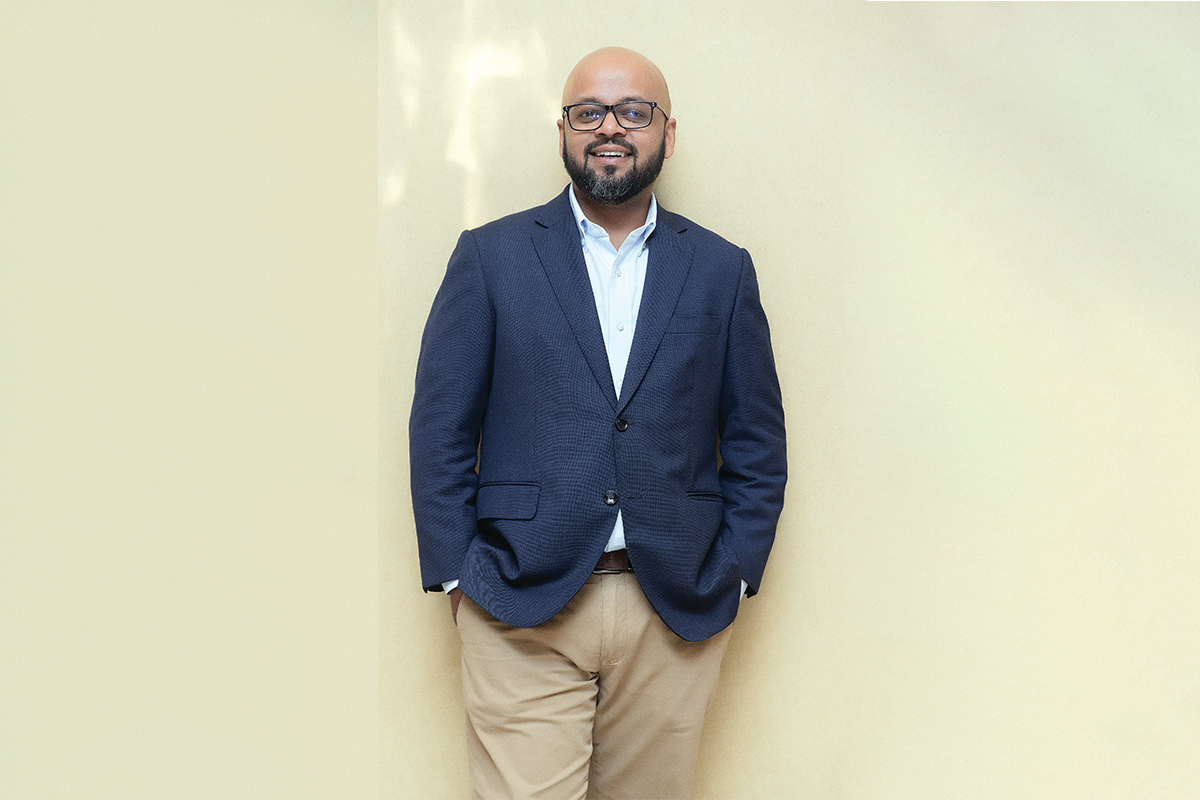
“We assume people actually care about who made their product and where it came from, which is a fair assumption but my challenge is: what percentage of consumers really care about that story versus caring about how the product looks, feels and performs? If you can offer both, great, that is a real advantage. But here is something about Aarong that is not really a secret. We started in 1978 under BRAC which today is the world’s largest NGO. But the shop itself was never called BRAC. We built a separate brand called Aarong because mixing the NGO identity with the brand identity tends to confuse the consumer”
Tanvir Hossain, Chief Business Officer, BRAC Aarong
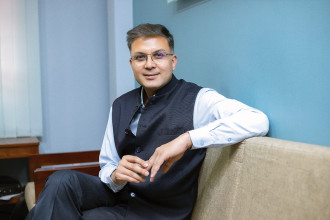
For Tanvir Hossain, business has always been about people before products. Long before he became Chief Business Officer of Aarong, Bangladesh’s iconic lifestyle brand and social enterprise under the BRAC network, he spent his days travelling to production centres across the country, assessing workplace safety, fair wages and the wellbeing of the artisans whose craftsmanship defines the brand. Those experiences continue to shape the philosophy with which he now leads one of South Asia’s most influential purpose-driven retail businesses.
Hossain oversees Aarong’s entire customer-facing ecosystem - from retail operations and digital commerce to marketing, merchandising, design and quality control - but his measure of success remains rooted in a deceptively simple question: Are the people creating these products building better lives because of the business? That principle has guided Aarong’s evolution into a model where commercial success and social impact are mutually reinforcing. Today, the enterprise supports thousands of artisans through healthcare initiatives, skills development, enterprise financing and education programmes, embedding dignity and economic opportunity into every stage of its value chain.
His leadership has also coincided with one of Aarong’s defining milestones. In the cultural heart of Dhaka, the company unveiled what is recognised as the world’s largest craft store, anchored by a five-storey hand-embroidered tapestry created by 200 artisans over six months. For Hossain, however, the global recognition was never the objective. Rather, it was an affirmation that craftsmanship, when elevated through thoughtful design, uncompromising quality and purposeful branding, can command a place on the global stage.
A frequent visitor to Nepal for more than 15 years, Hossain’s connection with the country extends beyond business. Whether trekking to Annapurna Base Camp or exploring its landscapes on two wheels, he has developed a lasting appreciation for the region’s culture, creativity and entrepreneurial spirit. In conversation with Business 360, he reflects on building purpose-led brands, scaling social enterprise without diluting commercial discipline, and why technology - including artificial intelligence - can become a powerful enabler for artisans and home-based entrepreneurs rather than a threat. Excerpts:
You have spent years working with BRAC Aarong, one of South Asia’s most successful social enterprises. What are the most important lessons from Aarong’s journey that organisations like SABAH Nepal can adapt to build stronger market access while staying true to their social mission?
I think staying true to the social mission means continuously working with the same communities and producer groups, and that is what Aarong has done since 1978. We have not suddenly shifted away from home-based or rural workers, especially women, just because it might have been easier or more profitable to do so. A fully for-profit enterprise might have made that shift in a heartbeat. Honestly, my role as chief business officer would look very different at another company. Someone with a background in social compliance is not the traditional pick for this seat. Normally you would put the retail person there, or someone from finance, not someone who spent years on compliance. That choice sends a message about what BRAC values. Artisans, communities, livelihoods, dignity always come first, before the revenue figures. Revenue matters but mostly as a signal that livelihoods are improving for the people we work with. On its own, the number does not mean much to us.
As for the most important lesson I have learned, it really depends on what kind of enterprise you are trying to build. There are broadly three models. You can be a pure producer, selling at trade fairs, local markets or straight from your production centre. You can be more export-oriented, with buyers coming to you with orders and you producing under their brand. Or you can be a design-led brand, where you design your own products from scratch, produce them and market them yourself.
Looking at where SABAH Nepal is right now, honestly it feels like a mix of all three. There is a storefront, so there is clearly an ambition to be design-led. At the same time, they are taking export orders and still selling through local markets and trade fairs. In the long run, though, my advice would be to commit to one model. If it is the design-led path, which is what a lot of small producers eventually want because it captures the most value for them instead of an intermediary, then the real work is building the brand. Building the design language, the quality and a marketing calendar that actually gets you there consistently.
What is already clear is the talent. The artisans are skilled and the capacity to produce is proven. What SABAH Nepal still needs to figure out is how strong their brand recognition really is and at what scale. Is this something for a small, close-knit audience, or does it need to go further than that? Running retail and marketing is expensive, so that has to be a deliberate choice. But you cannot sit at 50-50. If you want to be a brand, you have to commit to it fully.
Home-based workers remain one of the largest yet least visible segments of South Asia’s workforce. From your perspective, what are the biggest structural barriers preventing them from becoming fully integrated into regional and global value chains?
Home-based workers each have a certain type of craft or skill, and the first question is whether that aligns with what regional and global players actually need. Sometimes it does, sometimes it does not. From what I understand, big volume players like Zara, H&M or the Inditex group are not really working with craft in any meaningful way. They use a little, but even if this decentralised, home-based model was visible to them, they do not have the social motive to integrate it into their supply chain. It is too costly, and honestly, it is just not what they are trying to build.
For local players like us, where the value we create is really the whole point, our main goal has been to make this space as transparent and visible to ourselves as possible. We do not pay a middleman to find and manage home-based workers. We work with them directly, often through small centres run out of a worker’s own home. We pay rent for that space and the woman who leads it, usually a respected figure in her community, invites 10 or 15 others in. The space has to meet basic standards like proper lighting, a fan, a washroom, etc.
This keeps every worker visible to us. We distribute raw materials, collect finished goods, pay each person directly, and make sure no one is exploited along the way. I can tell you the name, address and phone number of all 25,000 home-based workers we work with. That visibility is why our health security system works and why we can pay everyone through mobile wallets, cashless, on the same day every month, based on pieces or hours worked. But honestly, this is a mission-led model. I am not sure mainstream supply chains will ever adopt it unless we push them to do so ourselves.
It looks like consumers today increasingly care about ethical sourcing, sustainability and the stories behind handmade products. How can organisations like SABAH Nepal better position their artisans and products to appeal to international buyers without losing authenticity?
Let me push back on that for a second. The question assumes people actually care about who made their product and where it came from, which is a fair assumption but my challenge is: what percentage of consumers really care about that story versus caring about how the product looks, feels and performs? If you can offer both, great, that is a real advantage. But here is something about Aarong that is not really a secret. We started in 1978 under BRAC, which today is the world’s largest NGO. But the shop itself was never called BRAC. We built a separate brand called Aarong, because mixing the NGO identity with the brand identity tends to confuse the consumer.
What we learned is that leaning too heavily on the story, someone toiling for hours in a remote village, only works if the quality and design are already there. Without that, the story alone will not carry the product far. It becomes a niche market and even that niche audience eventually tires of it. Aarong’s real success, and honestly its discipline, is that we never sell the story first. Our website looks like any other commercial brand like H&M and Zara, because we are competing in that same space. We never called ourselves niche. Aarong proved craft can be mainstream, at scale. So, feel, quality and looks matter more than the story behind, I feel.
The HomeNet South Asia Advisory Board brings together leaders from across the region. What are the most significant opportunities for cross-border collaboration among South Asian organisations, and where do you think we have made the greatest progress in recent years?
I think HomeNet South Asia is starting something valuable with this regional learning collaboration, and honestly, me being here today is a good example of that in action. Earlier, when we were part of BEES, another regional network, the objective was similar: how do we learn from each other across borders? In fact, the health insurance scheme I mentioned earlier was actually inspired by what was happening in India. There were a lot of micro-insurance activities there at one point, and we asked ourselves, how can we adapt something like this for our own context? The real objective was preventing health shocks for the poorest communities because a single catastrophic health event can wipe out savings, deplete land and assets, and push families into debt. We wanted to build a cushion against that, and it came directly from learning across the region.
That is exactly what HomeNet South Asia does well, bringing leaders together so we can learn and adapt from one another. Every country’s context is different, so it is never about copying a model exactly; it is about taking inspiration and shaping it to fit your own situation.
Long-term, I hope once our countries figure out the policy side of things, there is far more collaborative trade between us. There is no real reason the best of Nepal should not be available in Bangladesh, or the best of Bangladesh in Nepal. Beyond trade, there is also room to innovate together. Imagine using Pakistani embroidery techniques within Sri Lankan textiles, or bringing that pattern language into something entirely new. Given how large India is, we have naturally drawn a lot of craft inspiration from there too. So, I think HomeNet South Asia plays a genuinely important role in bringing all of this together.
Digital commerce has transformed the retail landscape across the world. How can home-based workers, many of whom have limited digital access, benefit from e-commerce, digital payments and AI-driven marketing without being left behind?
If you had asked me this question two years ago, before AI, I would have given you a different answer. I would have said digital commerce has not really been inclusive of home-based workers. There are simply too many barriers. But since AI came along, I think a lot of those barriers – not all but a lot – have started to ease. Before, even something as basic as creating content for a listing was genuinely difficult. Do you have Daraz here? Even something like that is challenging. You have to photograph the product properly, weigh it, understand the platform, know exactly how to list it correctly. That alone was a real barrier.
Now, it is not that the challenge has disappeared entirely but content creation has changed dramatically. I can take a picture of a simple glass and AI can make it look like it belongs on the moon. The whole game is shifting, though right now it is mostly the early adopters of AI who are benefiting the most. For people who are not digital natives, it will likely always be harder, and even with training, that support will probably only be effective for a certain segment. But for the newer generation of digital native home-based workers, and there are a lot of them, I think this genuinely changes the game. If they learn to use AI effectively, they can upgrade quickly in ways that were not possible before.
Training someone who is not digital native is extremely difficult, and honestly, it can feel unfair in some ways. What I am really saying is that a home-based worker can build their own brand today. If you are a craft person working from home, making one product really well, that should be your focus, and that is what you should market.
Learning AI and its tools is expensive, and that is exactly where grant funding and NGOs need to step in. That is their role in civil society to bridge that exact gap.
Many social enterprises struggle to strike the right balance between commercial sustainability and social impact. Based on your own experience, how should organisations measure success beyond revenue and sales figures?
This is a never-ending struggle, honestly. Social impact indicators evolve and you end up working with different metrics depending on the year. I have come to terms with the fact that this is okay. Your priorities can shift year to year. Maybe one year the focus is increasing wages by 10%. Another year it might be reaching entirely new groups. It is simply not realistic for an enterprise to gain traction on the same metric every single year and that is honestly what makes this work so challenging. Revenue figures might be climbing but other indicators might stay flat, or even dip, and it is easy to start wondering what you are doing wrong. In most cases, you are not necessarily doing anything wrong, unless you are abandoning your core principles, which is a completely different issue.
I would say social impact indicators can and should look different year to year. Some things you track consistently just for record-keeping but your main KPIs should be allowed to evolve. There is also, I do not want to call it a double standard exactly, but a certain unfair expectation placed on social enterprises by the market: this idea that your artisan numbers have to keep growing every single year. But how can they, when your market itself only grows so much? The people already working with you also need room to grow, to earn more, to become more productive. Holding that against a fixed growth number is not entirely fair.
Social impact can also be very targeted, broken into micro goals, this year improving one textile process for home-based workers in one specific region and that focus does not have to repeat the next year. Revenue is straightforward; it either grows or it does not. Social impact, from what I have seen, is never that simple.
Looking ahead five to 10 years, what could be the vision driving home-based workers and organisations like HSNA? What would success look like for the millions of home-based workers the network represents, and what role do governments, businesses and consumers each have to play in achieving that vision?
I am an outsider in a way. We work with home-based workers, so I understand the space, but I am still an outsider to this particular organisation. That said, I think HomeNet South Asia has done something remarkable. Ten years ago, people did not even know what a home-based worker was; it was not really seen as a category; your neighbour might have been doing it, and you just took it for granted. Illuminating this space has allowed different players to engage with home-based workers, and given these workers a platform to speak for themselves. The goal is a fair playing field, a fair marketplace. When these workers were invisible, exploitation was likely higher. Nobody is saying that has disappeared but at least it is visible now and organisations like HomeNet South Asia are working on reducing it, giving voice to millions of workers, and tapping into their real collective potential.
That collective power is often missed when you look at these women individually. But together, they become a massive voice, a real constituency that civil society and governments have to pay attention to. So, success looks like recognition and that recognition opens access to finance, to government services, to infrastructure, and to public spending actually reaching these communities.
For consumers, it comes down to conscious purchasing, though that is a long-term shift. On government, honestly, I am not sure what protections exist. In Bangladesh, there is almost nothing. No one holds us accountable; everything we do is on our own initiative. Home-based workers are not recognised as employees, so no law covers their rights. Rules exist for formal employees like you and me, but not for them. For businesses, the responsibility is making supply chains inclusive and self-regulating because a government inspector will visit a factory but never a home-based worker’s house.