'We are building an urban services ecosystem, not just a ride app'

-1792149354.jpg)
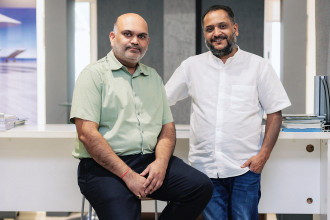
Santosh Pandey
Country Manager, Yango in Nepal
Santosh Pandey is an award-winning entrepreneur and business leader who currently serves as the Country Manager, Yango in Nepal, leading overall operations, market expansion and growth strategy for the company. Recognised on the Forbes 30 Under 30 Asia list for Retail & eCommerce, he has established a strong background in e-commerce, retail and tech platforms, having previously co-founded successful ventures such as Offering Happiness and Oho Cake. Beyond his corporate role, he serves as an Executive Committee member of Nepalese Young Entrepreneurs’ Forum (NYEF) Kathmandu Chapter and lectures at Tribhuvan University and Kathmandu University.
Yango entered Nepal at a time when the ride-hailing market was already competitive, aiming not just to offer another transportation option but to leverage global technology to solve everyday urban challenges. Starting with mobility, the company studied local commuting habits and customer expectations to adapt its technology to the local market. Recognising the rapid growth of Nepal’s digital economy, highlighted by a surge in digital payments and mobile-wallet adoption, Yango began evolving into a broader digital ecosystem that integrates food, delivery and mobility services through a single platform.
To achieve this, Yango operates on a partner model designed to create technology-enabled opportunities for local entrepreneurs, fleet owners and restaurants without requiring them to build their own digital infrastructure. Individual drivers and couriers access orders through these local transportation and delivery partners. Alongside scaling its SuperApp capabilities, the platform prioritises safety through multi-layered tools, algorithm-driven dynamic pricing and expanding electric vehicle adoption in Nepal. Additionally, Yango’s logistics and transportation network has proven adaptable beyond daily commercial operations, actively supporting emergency relief efforts during natural disasters. In a conversation with Business 360, Pandey shares key insights into Yango’s strategic vision, its business model and its role in transforming urban mobility across Nepal. Excerpts:
Yango entered Nepal at a time when the ride-hailing market was already quite competitive. What was Yango’s initial strategy for entering Nepal and how has the business evolved since its launch?
When we entered Nepal, our objective was not simply to add another ride-hailing option to an already competitive market. Yango is fundamentally a technology company and our approach has always been to use technology to solve everyday challenges and make urban services more accessible, efficient and convenient.
In Nepal, that starts with mobility, but it does not end there. We began by understanding local commuting habits, customer expectations and the needs of the businesses and people participating in the mobility ecosystem. As we learned more about the market, we began expanding from mobility into food and delivery, with the ambition of bringing these services together through a single digital ecosystem. This is reflected through the Yango SuperApp, which connects mobility, food and delivery as one ecosystem of urban services.
This direction also reflects the way Nepal’s digital economy is developing. According to Nepal Rastra Bank, QR-based payment transactions increased by more than 117% in Fiscal Year 2023/24, while the country had 23.46 million mobile-wallet users by mid-July 2024.
For us, this creates an opportunity to take global technology and adapt it to local needs – building services that become useful in people’s everyday lives.
Yango has talked about building more than just a ride-hailing platform in Nepal. What does Yango’s broader business model look like today and which areas do you see becoming the biggest part of the business in the coming years?
We don’t look at Yango simply as a ride-hailing company. We are a technology company building an ecosystem of urban services.
Mobility is at the centre of that ecosystem but the opportunity is much broader. Through the Yango SuperApp, we can connect people with rides, food, delivery and other everyday services through one platform. At the same time, businesses and entrepreneurs can use the same technology infrastructure to reach customers and participate in the digital economy.
The important part is that these services are connected. The same technology infrastructure, customer base and operational capabilities can support multiple use cases. Technology inside our service uses algorithms to optimise processes such as matching supply and demand, routing and service delivery, helping make urban services more efficient. This is consistent with the broader way Yango implements technology globally.
We bring global technology capabilities to local services, adapting them to how people move, order and do business in Nepal. As Nepal’s digital economy develops, we see significant potential to make sophisticated technology increasingly useful in everyday urban life.
What services are currently operational through Yango in Nepal? How much of your business today comes from ride-hailing compared with delivery and other mobility-related services?
Ride-hailing remains our core service in Nepal, alongside our growing food and delivery operations.
Through the Yango SuperApp, customers can access mobility as well as food and delivery services, while we continue to implement the wider ecosystem. Ride-hailing currently contributes the larger share of our business but delivery is an important growth area.
We see these services as complementary rather than isolated businesses. A customer who already uses Yango for mobility can also use the same platform for food or delivery. Similarly, a restaurant or other business can use Yango as a technology and customer-access platform.
That is the value of the SuperApp model: instead of creating separate technology experiences for every urban need, we can build an integrated ecosystem where different services work together.
Yango has positioned itself as a platform that creates opportunities not only for drivers but also for local entrepreneurs and fleet owners. How does the partner model work in Nepal and what kind of economic opportunity is it creating for these businesses?
Our partner model is designed to give local entrepreneurs access to technology and market infrastructure without requiring them to build that infrastructure themselves.
A local transportation partner can invest in vehicles, build a fleet and manage multiple drivers through the Yango platform. Yango provides the technology, customer access and platform infrastructure, while the transportation partner manages the operational side of their business.
Importantly, the ecosystem extends beyond transportation. Restaurants and other businesses can work directly with Yango to reach customers through the SuperApp. They do not necessarily need to build their own technology platform or customer-facing digital infrastructure.
This creates different entry points into the digital economy. An entrepreneur can build a fleet-based mobility business, a restaurant can use the platform to reach new customers, while individual drivers and couriers can use the services provided through our transportation and delivery partners to access orders and earn through their work.
So, we see the partner model not simply as a way of operating a ride-hailing service but as a way of creating technology-enabled opportunities for local businesses and entrepreneurs.
The objective is to maintain a healthy ecosystem where the service remains accessible to passengers while participation remains economically viable for drivers and transportation partners.
Safety is one of the most important concerns in Nepal’s ride-hailing industry. Yango has introduced driver verification, SOS, route sharing, trusted contacts and ride insurance. How effective have these measures been in practice and what additional safety measures are you planning?
Safety is a continuous priority for us and we approach it through a combination of technology, operational processes and awareness.
Our local transportation partners verify the drivers and vehicles operating through the platform, as well as their respective documents. Yango then provides additional technology-based safety tools, including an SOS emergency button that connects passengers with our emergency services team, route sharing, trusted contacts, in-ride insurance and 24/7 chat support.
Technology allows us to build safety into different stages of the journey rather than treating it as a single feature. We can use information and operational feedback to understand where improvements are needed and continuously refine the experience.
This is also where technology can make a meaningful difference to urban mobility. As the sector becomes more digital, we can use the capabilities of the platform to improve not only convenience and efficiency, but also trust and safety.
We will continue investing in technology, training and awareness initiatives as the market develops.
-1792149355.jpg)
How do you monitor driver behaviour and respond to issues such as reckless driving, cancellations, passenger complaints or other safety violations? What happens when a driver repeatedly fails to meet Yango’s service standards?
We have processes to monitor service quality and review passenger feedback, complaints and other operational indicators.
Where an issue is identified, the response depends on its nature and severity. This can include guidance, additional training or other corrective measures. Repeated or serious violations can result in restrictions or removal from the service.
Technology helps us monitor the quality of the service at scale but the objective remains straightforward: passengers should receive a reliable and safe service, while drivers and transportation partners should operate within clear and transparent standards.
Maintaining those standards is important for the entire ecosystem. A strong platform depends on trust between customers, drivers, transportation partners and Yango.
Delivery appears to be an increasingly important part of Yango’s Nepal operations. What delivery services are currently available, particularly in food, grocery and cargo, and how do you see the delivery business developing in Nepal?
Food delivery is one of the areas where we see significant potential for Yango in Nepal.
Nepal’s consumers are becoming increasingly comfortable with digital services. The growth of digital payments is a good indicator of this shift: Nepal Rastra Bank reported that QR-payment transaction volumes increased by 117% in FY2023/24, while e-wallet transactions also continued to grow strongly.
Through the Yango SuperApp, customers can discover restaurants, browse menus and order food through the same platform they use for mobility.
For restaurants, the opportunity is equally important. A restaurant can work directly with Yango to access customers through the platform without having to develop its own technology ecosystem or have their own fleet of couriers. Yango provides the digital platform and customer access, while the restaurant can focus on its food, service and business.
Beyond food, we are also developing courier and cargo-delivery services for individuals and businesses. This is a natural extension of our technology and logistics infrastructure. The same ecosystem that helps people move around a city can also help move food, parcels and other goods.
We therefore see delivery not simply as another category on the app but as part of a broader urban-services ecosystem. As digital adoption grows in Nepal, we expect customers and businesses to increasingly look for convenient, technology-enabled ways to meet these everyday needs.
Affordability has been an important part of Yango’s appeal in Nepal. How do you balance competitive fares for passengers with sustainable earnings for drivers and fleet partners, particularly as fuel, vehicle maintenance and other operating costs rise?
Yango is a technology-driven platform, so pricing is also technology-driven. Fares are not manually set by us on a trip-by-trip basis. Our algorithms take into account factors such as demand, supply and prevailing market conditions to determine the fare.
This allows the platform to respond dynamically to what is happening in the market and helps match available transportation with customer demand.
At the same time, we continuously monitor the costs and earning opportunities faced by drivers and our transportation partners. Beyond pricing, we also look at initiatives and partnerships that can help them manage operating costs and improve their earning opportunities.
The objective is to maintain a healthy ecosystem where the service remains accessible to passengers while participation remains economically viable for drivers and transportation partners.
The Nepali mobility market is gradually moving toward electric vehicles. What role do you see EVs playing in Yango’s future fleet in Nepal and are you working with local partners to accelerate EV adoption among drivers and fleet operators?
EVs are likely to play an increasingly important role in Nepal’s transportation sector and we are closely following how the market is developing.
Nepal has already seen strong interest in electric mobility but moving from adoption to scale requires the wider ecosystem to develop alongside the vehicles themselves. For drivers and fleet operators, factors such as purchase price, financing, charging infrastructure, battery range and operating economics all matter.
This is why collaboration is important. There is an opportunity for technology platforms such as Yango to work with vehicle manufacturers, financial institutions and other stakeholders to make EV adoption more accessible to transportation partners.
More broadly, we see technology playing an important role in making mobility more efficient and sustainable. As the EV ecosystem develops in Nepal, we want to understand how our platform can support that transition while ensuring that the economics work for the people actually operating these vehicles.
Following the devastating floods of August 26, Yango Nepal has used its delivery and transportation network to provide free transportation for relief supplies to affected communities in Rasuwa, Dhading and Nuwakot. What did Yango learn from this experience and do you see a longer-term role for your mobility network in disaster response and relief logistics in Nepal?
The flood response showed us that the infrastructure we build for everyday mobility and delivery can also serve an important purpose during emergencies.
Our teams were able to mobilise the cargo fleet in Yango Delivery to transport relief supplies to affected communities in Rasuwa, Dhading and Nuwakot. We worked with organisations including Hami Nepal, Astitwa Nepal and Crisis Connect Nepal, and the initiative helped humanitarian organisations deliver aid to more than 1,000 people, according to The Kathmandu Post.
What stood out to us was the ability to use an existing network of vehicles, drivers, technology and operational teams and mobilise it quickly when communities needed support. During a disaster, the challenge is often not only collecting supplies but moving them efficiently from collection points to the communities that need them.
We believe mobility and logistics platforms can play a meaningful supporting role in disaster response, particularly in transportation and last-mile delivery. Going forward, we would be open to working with local authorities, humanitarian organisations and other stakeholders where our technology and network can help move essential supplies during emergencies.
For us, it was a practical example of how technology built for everyday urban services can have a broader role in society when circumstances require it.
Yango operates on a partner model, enabling local Nepali citizens to become entrepreneurs by investing in the business. How does that work and what benefits do local partners get with Yango’s operations in the country?
There are several ways to participate in the Yango platform.
Local transportation partners can invest in vehicles, build fleets and manage multiple drivers. Yango provides the technology and platform infrastructure, while they focus on managing their vehicles, drivers and operations.
Individual drivers and couriers register through our transportation and delivery partners, using the platform to access ride and delivery orders and earn through their work.
Businesses such as restaurants can partner directly with Yango to reach customers through the SuperApp, without needing their own fleet or technology infrastructure.
So, an entrepreneur can build a fleet-based mobility business, a restaurant can reach customers digitally and individuals can earn through driving or delivery, each entering the digital economy at a different level.