Agreement on two-way Bhairahawa air route raises hopes for tourism, economy in Lumbini

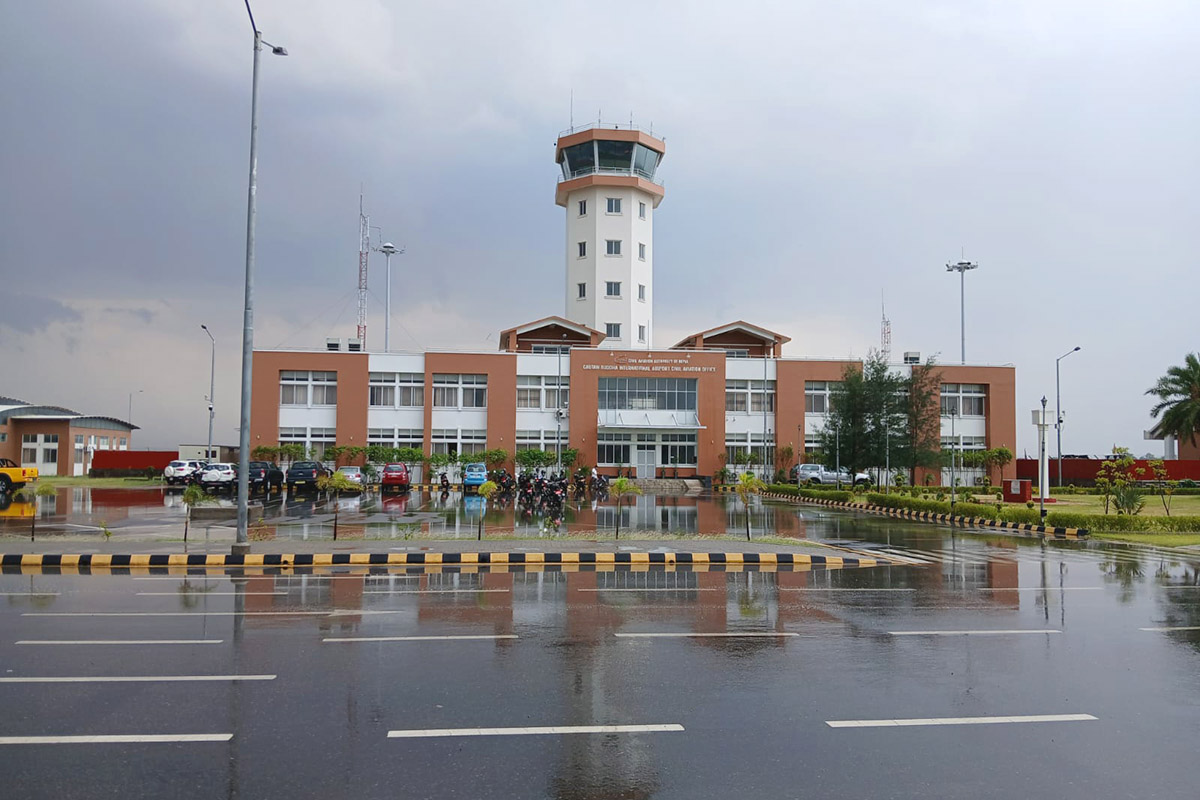
RUPANDEHI: Nepal and India's agreement to operate the Bhairahawa air route on a two-way basis has raised hopes for increased international flights from Gautam Buddha International Airport (GBIA). The development is also expected to boost tourism and economic activity in Rupandehi and across Lumbini Province.
The agreement, reached during Prime Minister Balendra Shah's state visit to India on November 22-23, is being viewed as an important step towards the fuller utilisation of GBIA, promotion of international tourism in Lumbini and expansion of economic activities in border areas.
According to the bilateral agreement between Prime Minister Shah and Indian Prime Minister Narendra Modi, the currently one-way Kathmandu-Bhairahawa-Lucknow air route will be made two-way. Previously, India had not allowed aircraft to enter Bhairahawa from the Indian side using the route.
The joint statement issued at the conclusion of the visit said technical officials from both countries would hold further consultations to finalise the necessary operational procedures and modality.
The agreement is expected to facilitate the arrival and departure of international flights at GBIA. For Nepal, which has been raising the issue of international air access for more than a decade, the development is being viewed as an important step towards expanding air connectivity.
Despite the construction and operation of GBIA, the expected number of international flights has not materialised, limiting the utilisation of investment, infrastructure and business opportunities. The new agreement has increased prospects for developing the airport as a hub for regular international flights.
Netra Prasad Acharya, president of the Siddhartha Chamber of Commerce and Industry, Rupandehi, said the air-route agreement reached during PM Shah's India visit was an important achievement for Nepal's tourism development.
He said air connectivity was the foundation of tourism development and welcomed the creation of an environment for easier air travel from India to Bhairahawa.
According to Acharya, local industrialists, business operators, tourism entrepreneurs and the public had expected an expansion of international flights after GBIA came into operation. However, insufficient air connectivity and the availability of only a one-way route prevented the airport from operating at the expected level.
He said making the route two-way would help increase the airport's utilisation, attract foreign tourists and improve returns on private-sector investment.
Stakeholders believe the operation of the two-way air route at GBIA will benefit not only tourism but also industry, trade, hotels, agriculture, construction, transport and other service sectors.
An increase in foreign tourist arrivals is expected to create employment in hotels and resorts while boosting demand for local products, handicrafts, food items and related services.
They also said smoother international flight operations to and from GBIA would help promote international conferences, Buddhist studies programmes, meditation and yoga camps, and religious tourism programmes with international participation.
Stakeholders further noted the potential to bring visitors from countries with large Buddhist populations, including Sri Lanka, Thailand, Myanmar, Vietnam, China, Japan and South Korea, to Lumbini through India's major airports and religious destinations.
They said coordination among international airlines, tourism operators and relevant authorities in both countries would be necessary to turn that potential into reality.
Sagar Adhikari, former president of the Nepal Association of Tour and Travel Agents (NATTA), said expanding air links between Bhairahawa and various tourist and religious destinations in India could bring significant changes to Nepal's tourism sector.
He said tourism development required not only airport infrastructure but also convenient air travel and international connectivity. He stressed the need to accelerate efforts to start flights from Bhairahawa to destinations in India.
According to Adhikari, convenient transport links with major religious and tourist cities in India are essential to increase tourist arrivals in Lumbini.
He said connecting destinations on India's Buddha Circuit with Lumbini through a single tourism package could encourage visitors to stay longer, benefiting hotels, travel businesses, transport operators, restaurants and other tourism-related enterprises.
Tourism entrepreneurs say the Lumbini region can be connected with Buddhist and religious destinations in India, including Lucknow, Varanasi, Sarnath, Kushinagar and Shravasti in Uttar Pradesh, as well as Bodh Gaya, Nalanda and Vaishali in Bihar.
Suraj Ghimire, a lecturer at Lumbini Buddhist University, said Lumbini, the birthplace of Gautam Buddha, is not only a pilgrimage destination for Buddhists but also an important centre for promoting peace, non-violence, positive thinking, meditation and human welfare.
He said millions of people around the world are interested in visiting places associated with Buddha's life and philosophy, and that improved air connectivity from India would make travel to Lumbini more convenient.
According to Ghimire, the Buddhist tourism route linking Lumbini, Bodh Gaya, Sarnath and Kushinagar is among the world's most important Buddhist religious and cultural tourism circuits.
He said linking Lumbini with Tilaurakot, Devdaha and Ramgram could support the development of longer tour packages for visitors interested in Buddhist philosophy, history and civilisation.
Under Nepal's Buddha Circuit, important destinations include Lumbini, Tilaurakot, Devdaha and Ramgram. Attractions in Lumbini include the Mayadevi Temple, the Ashoka Pillar, the sacred Pushkarini pond, the international monastery area and monasteries and viharas representing Buddhist traditions from different countries.