Leadership as a Process: Inside Dr Manoj Kumar KC’s Philosophy of Modern Policing

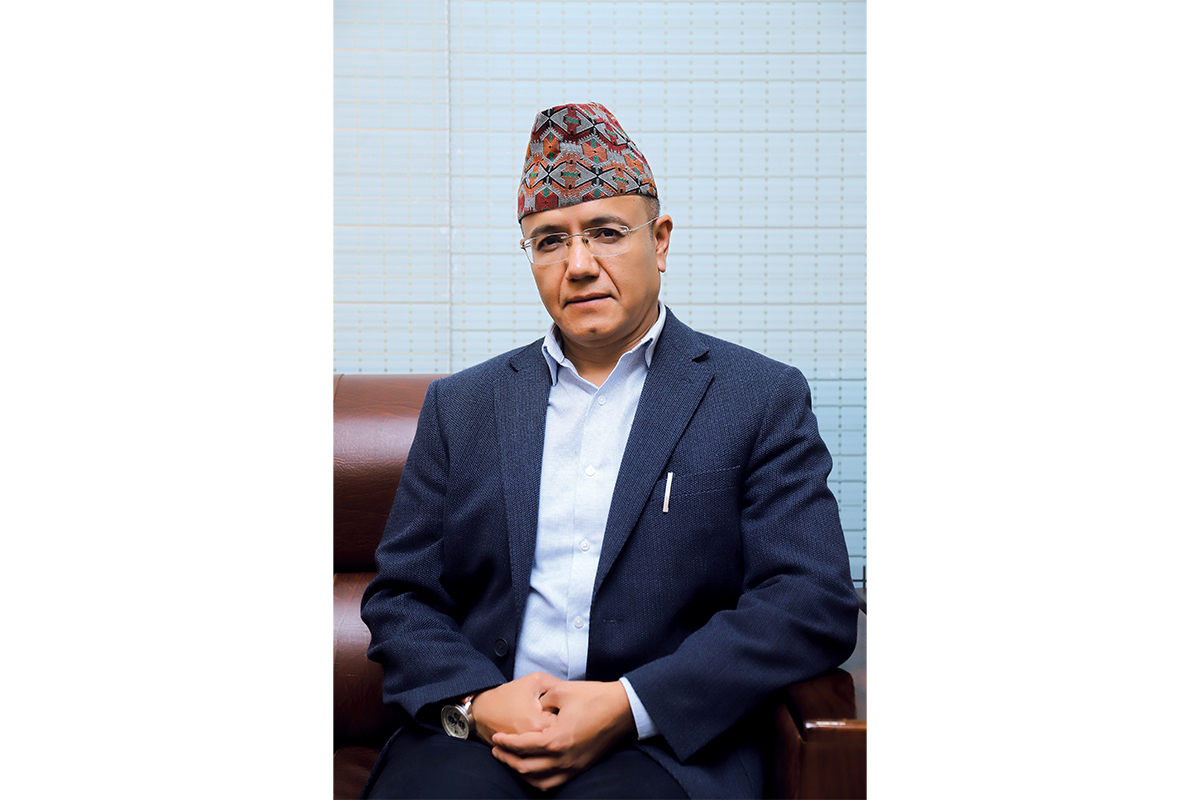
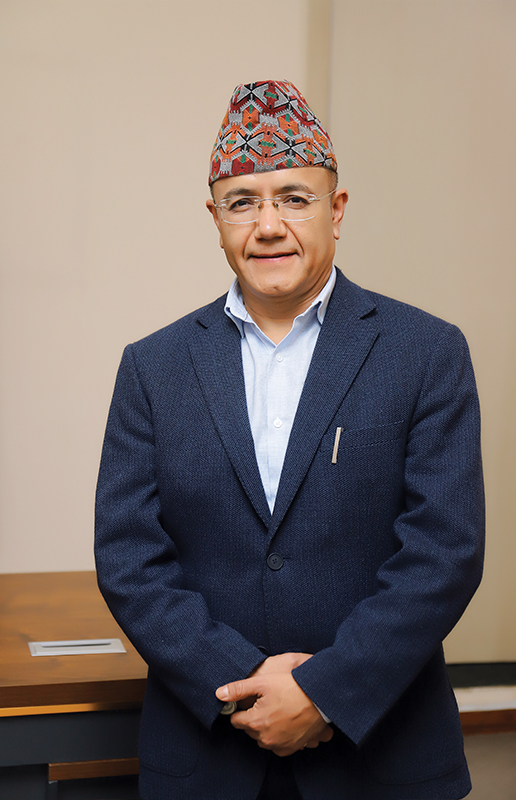
Dr Manoj Kumar KC
Additional Inspector General of Police & Bureau Chief, Central Investigation Bureau, Nepal Police
Leadership is one of the most observed yet least understood phenomena. I see leadership not as an attribute but as a process that strengthens our ability to understand and agree on what needs to be done
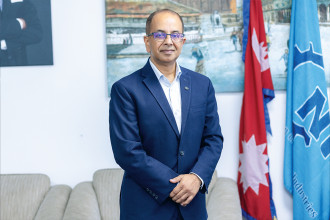
Dr Manoj Kumar KC, Additional Inspector General of Police and Bureau Chief of the Central Investigation Bureau of Nepal Police, views leadership as a process rather than a personal trait. For him, leadership is about helping people understand what needs to be done and moving together towards that goal. He believes leadership is shaped over time, learned through experience and social interaction, rather than something people are simply born with.
His understanding of leadership is grounded in years of challenging field experience. From managing high-risk situations like the violent land-seizure clash in Rupandehi to driving reforms in training, investigation and academic development within Nepal Police, he has seen how teamwork, clarity and calm decision-making shape effective outcomes. He also stresses that leaders must recognise when to pass on responsibilities, follow defined rules and build trust through accountability.
KC’s approach to policing combines service, empathy and discipline. He draws motivation from the gratitude of ordinary citizens and believes that integrity, fairness and zero tolerance for misconduct are non-negotiable.
As policing evolves toward data-driven methods and new technologies, he highlights the importance of adapting while protecting human rights, strengthening institutional culture and supporting officer well-being.
In this edition of Business 360, KC shares what makes a leader.
What is your definition of a leader?
Leadership is one of the most observed yet least understood phenomena. I see leadership not as an attribute but as a process that strengthens our ability to understand and agree on what needs to be done.
Is leadership ‘in-born’ or ‘acquired’?
I think this debate is largely settled now. Based on the big man and trait theory, the idea that ‘leaders are born’ dominated thinking until the early last century. Today, leadership is understood to develop over time through a complete social process. It is learned and acquired gradually.
Who comes to your mind as ‘an ideal leader’?
For me, many people who have changed their part of the world are ideal leaders. Nelson Mandela, who fought against apartheid and others who stood up and drove social change… all fall into this category.
Could you share any incident that tested your leadership ability?
When I was the district chief of police in Rupandehi, a major riot control situation emerged. More than a thousand landless people tried to forcibly occupy government land. A long operation was carried out and a deadly clash followed where four protestors died and dozens of people, including police personnel, were injured. I stayed calm and managed the situation. In moments like these, the weight of every decision becomes clear. A leader has to step forward, take responsibility and guide the team through uncertainty.
Staying steady when everything around you is volatile is not easy but that is often what defines real leadership. Despite the risks, I did what needed to be done. Medical attention was provided and I personally led the entire team in the field. Key arrests were made to prevent any further escalation. After that, there were no more protests or clashes. The illegal activity was brought to a complete stop.
How important is it to have a good team to work with?
Collaboration drives change in today’s world. Teamwork is the foundation. A successful leader brings people together and guides them in the right direction to achieve a shared objective.
When should leaders hand over the leadership position?
I do not value leadership solely because someone holds a top position. Leadership exists within the system, not only at the top. But if the issue is about changing positions, it should follow a clear set of rules and be based entirely on performance.
What do you consider your most significant accomplishment as a leader?
Accomplishment is something others should measure. If I have to speak for myself, I would say I can create momentum in the offices where I work by identifying gaps and bringing people together to move things forward. In almost all my tenure in different police offices, I have introduced significant improvements in police training, investigation and the establishment of a Master’s degree in Police Science at the Police Academy.
How can a leader prepare for the unknown?
We live in a complex world where unpredictability is common. A police leader, in particular, works in a high-risk environment and preparing for the unknown is a core skill. Police leaders must understand the dynamics of every environment they serve, including political processes. This helps us prepare for whatever comes our way.
You are recognized as a leading figure in Nepal Police known for your diligence. How do you stay motivated?
There are some fundamental ideals I never compromise on. Policing is about serving people which means treating everyone fairly. When I serve ordinary citizens, the gratitude on their faces and the dignity restored in their eyes give me purpose. This motivates me and lets me sleep peacefully every night.
Beyond an individual officer’s moral compass, what specific institutional mechanisms or procedural changes are most critical for a police leader to ensure a sustained culture of zero-tolerance for corruption and misconduct across the entire force?
Modern policing stands on two pillars. First, rules must prevail in every case and apply to everyone. Second, accountability must guide every action. A police officer, being an enforcer, must be a role model. Misconduct and corruption have no place in policing. A system-based approach with zero tolerance is the only way to embed this culture.
With increased public scrutiny, what is the single most important strategic shift the leadership of Nepal
Police must make to enhance its legitimacy and public trust with diverse community groups?
Today’s policing focuses on law and accountability. Public trust and confidence are the most important tools for police and determine the legitimacy of the institution.
What is the most significant internal resistance or cultural barrier you have faced when driving major organisational reforms within Nepal Police?
Police reflect society. Who we are outside and what we do in society shows up inside the police. The lack of a professional environment outside creates influence inside. Recognising performance through a careful, system-based appraisal process is the only solution. This is where real reform should be directed.
As policing models evolve globally, how is the Nepal Police leadership planning to strategically integrate data-driven policing and emerging technologies like AI or advanced analytics while ensuring the protection of citizen privacy and human rights?
Police leadership is a unique enterprise that requires specialised skills in an operational, political and cultural environment. Today’s policing is increasingly data-driven. Analytics has become central to policing, and AI is being used widely around the world. Nepal Police is now moving toward big-data policing. Crime databases and algorithms are already in use.