Responsibility begins, long before the title arrives: CAN Federation President Pandey

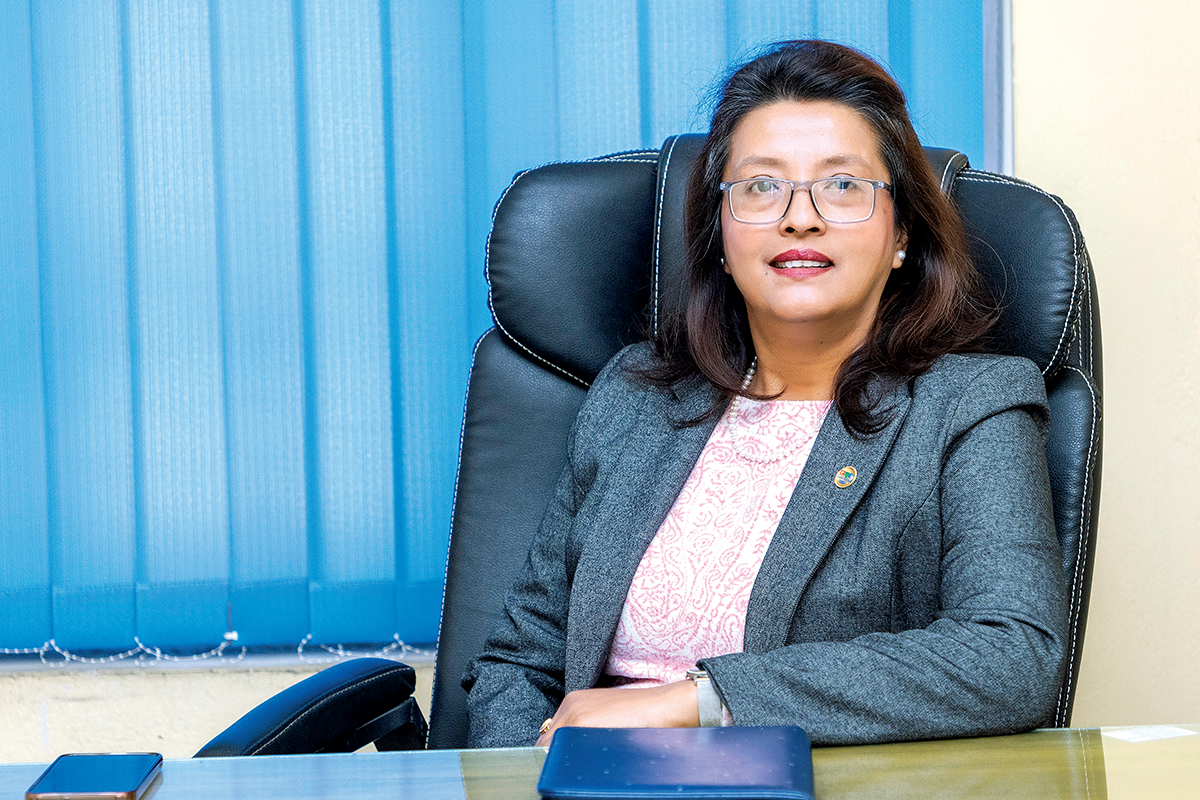
Sunaina Ghimire Pandey, President, CAN Federation
The moment you mentally commit to a role, responsibility begins, long before the title arrives. Privilege follows responsibility, not the other way around. Influence should always be understood as a duty, never as entitlement
Sunaina Ghimire Pandey is a trailblazer in Nepal’s information and communication technology sector. As a child, she often accompanied her father on morning walks, lingering afterward at a nearby tea stall where he and his friends exchanged ideas on everything from society to progress. Those early conversations - rooted in curiosity and a growth mindset - quietly shaped her own outlook, nurturing the achiever’s instinct she carries to this day. She describes herself as a lifelong learner and a go-getter.
Pandey made history as the first woman to lead the Federation of Computer Association Nepal (CAN Federation) as its president. With over 25 years of sustained contribution to technology development, leadership, and policy advocacy, her influence on Nepal’s digital landscape is profound. Her early technical work played a pivotal role in the localisation of Microsoft Windows XP and Office, the establishment of national standards for Nepali computing, and the expansion of digital access for millions.
Beyond her technical accomplishments, Pandey has built and led institutions, promoted digital entrepreneurship, and consistently championed women’s inclusion in ICT through policy reform, mentorship, and leadership development. Her contributions to Nepal’s digital transformation have been widely recognised.
In this edition of Business 360, Pandey shares her perspective on leadership.
What is leadership to you?
Leadership is about setting a clear goal and working toward it while bringing people together for a larger purpose. Along the way, there are moments of doubt—when you ask yourself, why am I doing this? and feel tempted to walk away. But leadership means understanding that effort, uncertainty, and setbacks are integral to the journey.
True growth begins with an honest struggle within oneself. Overcoming both inner conflicts and external challenges becomes the foundation of leadership.
Is leadership inborn or acquired?
Leadership is entirely acquired. If it were inborn, there would be no struggle, everything would be handed to us effortlessly from birth. But that is never the case. The first challenges often begin at home, navigating restrictions and expectations. Then come societal pressures and external obstacles. Facing these circumstances head-on is what shapes a leader.
Was there an incident that has truly tested your leadership?
In 2019, when I contested for the presidency of CAN Federation, I faced immense resistance. No woman had ever vied for or held the position before. Even my family worried about the stress and challenges I was under. Many people tried to discourage me, saying I was too young, unprepared or incapable, and advised me to try again after a few years. It often felt like an emotional attack.
Yet, there was also overwhelming support from those who wanted to see change. I remained determined because of my team’s belief in me. Although I did not win that election, I never felt defeated. I stood firm until the end, and that journey itself was a profound test and affirmation of my leadership.
As CAN president, have you made any unpopular decisions for long-term sectoral benefit?
After assuming the presidency, we initiated structured policy work through strategy planning meetings to define both short- and long-term goals for the sector. Many stakeholders - internal members, organisations, even government bodies - initially resisted participating, viewing it as an unnecessary burden. Resistance still exists. However, these meetings are essential for building sustainable strategies for Nepal’s IT sector. Sometimes leadership requires persisting with ideas that are not immediately popular but are necessary for long-term growth.
Which challenges in Nepal’s IT ecosystem do you feel personally accountable to address?
Earlier, policy barriers were the primary concern. Today, the biggest challenge is the shortage of skilled human resources. We are working on skill development by collaborating with the National Academy of Vocational Training (NAVT).
Equally critical is preparing our workforce for artificial intelligence. Globally, companies are replacing traditional developers with AI-skilled professionals. If we fail to equip our youth with AI capabilities, we risk losing global competitiveness and jobs. Addressing this is a top priority for me.
When should a leader hand over the baton?
In the IT sector, technology evolves daily. Timely leadership transition is essential. Unlike other sectors where experience and age dominate, IT thrives on new knowledge and adaptability. When experience complements the knowledge of the younger generation, that is the right moment to pass on leadership. My tenure is two years, and I fully intend to hand over responsibility at its conclusion.
How has being CAN President reshaped your view of power and influence?
In the IT sector, power and influence matter far less than strategic innovation. Technology always comes first; policies and regulations follow. Hotmail existed before policies. Pathao operated before regulations were formed. What drives success in IT is not authority, but strategy and innovation. I understood this early on, and my experience as president has only reinforced that belief.
When did you first realise people were listening to you as a leader?
During Microsoft’s Black Screen awareness campaign for Windows XP in 2008–09, we gathered around 5,000 people. The stage was completely dark when I walked in. I was terrified, so nervous I thought I might faint.
But in that darkness, I couldn’t see the audience; only my voice carried. When the lights came on, I focused on my words, not the crowd, and spoke with confidence. Even afterward, on my way home, I could hardly believe I had addressed such a large audience. That was the first time I truly felt heard.
If you were mentoring your younger self, what leadership advice would you give?
I would speak to her about maturity and restraint. I was once too aggressive and unguarded with my words. I would tell her that nothing is impossible.
When I was younger, I never imagined I could hold a position like this. I believed certain goals were simply unattainable. Today, I would tell my younger self: take the first step. Just begin. Stay optimistic. Build deep skills and knowledge in your chosen field.
How do you navigate rooms where politics, business interests and egos collide?
My instinct is neutrality. Remaining calm, balanced, and emotionally detached is essential. I step back, observe from a third-person perspective, and focus on the larger purpose rather than individual gain. That approach helps prevent escalation and fosters constructive outcomes.
What is the emotional toll of leadership, and which rewards go unspoken?
Leadership is emotionally exhausting. Your heart breaks repeatedly, your mind is constantly overworked, and physical fatigue becomes routine. Yet, you must continue. Many decisions cannot be made based on personal will. Collective decisions are often perceived as personal ones, even when they conflict with your own values. This silent burden of leadership is rarely acknowledged.
When does influence become responsibility rather than privilege?
The moment you mentally commit to a role, responsibility begins, long before the title arrives. Privilege follows responsibility, not the other way around. Influence should always be understood as a duty, never as entitlement.