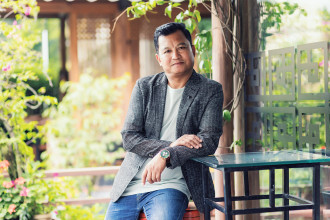
'Leadership is not about being liked'

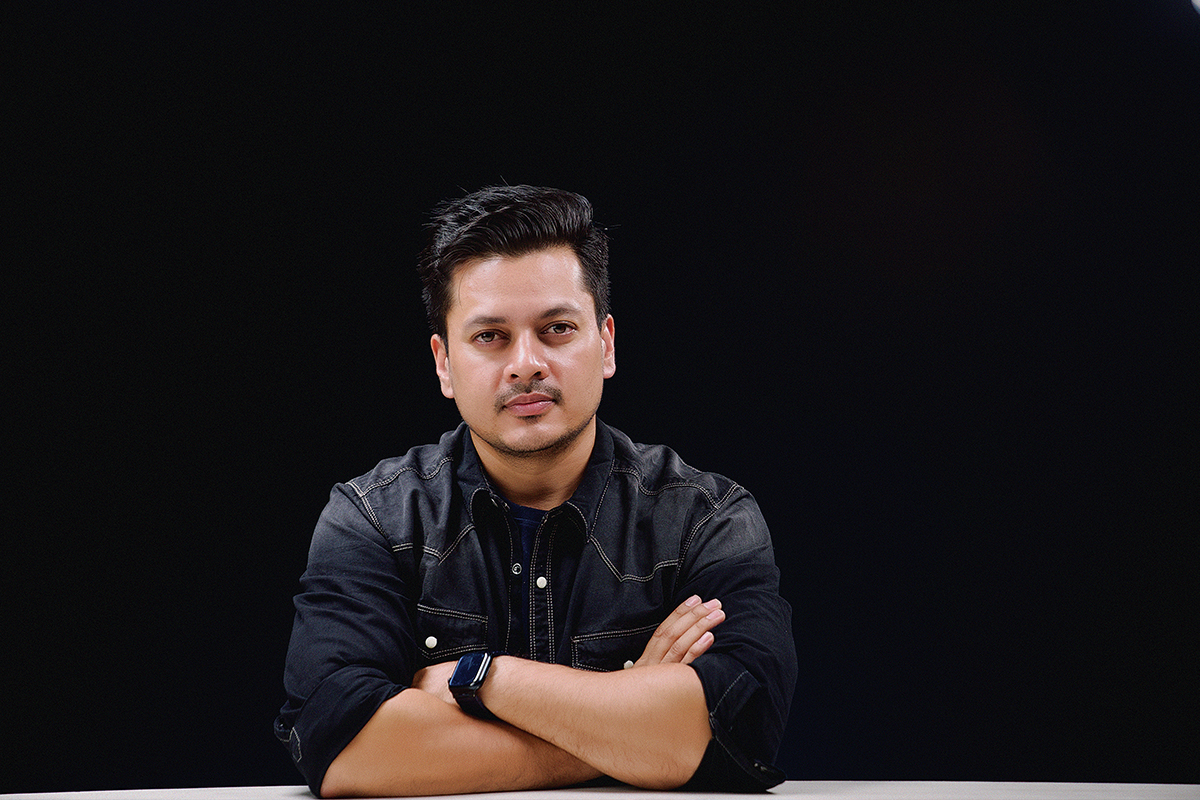
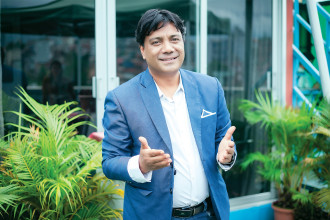
Sanjog Koirala, Founder, Ideapreneur Nepal
Sanjog Koirala is a popular tech enthusiast, actor and entrepreneur. He runs multiple food and beverage businesses with one of the most known being Chiya Adda. He started his career as a child actor, went on to study Chartered Accountancy, returned to the movies but eventually pivoted to blending his business acumen with his creativity especially seen in IdeaPreneur Nepal, a YouTube channel that promotes business content and financial literacy, a platform that has gained him wide recognition.
Today all of his ventures - Chiya Adda, Ideapreneur Nepal and Money Mitra are reflective of his own entrepreneurial growth and evolution in a business landscape that is changing quickly.
In this edition of Business 360, Koirala talks about leadership. Excerpts:
How do you define your personal leadership philosophy?
My personal leadership philosophy is centred on ‘Distributed Ownership’ and ‘Extreme Clarity’. I think a leader’s primary role is not to hold all the answers but to paint a clear, compelling picture of the future and then let the smartest people in the room own their piece of that vision without interfering. It is about building a system where the business can operate efficiently even if the leader steps away.
My ideal leader is someone who remains calm in chaos, listens deeply and empowers others without needing the spotlight. Someone like Satya Nadella stands out to me as he transformed Microsoft through humility and emotional intelligence without too much noise or being centric to certain specific people. When you think of Microsoft now, you think as a company, not just an effort of someone solo.
Is leadership ‘acquired’ or ‘inborn’?
It is a mix but I lean heavily towards ‘acquired’. You might be born with a distinctive advantage but true, effective leadership, especially in business, is a set of learned skills. This includes communication, decision making, conflict resolution, and, most importantly, the discipline of systems thinking and being a team player. You acquire it through consistent practice, failures, pressure and the willingness to evolve. In my view, leadership is far more learned than inherited.
Could you share an incident that tested your leadership ability?
Early in my journey, I faced a crisis when a key partner unexpectedly withdrew, leaving a massive funding gap and operational uncertainty. My team was understandably stressed. The test was not just finding a financial solution but also about maintaining morale. I gathered the team, shared the uncomfortable truth clearly, and that day I learned that leaders must take responsibility publicly and solve issues privately. It changed the way I communicate and the way I lead. We had to cut back significantly on non-core activities but by involving the team in the solution, we turned a crisis into a shared mission. It taught me that in tough times, courageous clarity is the best leadership tool.
What is the one uncomfortable truth about leadership that you wish more entrepreneurs understood?
Leadership is not about being liked. It is about doing what is right even when it is unpopular. Many new entrepreneurs mistake friendliness for leadership. But the reality is that the toughest decisions are often the loneliest ones. I wish more entrepreneurs would grasp that as they progress and scale, they will inevitably outgrow certain relationships. To move the company beyond its current position, they must be prepared to make uncomfortable decisions, even if those choices are not favoured by the founding members. Such decisions are often essential for the company’s future.
-1767600523.jpg)
How do you make tough decisions when data and intuition disagree?
Generally, I am more of an ‘intuition’ person, but over the years, I taught myself to use both as complementary tools. Data grounds you in facts while intuition guides you through uncertainty. Sometimes people mistake intuition for motivation as well. But when they clash it is easier to pick, if you are small and there is not much at stake then you follow intuition but if the stakes are high and your company is big then you ask yourself this question, “If this fails, can we afford the downside”, and if the answer is ‘YES’ then still follow intuition and if it is a ‘NO’, then follow data.
When should a leader hand over their leadership position?
A leader should step back when the growth of the organisation demands a skillset that someone else can provide better. Leadership is not about holding the seat; it is about ensuring the organisation thrives without being dependent on a single person’s ability. When ego becomes bigger than impact, it is time to hand over. Or even when the leader feels he wants more time for himself in personal life and has groomed someone to replace him gracefully.
If your leadership were a strategy game, what would your winning move be?
If my leadership were a strategy game, my winning move would be ‘The Resource Conversion Engine’. This involves consistently transforming the company’s least valuable resource, for a YouTube channel, the random comment section, into its most valuable asset by filtering them into topics, pain points and then using that data to build solutions, thus utilising deep customer insights or R&D for a 10X new product. And, obviously, identifying the right individuals who are not highly capable but are willing to learn at first, then placing them in suitable roles for them to grow, learn and establish themselves as a dominant personality in their specific role.
What is one belief about leadership you held for years but now realise was completely wrong?
I once believed that leaders must always have the answers and needed to be the most visible problem-solver. Now I know the opposite is true. A leader’s real strength is in asking better questions, encouraging curiosity and creating space for the team to find solutions independently.
When resources are limited, what financial principle guides your toughest leadership choices like cutting costs, reallocating budgets or doubling down on long-term investments?
Invest in what compounds, cut what comforts. So, invest in systems, technology but cut down on fancy office setups, expensive equipment and just have the basics. So, prioritise long-term value drivers and reduce expenses that create short-term convenience but no strategic impact.
How do you prevent short-term financial survival decisions from damaging your long-term leadership vision?
I rely on a simple filter:
• Does this decision align with our core values?
• Will it damage trust inside or outside the company?
• Will it slow us down in the next 1–3 years?
If the answer is ‘yes’ to any of these, I search for another path. Survival should never come at the cost of identity. Survival is necessary but if the survival strategy destroys the reason you are surviving in the first place, it is a self-defeating move. The vision acts as a non-negotiable anchor during tough times.
What advice would you like to give youths who aspire to become leaders?
Do not aspire to be a generalist leader right away. Instead, go deep and become world-class at one particular thing. This unique expertise gives you credibility, leverage and power. Once you have that, you can then focus on learning to connect, communicate and lead diverse teams. Build your value first, then lead with it.