Samriddhi Foundation hosts open dialogue on ‘March elections’ with governance expert Adhikari
-1766478585.jpeg)
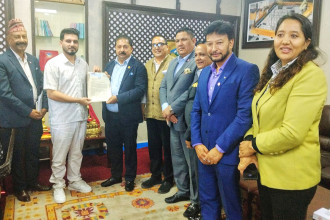
KATHMANDU: Samriddhi Foundation recently organised an open dialogue titled 'March elections: A Reality Check' as part of its monthly Sambaad @Samriddhi conversation, featuring governance expert Ramesh Kumar Adhikari and hosted by Akash Shrestha, director of the foundation.
Addressing the programme, Adhikari said influential political stakeholders were at different stages of readiness for the March elections, with some on the verge of changing their structure while others had yet to decide on leadership. “Although political parties show differing levels of readiness, key stakeholders, including parties at various points in their electoral preparation, have continued to propel the election process forward,” he observed.
Adhikari stated that lessons from other countries may not be easily transferable to Nepal. He mentioned that examples such as Ukraine holding elections within a month, and Tunisia as another case, are often cited, but applying those experiences to Nepal “would be like comparing Humla’s apples to Sunsari’s oranges, as the contexts are fundamentally different; although not impossible, it would be extremely difficult.”
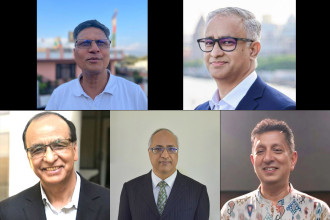
-1766478584.jpeg "March-elections,-Samriddhi-Foundation,-Sambaad-@Samriddhi-conversation-(3)-1766478584.jpeg")
-1766478585.jpeg "March-elections,-Samriddhi-Foundation,-Sambaad-@Samriddhi-conversation-(1)-1766478585.jpeg")
Governance expert Adhikari said that while most parties appeared prepared and eager to move forward, many had not finalised mandates and manifestos. “Some parties are still undergoing reform, while others have not even finished their AGM, and a few haven’t even started party expansion,” he said.
He highlighted improvements since the 2015 elections, saying Nepal had achieved important milestones in voter turnout, participation and the overall quality of the electoral process, indicating steady improvement over time.
On timing and turnout, Adhikari said elections in Nepal were often treated like a festival but were driven by political agendas rather than purely technical considerations, and that the proposed timing raised concerns when compared with international practices such as Bhutan’s June–July elections. “While overall public participation is unlikely to decline, the Far West of Nepal is likely to be affected, as many migrant workers return from India only toward the end of Chaitra, which could impact turnout in that region,” he stated.
The expert expressed particular concern about the Election Commission’s incomplete composition, warning that holding elections under an acting chief could create serious problems, noting that Nepal’s electoral history shows no election has been conducted under an acting chief. He also said the 75‑day timeframe was extremely short and that there had been neither sufficient discussion nor formal communication from the Election Commission on the matter. Ballot boxes, he added, remained a neglected issue.
Adhikari said elections could be held differently at different levels but reiterated his concern about protecting ballot boxes if Nepal holds elections on multiple tiers.