Historic Conservation Effort: Rajapur and Tikapur Unveil Nepal’s First Fish Sanctuary in Lower Karnali

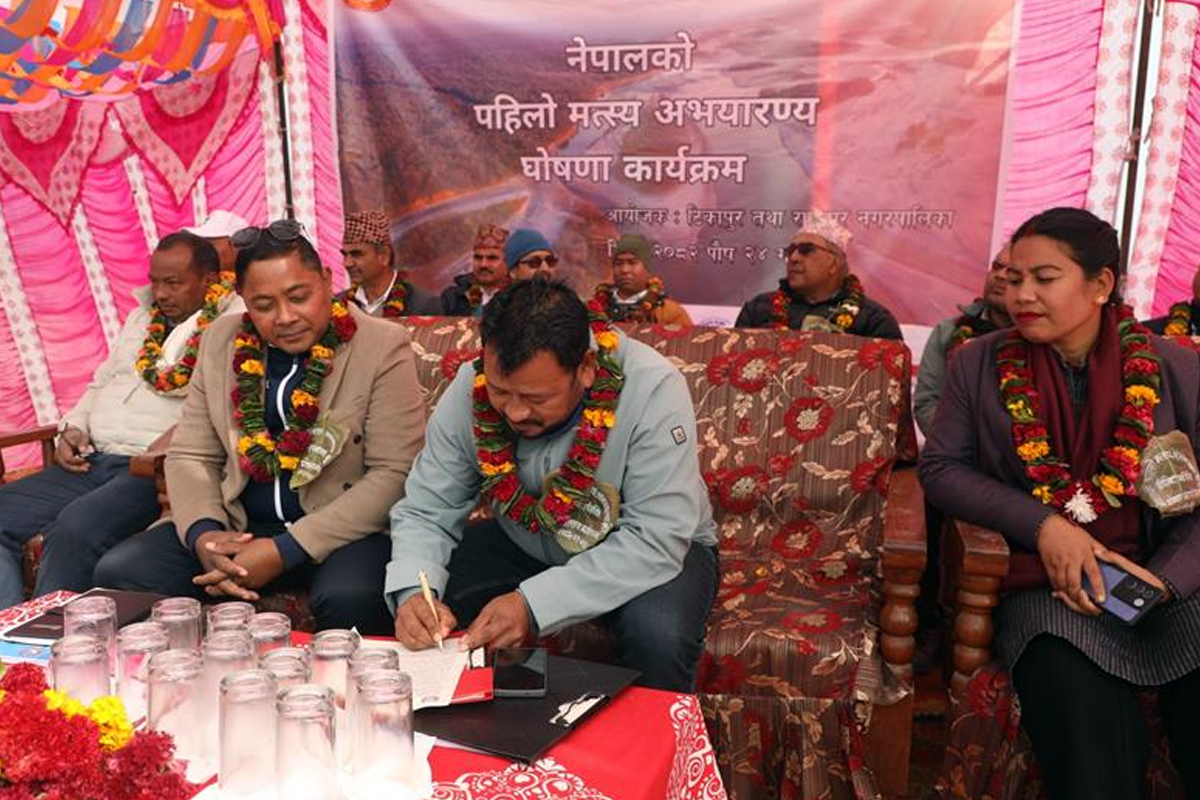
KAILALI: Rajapur and Tikapur municipalities have jointly established Nepal’s first fish sanctuary in the Lower Karnali River, marking a historic milestone for freshwater biodiversity conservation and community-led natural resource management.
The Sakhi Fish Sanctuary was formally declared on 8 January 2026 during a public event in Tikapur, Kailali, attended by municipal leaders, community representatives, government agencies and development partners.
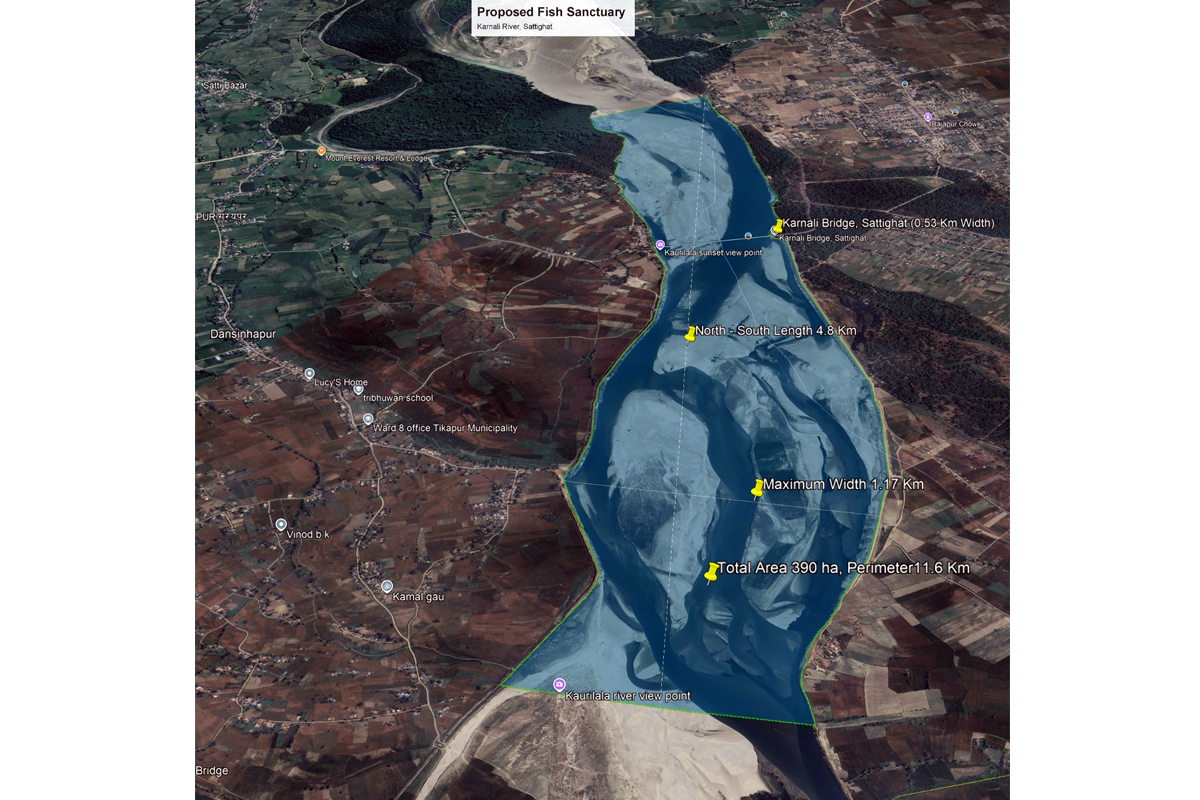
Covering approximately 3.9 square kilometres (390 hectares), the sanctuary stretches from Southern Tedhiya and Chhediya in Rajapur to Arnahawa Phanta in Tikapur. Officials said the area is ecologically critical, serving as breeding, spawning and nursery grounds for indigenous fish species, while also supporting globally significant aquatic wildlife, including the Gangetic river dolphin, gharial, and smooth-coated otter.
Tikapur Mayor Ram Lal Dangaura Tharu described the sanctuary as a locally driven initiative, stating, “This sanctuary reflects our responsibility to lead conservation from the ground up, guided by the voices of our river-dependent communities. This is a decision taken by the people of Rajapur and Tikapur for our own future.”
Rajapur Mayor Dipesh Tharu emphasised shared stewardship, saying, “Protecting the Lower Karnali is our collective duty. This declaration marks the beginning of long-term conservation led by local governments and communities working together.”
The sanctuary was declared under the Aquatic Animal and Biodiversity Conservation Act of local governments, following approvals by both municipal executives. The process adhered to the principles of Free, Prior and Informed Consent (FPIC), with public notices issued in the relevant wards.
Management of the sanctuary will follow a **co-management framework**, combining municipal oversight with active participation from local communities. Community River Stretch Management Groups (CRSMGs) have been formed to carry out monitoring, management, and awareness activities, in coordination with municipal authorities, the Division Forest Office, and security agencies.
Special emphasis has been placed on including the Sonaha and Tharu communities, whose livelihoods and cultural practices are closely tied to the Karnali River.
WWF Nepal provided technical and financial support through a UK government-funded Darwin Initiative project, collaborating with local partners including Sonaha Bikash Samaj, Freed Kamaiya Women Development Forum, Dolphin Conservation Center, and the Small Mammals Conservation and Research Foundation. Dr Ghana Shyam Gurung, WWF Nepal’s Country Representative, highlighted the broader impact of the sanctuary, stating, “In this region, fish are central to livelihoods and cultural traditions. Protecting fish means protecting water, life, and the future of our communities. This initiative also has the potential to promote nature-based tourism while safeguarding iconic species.”
The Sakhi Fish Sanctuary is expected to serve as a national model for community-led freshwater conservation, supporting biodiversity protection, food security, cultural preservation, and climate-resilient livelihoods in Nepal.


-1791309830.jpeg)