Nepal’s first fish sanctuary declared on the Lower Karnali River

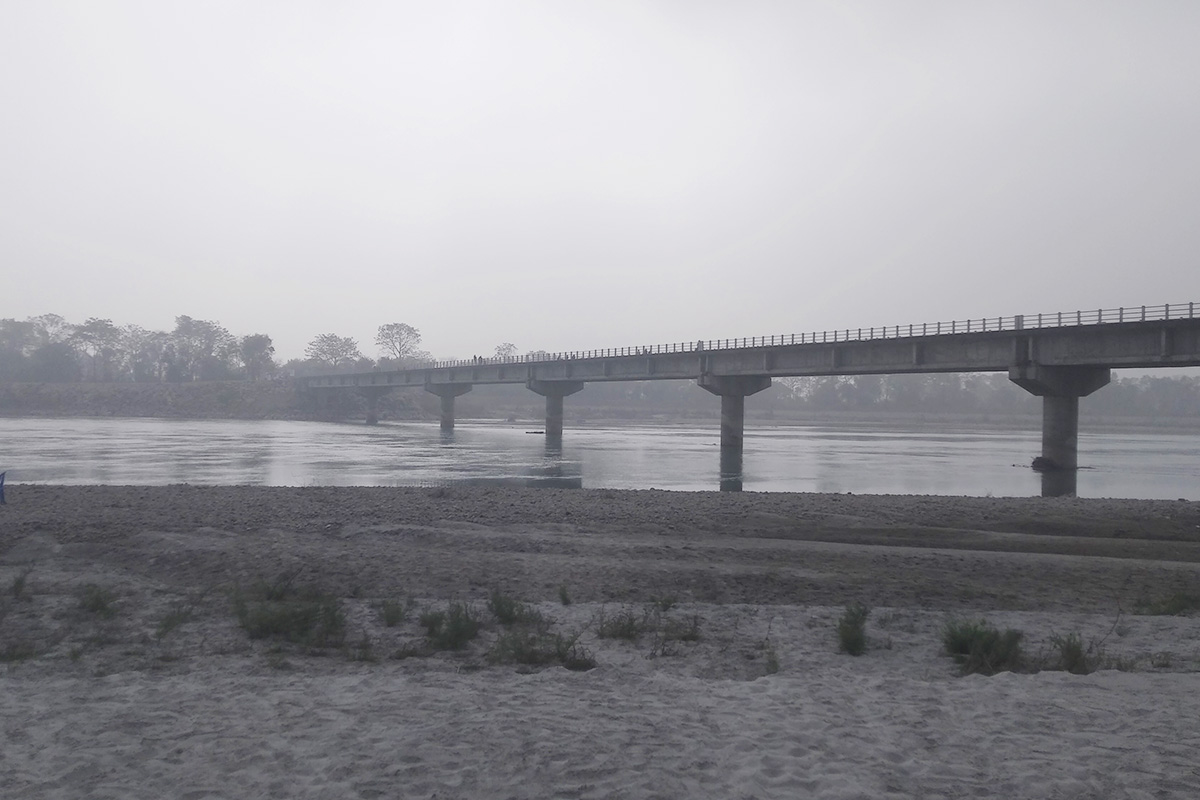
TIKAPUR: Tikapur Municipality in Kailali district and Rajapur Municipality in Bardiya district jointly declared Nepal’s first fish sanctuary, the Sakhi Fish Sanctuary, in the Lower Karnali River on Thursday. The sanctuary is an initiative for freshwater biodiversity conservation and sustainable fisheries management in Nepal.
The sanctuary covers approximately 3.9 sq km (390 hectares), with boundaries extending from Southern Tedhiya, Rajapur‑3, and Chhediya, Rajapur‑4, to Arnahawa Phanta, Tikapur‑8, within the territorial jurisdictions of both municipalities. The declared river sections have been identified as ecologically significant areas, serving as critical breeding, spawning and nursery habitats for indigenous fish species and providing essential habitat for nationally and globally important aquatic fauna, including the Gangetic river dolphin (Platanista gangetica), gharial (Gavialis gangeticus) and smooth‑coated otter (Lutrogale perspicillata).
-1768043448.jpg)
The public declaration was held on a dry section of the Karnali riverbed that marks the border between Kailali and Bardiya districts. Tikapur Mayor Ramlal Dangaura Tharu presided over the event and Rajapur Mayor Dipesh Tharu attended as chief guest; both signed a formal agreement committing their local governments to protect and manage the sanctuary. Representatives from the Division Forest Office, 15 community groups and conservation partners, including WWF Nepal, attended the programme.
-1768043449.jpg)
The two municipalities adopted seven declaration points and established a co‑management framework that pairs municipal leadership with active participation from river‑dependent communities. Community River Stretch Management Groups (CRSMGs) were formed to carry out routine management, monitoring and awareness activities under municipal guidance and in coordination with the Division Forest Office and relevant security agencies. Municipal officials said their immediate priorities were to operationalise the co‑management plan, map critical sites, set patrol schedules, launch community education programmes and roll out monitoring and awareness campaigns; progress will be tracked through regular community consultations and coordination with government line agencies.
“This sanctuary is a decision jointly initiated, endorsed and fully owned by Rajapur and Tikapur — a step taken by our people to protect aquatic life and secure livelihoods for future generations,” Tikapur Mayor Tharu said. “We are not handing this responsibility to outsiders; we are taking it on ourselves.”
-1768043449.jpg "Nepal’s-first-fish-sanctuary,-Sakhi-Fish-Sanctuary,-Lower-Karnali-River-(6)-1768043449.jpg")
-1768043450.jpg "Nepal’s-first-fish-sanctuary,-Sakhi-Fish-Sanctuary,-Lower-Karnali-River-(7)-1768043450.jpg")
-1768043449.jpg "Nepal’s-first-fish-sanctuary,-Sakhi-Fish-Sanctuary,-Lower-Karnali-River-(4)-1768043449.jpg")
-1768043627.jpg "Nepal’s-first-fish-sanctuary,-Sakhi-Fish-Sanctuary,-Lower-Karnali-River-(5)-1768043627.jpg")
“By taking municipal ownership of the Sakhi Fish Sanctuary, we commit to long‑term stewardship of the Lower Karnali through coordinated action between local government and river communities,” Rajapur Mayor Dipesh Tharu said. “This is the beginning of sustained conservation backed by local law and community consent.”
Leaders of local groups welcomed the move. “The river fed our families and shaped our culture. This sanctuary gives us a voice and tools to manage the Karnali for our children,” a leader of Sonaha Bikash Samaj said. The chair of a newly formed CRSMG said the groups would patrol, monitor spawning sites and run awareness drives, adding that local people will be the first line of defence for the river.
Dr Ghana Shyam Gurung, Country Representative of WWF Nepal, praised the declaration and linked conservation to livelihoods. He said, “When we protect fish, we protect water; when we protect water, we protect life — this sanctuary strengthens both biodiversity and community resilience.” WWF provided technical and financial support through a Darwin Initiative‑funded project focused on community livelihoods and otter stewardship.
A local fisher from Tharu community welcomed the move but urged practical support. “We welcome measures that restore fish stocks, but we need clear support for alternative livelihoods during seasonal restrictions,” he said, calling for training and short‑term income options while protection measures take effect.
A Division Forest Office representative said the office would coordinate enforcement and technical support with the municipalities to ensure the sanctuary’s rules were implemented effectively. “We will help map critical habitats, advise on patrol protocols and support monitoring efforts,” the official said.
-1768043450.jpg "Nepal’s-first-fish-sanctuary,-Sakhi-Fish-Sanctuary,-Lower-Karnali-River-(9)-1768043450.jpg")
-1768043450.jpg "Nepal’s-first-fish-sanctuary,-Sakhi-Fish-Sanctuary,-Lower-Karnali-River-(8)-1768043450.jpg")
-1768044097.jpg "Nepal’s-first-fish-sanctuary,-Sakhi-Fish-Sanctuary,-Lower-Karnali-River-(10)-1768044097.jpg")
-1768043450.jpg "Nepal’s-first-fish-sanctuary,-Sakhi-Fish-Sanctuary,-Lower-Karnali-River-(11)-1768043450.jpg")
-1768043451.jpg "Nepal’s-first-fish-sanctuary,-Sakhi-Fish-Sanctuary,-Lower-Karnali-River-(12)-1768043451.jpg")
-1768043451.jpg "Nepal’s-first-fish-sanctuary,-Sakhi-Fish-Sanctuary,-Lower-Karnali-River-(13)-1768043451.jpg")
-1768043451.jpg "Nepal’s-first-fish-sanctuary,-Sakhi-Fish-Sanctuary,-Lower-Karnali-River-(15)-1768043451.jpg")
-1768043451.jpg "Nepal’s-first-fish-sanctuary,-Sakhi-Fish-Sanctuary,-Lower-Karnali-River-(16)-1768043451.jpg")
-1768043451.jpg "Nepal’s-first-fish-sanctuary,-Sakhi-Fish-Sanctuary,-Lower-Karnali-River-(14)-1768043451.jpg")
-1768043448.jpg "Nepal’s-first-fish-sanctuary,-Sakhi-Fish-Sanctuary,-Lower-Karnali-River-(1)-1768043448.jpg")
An independent conservation scientist who reviewed the sanctuary boundaries said protecting spawning and nursery habitats was a sound strategy but cautioned that long‑term success would depend on consistent monitoring and community compliance. “Designating the area is a vital first step; the harder work is sustaining enforcement, data collection and livelihood alternatives so people do not revert to unsustainable fishing,” the scientist said.
Officials said they hoped the Sakhi Fish Sanctuary would serve as a national model for community‑led freshwater conservation.



-1791309830.jpeg)