BEYOND BALANCE SHEETS AND NUMBERS

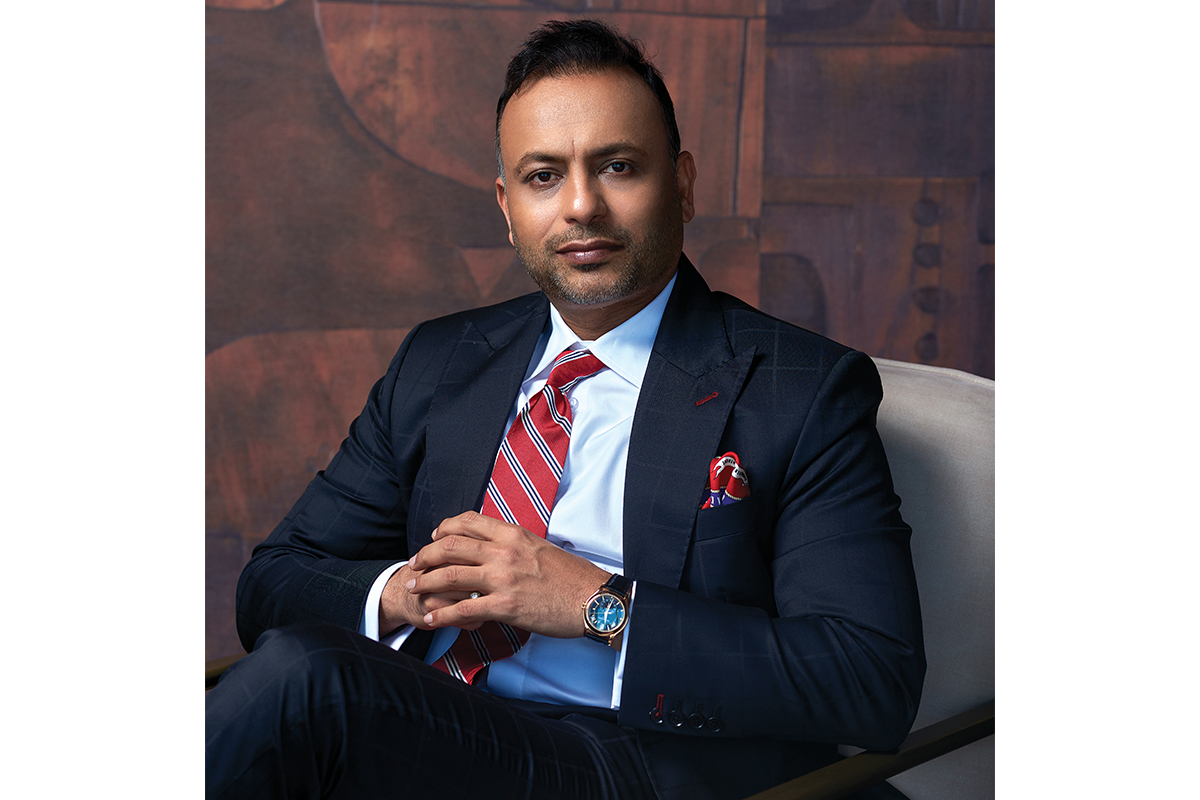
MANISH KHEMKA
Executive Director, BLC Holdings, Chairman, Global Equity Fund
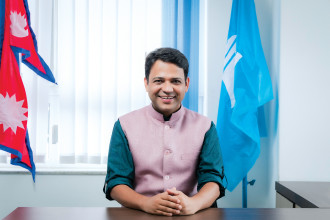
Manish Khemka, Executive Director of BLC Holdings and Chairman of Global Equity Fund, represents a leadership philosophy rooted in patience, systems, and long-term value creation. With over two decades at one of Nepal’s most diversified business groups, Khemka has been instrumental in building institutions that prioritise sustainability and structural strength over short-term gains. Originally from Birgunj, his 21-year journey with BLC has shaped a firm belief that enduring growth is driven by robust systems and disciplined governance.
A strong academic foundation underpins his approach to leadership. Khemka has completed executive education in leadership and strategic management at Harvard Business School and a specialised programme in healthcare leadership at Harvard Medical School, an area central to BLC’s strategic focus. His engagement extends beyond the firm into national policy and industry platforms. He serves as a National Council Member of the Confederation of Nepalese Industries and chairs its Health Council, while remaining connected to global academic and professional networks including NYEF and the Harvard Association.

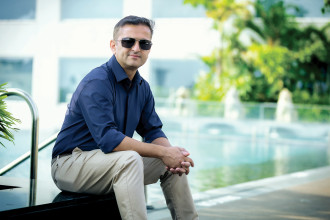
Beyond the boardroom, Khemka brings a breadth of interests that reflect a balanced and curious mind. A committed fitness enthusiast, sportsman and golfer, he is also known for his appreciation of fine watches and personal style. Equally significant is his involvement in social and humanitarian initiatives, shaped by a conviction that business success must advance alongside community well-being. As a dedicated poet and author, he has also shared his personal thoughts in his book, ‘Rubaru,’ to connect with other people who love writing. These beliefs continue to inform his leadership choices and institutional vision, insights he shared in conversation with Business 360.
What drew you to take on a leadership role at BLC, and what did you see as its core responsibility when you stepped in?
When I joined BLC, it was more of a personal mission than an assignment, but one I accepted with genuine enthusiasm. I was given the responsibility to help build institutions, and that challenge immediately appealed to me.
From the outset, the focus was on creating a system-driven organisation, one that prioritised long-term sustainability alongside broader community growth. My core responsibility was to help build something enduring, rooted in strong systems rather than short-term outcomes. The objective was not merely to run a business, but to shape an institution capable of standing the test of time and contributing meaningfully to the ecosystem around it.
How does your role at BLC differ from your other professional engagements, in terms of mandate and impact?
My roles across different organisations are interconnected and reflect my broader professional engagement. Beyond BLC, I am associated with the Confederation of Nepalese Industries as a National Council Member and Chair of the Health Council, and I remain connected with academic and professional networks such as the Harvard Association.
That said, the nature of my work varies significantly. At CNI, my role is more focused on networking, advocacy, and policy framing - contributing to dialogue and influencing broader policy direction.
At BLC, however, my role is far more execution-oriented. As Executive Director, my responsibility is to ensure that decisions taken at the board level are implemented effectively on the ground. While I continue to contribute strategic and policy perspectives, the emphasis here is firmly on delivery. In simple terms, BLC is where decisions are translated into action.
What have been the biggest strategic challenges at BLC so far, and how have you approached them?
Scalability remains one of the biggest challenges, not just for BLC but for most institutions in Nepal. Moving to the next level often runs into infrastructure constraints, which can significantly limit growth.
Government processes present another reality. Bureaucratic hurdles and regulatory delays are part of the environment we operate in, and in Nepal, you quickly learn that you must work within the system as it exists. Balancing ambition with practical constraints becomes essential.
Human resources pose a further challenge. Despite visible unemployment, finding capable middle management is surprisingly difficult. There is often talent at the top and entry level, but the middle layer remains thin. Our response has been to recruit young graduates, invest in training, and build capacity internally. Similarly, when faced with infrastructure gaps, we focus less on what is missing and more on how to bridge those gaps through practical solutions.
In what ways do you see BLC contributing to Nepal’s broader financial and institutional ecosystem?
BLC contributes in several ways. One notable example is Global Equity, Nepal’s first private equity and venture capital firm. Another is United Finance, which later merged with Nabil Bank. At the core of these initiatives has always been employment generation and channelling capital toward small and medium enterprises.
Through Global Equity, we provide growth capital to businesses that traditional banks are often hesitant to support.
In Nepal, lending tends to be concentrated in low-risk areas such as real estate or vehicle financing. When entrepreneurs approach banks with agricultural or innovative projects, the process often becomes lengthy and uncertain. We consciously take on that risk by backing ideas with strong growth potential but limited access to conventional finance.
Beyond finance, BLC is involved in areas such as agricultural processing, where we work directly with farmers by providing advances and bridging capital gaps. In our distribution businesses, many dealers and wholesalers are SMEs. By extending business credit, we support their growth, job creation, and contribution to the wider economy. Collectively, these efforts strengthen Nepal’s institutional and entrepreneurial ecosystem.
Looking back at your career, which decision tested your judgement the most, and what did it teach you about leadership?
In Nepal, every day presents a new challenge. Each situation demands its own strategy and execution, and outcomes are rarely predictable. Being part of a diversified group while also engaging with organisations like CNI means we are constantly making decisions under uncertainty.
One decision that stands out was our expansion into healthcare. It was highly capital-intensive, and there were legitimate concerns about timing and risk. After careful deliberation at the board level, we decided to proceed. In hindsight, it was the right decision made at the right time.
A similar debate arose during the expansion of our pharmacy chain. Many questioned the rationale for investing in physical pharmacies as online platforms gained momentum. Today, we operate around 15 pharmacies across Kathmandu, with plans for significant expansion. These experiences reinforced a key lesson: there is never a perfect time to start or expand a business. Leadership often requires creating the right conditions yourself and having the confidence to move forward despite uncertainty.
How has your understanding of risk evolved over the years, particularly in a market like Nepal?
Earlier in my career, I viewed risk primarily through the lens of minimisation, focusing on how much could be reduced or avoided. Over time, working in Nepal taught me the limits of that approach.
In a market like ours, risk is unavoidable. What has changed is my willingness to engage with it rather than resist it. I now focus on understanding its nature, anticipating where it may arise, and finding ways to manage it effectively.
As a result, my risk appetite has evolved. Today, I see risk not only as a challenge but also as a source of opportunity. Instead of trying to eliminate it, I focus on managing it intelligently and leveraging it to create value.
What aspect of your work would surprise people who only see your public profile?
Most people associate me primarily with corporate work, which is understandable given how deeply involved I am in business operations. What is less visible is my engagement with social and humanitarian causes.
I currently serve as First Vice President of the Lions Club of Kathmandu and am involved in several community-focused initiatives. I have also represented a nutritional committee at the National Planning Commission. These roles reflect a dimension of my work that is quieter but equally important to me. I strongly believe that commerce and community should not operate in isolation, and I see my role as helping build bridges between the two.

In an environment of constant short-term pressure, how do you define sustainable growth?
Nepal is a market where conditions change rapidly. Targets shift, assumptions collapse, and plans often need to be revised mid-course. In my experience, Plan A rarely succeeds; more often, it is Plan C or D or something entirely unplanned that works.
In such an environment, sustainability becomes both more challenging and more critical. At BLC, we believe growth without sustainability is not real growth. It may look impressive in the short term but it does not endure.
We have therefore built sustainability into our systems and decision making processes. Whether in education, healthcare, or agricultural processing, we assess every initiative through a long-term lens. Community development is not incidental for us; it is central to our vision.
What distinguishes strong institutions from merely successful ones in Nepal’s business context?
Success and strength are often conflated, but they are not the same. Nepal has seen many institutions grow rapidly and attract attention, only to struggle or disappear later.Such success is often driven by narrow metrics like rapid expansion, top-line growth, or short-term profitability. When transparency, governance, and stakeholder inclusion are overlooked, that success becomes fragile.
Strong institutions are built for endurance. They may not always be the largest or fastest-growing, but they create lasting impact. They are anchored in sound governance, clear values, and a genuine commitment to long-term stakeholder benefit. Success without strength is temporary; strength comes from depth, not scale alone.
How do you balance commercial objectives with long-term responsibility to customers and the broader economy?
Our starting point has always been clear: profit is an outcome, not the objective. We focus on delivering meaningful value and a better experience to our customers.
When customers derive real benefit, trust follows naturally, and profitability follows trust. This philosophy shapes how we design our products and services, with an emphasis on value creation rather than short-term financial gain.
Our board has been explicit about this vision. Long-term sustainability and customer satisfaction sit at the centre of every decision. If we expect customers to stay with us, we must earn that loyalty through consistency, reliability and genuine value.
Nepal’s economy is often described as resilient but constrained. From your perspective, what is holding it back the most right now?
Nepal occupies a strategic position between two global economic engines, India and China. Both are growing rapidly, yet Nepal has struggled to benefit meaningfully from that growth. A key reason is the country’s difficulty in aligning long-term national objectives with geopolitical and economic realities.
Over time, political alignment has often swung between our southern and northern neighbours. In attempting to favour one side, we sometimes unsettle the other. This imbalance has prevented Nepal from leveraging its geographic advantage consistently and strategically.
Political instability is another reality. Given the structure of our electoral system, frequent changes in government are almost inevitable. While change in itself is not ideal, the bigger challenge for businesses is the resulting inconsistency in policies.
Policy unpredictability creates deep uncertainty for investors. Businesses plan over long horizons, often 10, 20, or even 30 years. Large investments take time to break even and even longer to generate returns. When policies shift abruptly, such as incentives introduced by one government and withdrawn by the next, entire business models can be disrupted. Once capital is committed, it cannot simply be reversed.
Beyond inconsistency, many policies are outdated, designed decades ago in a very different economic and social context. The world today is rapidly changing, driven by technology, globalisation, and evolving expectations. Just as parenting methods from one generation may not work for the next, policies from a previous era cannot effectively govern today’s dynamic, digital economy.
Even when new policies are introduced, ambiguities persist. Stakeholders interpret them differently, and enforcement authorities often apply them inconsistently. This creates confusion and unpredictability for businesses trying to operate responsibly.
If Nepal can ensure policy consistency across political cycles and modernise its regulatory framework to reflect present day realities, the economy has the potential to move beyond resilience toward sustained growth. Without such measures, uncertainty will continue to hold it back more than any external constraint.
What role should banks and financial institutions realistically play in supporting productive sectors rather than speculative activity?
This requires a significant shift in both policy thinking and institutional mindset. Banks are naturally driven by profitability, which is not inherently wrong. However, this focus often directs capital toward lower risk, asset backed activities, rather than productive but riskier sectors.
In Nepal, this imbalance is clear. Large business groups can access hundreds of crores in loans, while a small farmer or entrepreneur trying to start a venture such as kiwi farming struggles to secure even modest credit. From a bank’s perspective, lending to established groups feels safer and more convenient, especially under pressure to balance risk and return.
This is where private equity and venture capital institutions become essential. Banks cannot - and should not - directly fund high-risk early-stage ventures under current regulatory frameworks. But they can allocate a portion of their capital to professionally managed PE and VC funds with the expertise to assess and manage these risks. These intermediaries can bridge the gap between capital and end users more effectively.
Regulatory support is crucial for this model to work. The central bank and government need to create space for banks to invest in these funds, possibly through public-private partnership models. Countries with strong startup ecosystems, in Asia and beyond, accept that failure is part of innovation. Without that acceptance, risk-taking is stifled. Supporting productive sectors requires building systems that absorb risk intelligently, not avoiding it altogether.
How do you see Nepal’s financial sector evolving over the next decade, especially in terms of governance and transparency?
Technology has already begun reshaping Nepal’s financial sector. The rise of fintech has made banking more inclusive, decentralised and accessible. Digital platforms have reduced entry barriers and brought more people into the formal financial system.However, governance and transparency remain critical concerns. On the surface, the sector appears transparent, but in practice, layers of opacity persist. Recent challenges in development banks and financial institutions have exposed weaknesses in risk assessment and lending practices. In many cases, decisions were influenced by vested interests rather than sound financial judgement.
Technology alone cannot solve these issues. Digital systems improve transparency only if the intent behind them is genuine. If people seek to manipulate systems, they will find ways to do so, regardless of technological advancement.
True transparency must start at the board and management level. Banks deal with public money, and that responsibility cannot be taken lightly. When boards push aggressively for short-term returns and rapid balance-sheet growth, management often responds by taking hidden risks. These risks surface years later, when loans become non-performing. For Nepal’s financial sector to mature, accountability must become as important as profitability.
Are we doing enough to channel capital toward entrepreneurship, manufacturing and value-adding industries in Nepal?
At present, the answer is no. While entrepreneurship and startups are increasingly discussed, capital remains concentrated in relatively safe and familiar sectors such as real estate, hydropower, and hospitality.Even venture capital and private equity funds, despite higher risk tolerance, often invest in safer projects. Truly early-stage entrepreneurs and small manufacturing ventures still struggle to access capital. This highlights the critical need for policy reform.
If Nepal wants to foster value creation, it must actively support mechanisms that channel funds to SMEs and early stage businesses. This requires not only financial instruments but also regulatory clarity, risk sharing frameworks, and a cultural shift toward accepting entrepreneurial failure as part of progress.
Which economic reform would you prioritise if you had the government’s ear for one year?
Policy consistency would be my top priority. Businesses can adapt to political change, but they cannot operate under constantly shifting rules. When incentives are introduced by one government and withdrawn by the next, long-term planning becomes nearly impossible.Investment decisions are made over decades, not budget cycles. Sudden policy reversals disrupt entire business models and discourage future investment. Beyond consistency, policies also need to be updated more frequently. Many regulations were designed for a very different era and struggle to address today’s economic realities.
Clear, modern, and consistently applied policies would do more for Nepal’s economy than any single incentive package. Without them, even well-intentioned reforms lose their impact.
When you look ahead, what would you like your professional legacy to stand for?
I would like my legacy to be guided by ethics and values. Above all, I want to be remembered for helping build bridges between commerce and community.
I want my work to reflect impact, bringing people from the margins into the mainstream, and helping those already in the mainstream grow further. Numbers matter, but they are not the full story.
Ultimately, I hope my legacy represents meaningful and lasting contribution. As a Nepali, I want to see my country confident, prosperous and hopeful. If my work plays even a small role in that journey, I would consider it a life well spent.