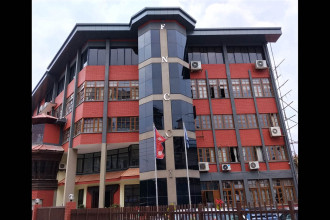
Nepal–Qatar Joint Business Council concludes meet

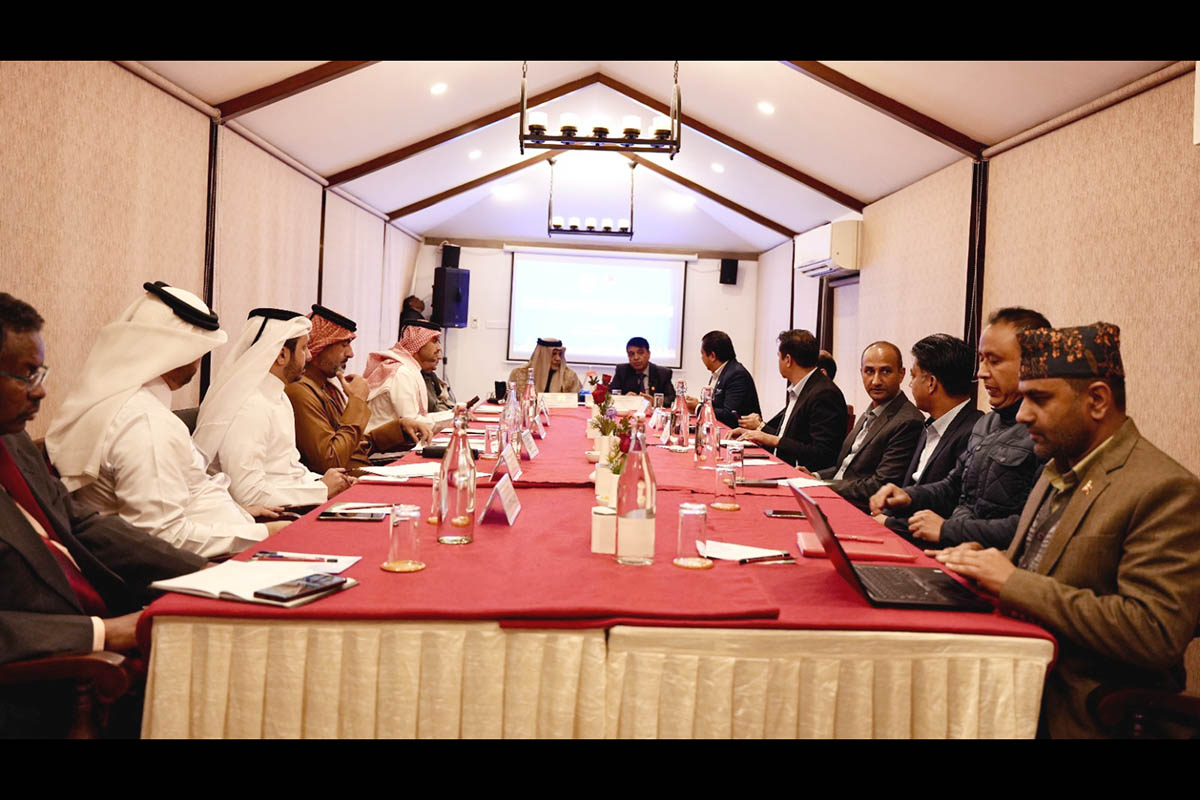
KATHMANDU: Nepal–Qatar Joint Business Council (JBC) concluded a meeting in Chandragiri, Kathmandu, with private sector representatives from both countries pledging closer cooperation to expand bilateral trade and investment.
The JBC, established under an agreement signed during Emir of Qatar Sheikh Tamim bin Hamad Al Thani’s visit to Nepal in April 2024, is designed to provide a structured platform for dialogue, business collaboration and direct engagement between Nepali and Qatari private sectors.
Delegates held in‑depth discussions on investment promotion, trade expansion, business‑to‑business collaboration and government‑to‑government coordination.
Nepali participants highlighted recent government efforts to create a more investment‑friendly environment through legal reforms, simplified approval processes via digital systems and promotion of public‑private partnerships. They urged Qatari investors to consider opportunities in energy, minerals, health, education, tourism, agro‑processing and information technology, and said Nepal stands ready to facilitate such investments.
The Nepali side also encouraged local entrepreneurs to explore opportunities in Qatar’s service sector, tourism‑related industries, skill development and small and medium‑sized enterprises (SMEs), stressing the potential for joint ventures. The Qatari delegation expressed a positive outlook on Nepal’s investment climate and interest in expanding direct co‑operation and business exchanges, noting Nepal’s attractiveness and the significant investment potential across many sectors.
On the occasion, Federation of Nepalese Chambers of Commerce and Industry (FNCCI) President Chandra Prasad Dhakal said the meeting would strengthen Nepal–Qatar economic ties and help increase trade and investment. He said the federation is committed to facilitating foreign investment, strengthening institutional cooperation and promoting B2B contacts. He invited the leadership of the Qatar Chamber of Commerce and Industry (QCCI) to FNCCI’s upcoming annual general meeting as a platform for direct dialogue with policymakers and business leaders.
FNCCI Senior Vice President Anjan Shrestha emphasised that the JBC should produce practical outcomes rather than remain a formality. “There is a shared understanding that the JBC must be a platform that delivers tangible results. It can and should be an effective medium for project identification, problem‑solving, and developing commercially beneficial partnerships for both sides,” he said.
QCCI Board Member Mohamed bin Ahmed Al Obaidly, head of the Qatari delegation, said Qatari investors are ready for long‑term investment if Nepal offers stable policies, clear legal structures and banking facilitation. He added that investments would begin once concrete areas for cooperation are identified and urged making the JBC’s role more effective.
Likewise, FNCCI Treasurer Bharat Raj Acharya called for the JBC to be developed as an active bridge for long‑term economic cooperation and noted that recent high‑level bilateral meetings have created a positive environment for increased private sector participation.
During their visit, the Qatari delegation also met Finance Minister Rameshore Prasad Khanal; Foreign Minister Bala Nanda Sharma; Minister Anil Kumar Sinha (Industry, Commerce and Supplies; Culture, Tourism and Civil Aviation); Nepal Rastra Bank Governor Dr Biswo Nath Poudel; and Civil Aviation Authority of Nepal Director General Deo Chandra Lal Karn. Discussions focused on bilateral investment promotion, trade expansion, G2G and B2B cooperation, and air connectivity.
The FNCCI said the JBC meeting is expected to institutionalise economic cooperation and strengthen trade, investment and direct private sector partnerships between Nepal and Qatar in the coming days.
-1788157009.jpg)