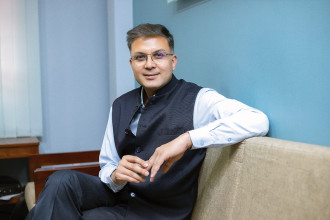
“Stuck in Old Thinking in a Multipolar World” – Som P Pudasaini, PhD

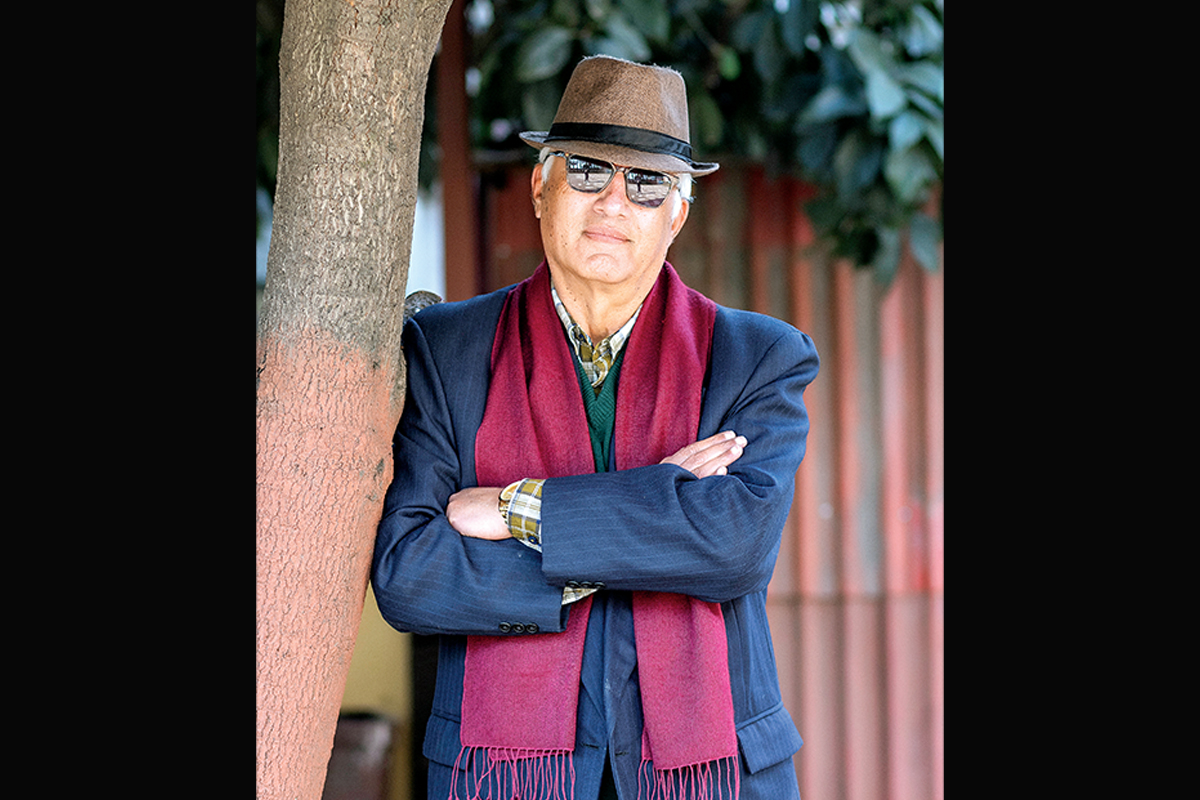
Growth is happening right on our doorstep. The responsibility of the leadership was to recognise this shift, moving from the bipolar world of the Cold War to the multipolar world of today, and position Nepal to benefit. Instead, we have remained stuck in old ways of thinking. Our leaders talk about the future but act on the pettiness of the past. The failure to adapt to this new world is a direct responsibility of those at the top.
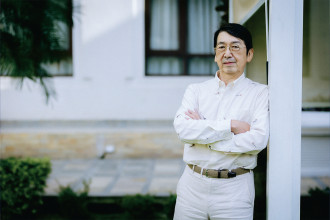
Som P Pudasaini, PhD
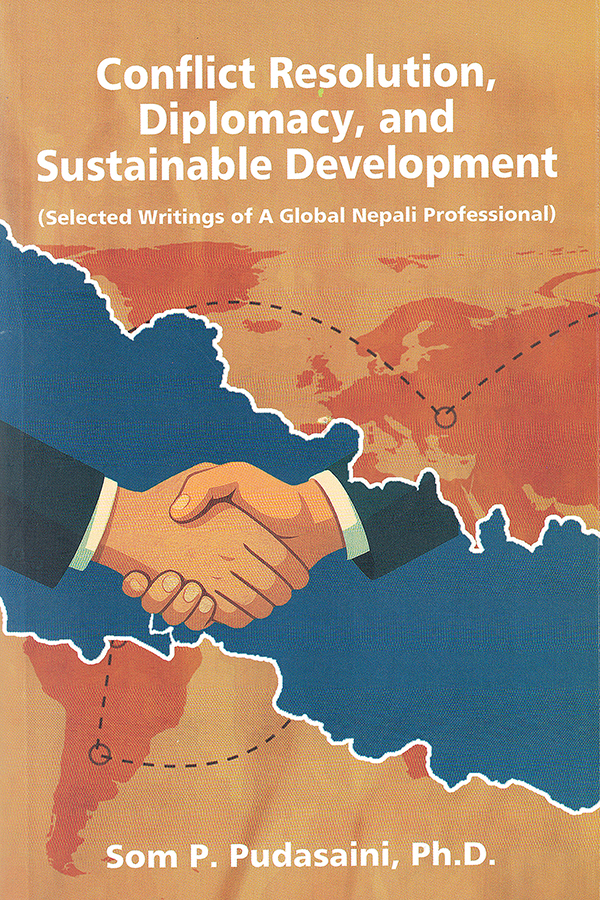
Author, ‘Conflict Resolution, Diplomacy, and Sustainable Development’
Som P Pudasaini, PhD, is a figure who carries the quiet authority of a man who has spent half a century navigating the complex machinery of global development. With a career spanning the senior ranks of the United Nations, World Bank and prestigious academic institutions worldwide, his perspective is informed by a rare ‘triple threat’ of experience. He is a practitioner, a strategist and a scholar. His latest work, “Conflict Resolution, Diplomacy, and Sustainable Development,” serves as a philosophical and pragmatic post-mortem of the Nepali state, drawing from his 75 years of life and 50 years of professional service.
The book represents a bold attempt to synthesise seemingly disparate fields into what Pudasaini calls the ‘Triple Nexus’. He argues that Nepal’s repeated cycles of instability stem from a failure to realise that peace, foreign policy and economic growth are not separate silos, but a single, interlocking gear system. Drawing from his roots, ranging from his early days as a young officer in the Mechi zone to his international missions in the Maldives, Sri Lanka and beyond, Pudasaini offers a critique that is both blunt in its assessment of political syndicates and deeply optimistic about Nepal’s inherent potential.
In person, Pudasaini is both a realist and a visionary. He speaks with the precision of an auditor when discussing the breakdown of meritocracy, yet pivots effortlessly to the spiritual optimism of Gautam Buddha to frame the path forward. He views his latest publication not merely as a record of the past but as a gift and a blueprint for a younger generation of Nepalis who are eager to move beyond the stale leadership of the previous era. While speaking with Business 360, Pudasaini delved deep into the structural reforms necessary to rescue Nepal’s future.
Your career spans over five decades with the UN and World Bank. To start, could you tell us a bit about the perspective you bring to this book?
This book is a fusion of 75 years of life experience and 50 years of professional work. I grew up in Nepal, studied here, and then, almost by accident, had the chance to study abroad and work in places I never imagined. Whether at the World Bank or the UN, I was constantly learning lessons related to peace, conflict and sustainable development.
I began the book with a quote from Gautam Buddha because, in development, we often get lost in the past or the uncertain future. Buddha reminds us that what matters is what happens today. After five decades, I wanted to share these lessons with the current generation so they might avoid our mistakes and build a more hopeful future.
The book stresses the need to integrate conflict resolution, diplomacy and sustainable development. Given Nepal’s repeated failures to do so, what do you think has fundamentally blocked this integration?
The challenge is that these are three massive fields. You could write a hundred books on each. In Nepal, we have the potential but we lack the wisdom of integration. When I started my career at 21, working in districts like Taplejung and Jhapa, I saw tremendous potential but very little being done.
What has blocked us is a pendulum mindset. People tend to see only the extreme ends, either everything is good or everything is bad. We fail to see the distance covered in between. Since the 1950s, we have had 15 development plans. We’ve seen life expectancy rise from 37 to over 70 years, and literacy jump from 5% to nearly 77%. The progress is there but the integration cycle is blocked by a lack of honest, excited leadership that can harmonise these achievements into a singular national vision.
Nepal’s peace process ended formally years ago, yet political instability and social grievances persist. What, in your view, went most wrong after the conflict ended?
We have to ask, ‘Why hasn’t our demographic and social progress translated into a sense of pride or hope?’ If you look at Malaysia or South Korea, they were where we were in the 1970s. They have leaped forward while we remain stuck in a cycle of bad governance and factionalism.
What went wrong is a fundamental disrespect for merit. We have replaced competence with bhagbanda (political sharing of spoils) and pettiness. Honest citizens feel they cannot achieve anything without being a jhole (sycophant) for someone corrupt. This has created a sense of hopelessness, especially among the youth. They see what China, India or Japan have done and they wonder why Nepal, despite its brave Gorkhas and hardworking labourers in the Gulf, cannot replicate that success at home. Our individuals have the capacity but our systems protect the corrupt rather than promoting the capable.
You often point to weak institutions as a root cause of conflict. Why have decades of reforms failed to produce strong institutions?
The problem is that our institutions have been worn out by repeated crises of governance. We talk about zero tolerance against corruption but the reality is the opposite. We have failed to promote private initiatives and have not been respectful of the changing global situation.
Historically, Nepal is one of the oldest nations in Asia, older than the modern iterations of India or China. Yet, while our neighbours built institutions that could drive rapid growth, we stayed mired in internal factionalism. We have the potential but our institutions are being hollowed out by a leadership that prioritises self-protection over national institutional strength. We are not respecting the merit that is required to make an institution functional.
To what extent should Nepal’s political leadership be held directly responsible for perpetuating instability and underdevelopment?
Leadership is central, especially in how it navigates our unique geography. We are a small country between two giants, India and China, and close to three nuclear powers. This makes us both strategically important and incredibly vulnerable. The world has shifted from a North Atlantic focus to an Asia-Pacific focus. Growth is happening right on our doorstep. The responsibility of the leadership was to recognise this shift, moving from the bipolar world of the Cold War to the multipolar world of today, and position Nepal to benefit. Instead, we have remained stuck in old ways of thinking. Our leaders talk about the future but act on the pettiness of the past. The failure to adapt to this new world is a direct responsibility of those at the top.
Nepal is praised for its diplomatic balance between powerful neighbours. Has this approach limited our ability to pursue a clear and independent development vision?
We live in a fundamentally interrelated world. Fifty years ago, the average Nepali didn’t need anything from the outside world. Today, we are dependent on everything. But interdependence is a two-way street. If we don’t produce Pashmina, Americans can’t wear it, if we don’t have momo, the culinary landscape of India changes. The problem isn’t the balance itself but a misunderstanding of what foreign policy is. In diplomacy, the mantra is: Foreign affairs is an extension of domestic affairs. We spend all our time worrying about what India, China or the US thinks, which is irrelevant if we don’t know what we are doing at home. Because we lack a domestic productivity vision in agriculture, energy and IT, we treat diplomacy as a shield rather than a tool. We haven’t used our balance to build independence. We have used it to manage our dependence.
Can diplomacy and foreign assistance realistically compensate for weak domestic governance, or has Nepal relied too heavily on external engagement?
Foreigners will never respect us if we do not respect our own interests first. Our leaders complain that foreigners don’t respect us but why would they? If a leader is more interested in protecting a corrupt syndicate than in the merit of his own people, he loses his credibility on the global stage.
I have seen this in my own career. I don’t carry a political party banner. I carry experience and honesty. When you speak with competence, even the biggest powers listen. Nepal has relied on external engagement as a crutch because our domestic institutions are being hollowed out by the sharing of spoils. We have become a syndicate of middle-class interests at the national, provincial and village levels. Diplomacy cannot fix a country that refuses to promote its own best minds.
Nepal has made progress in health and literacy, yet economic transformation remains slow. Why hasn’t this demographic progress translated into sustained development?
The potential is there. Look at our youth. But they are frustrated because they see the world. They see what Japan, Korea and even Saudi Arabia have done. They don’t have the patience of my generation and they shouldn’t have to. The disconnect exists because we have reached what I call a limit of efficiency. There is a concept called the Peter Principle where people are promoted to the point of their incompetence. In Nepal, our entire political leadership has crossed their limit of efficiency. They have become ineffective, yet they refuse to be replaced. They stay in power through a gang-like mentality, where the same three or four names rotate positions. When 56% of the population or the party body demands change, the people at the top simply ignore them. This stagnation is why a literate, healthy youth population is forced to seek opportunities in the Gulf instead of building Nepal.
Looking at our policy history, what was Nepal’s most costly missed opportunity?
As a famous scientist once said, “If agriculture goes wrong, nothing else will have a chance to go right.” This is an extreme statement, but for Nepal, it is a haunting truth. We missed the opportunity to modernise our agricultural core. Even if you have all the money in the world, if there is a blockage from outside and you have no food security, you have nothing.
We also failed to depoliticise our institutions. In a healthy democracy, you have the separation of powers, the Executive, Legislative and Judiciary, with bodies like the Commission for the Investigation of Abuse of Authority (CIAA) acting as watchdogs. But in Nepal, unless you are someone’s sycophant, you cannot get a position. Whether it’s a Vice Chancellor, an ambassador or a bureaucrat, the right man is rarely in the right place. We have traded national institutional strength for party-wing loyalty.
Sustainable development is a common phrase. In your assessment, how has it been misused or diluted in Nepal?
In Nepal, sustainable development has become a slogan used to mask bad governance. Leaders talk about sunya sahanshilta (zero tolerance) against corruption while protecting the very people who practice it. Real sustainable development requires two things, which are merit and ethics. You saw it during the recent movements. Even a minister admitted he couldn’t get a citizenship without a 10,000-rupee bribe. When the leadership says ‘I didn’t know’, it is a confession of total ineffectiveness. You have the entire state machinery under you. If you don’t know your own departments are extorting the public, you should resign. We have diluted the concept of development into delivery for the party rather than delivery for the people.
After five decades in development, is there any approach or assumption you once believed in that you would now fundamentally question?
Looking back, the biggest assumption I, and many in my generation, held was that the ‘State’ would naturally build itself once democracy arrived. We focused on the machinery of government but ignored the people with vested interests who were hollowing it out. I’ve realised that peace is not just the absence of war. As Einstein said, peace cannot be kept by force, it can only be achieved by understanding. We spent too much time on the force of politics and not enough on the understanding of our own domestic potential.
I also question our obsession with looking outward for solutions. We talk about India and China interfering, but I ask: If we don’t let them interfere, can they? They interfere because our leaders invite them to bolster their own factional interests. I now believe that foreign policy is nothing more than a mirror of home. If you are strong and honest at home, you are respected abroad.
You mentioned King Prithvi Narayan Shah’s famous analogy of Nepal as a ‘yam between two boulders’. How does that hold up in 2026?
In his time, there were only two boulders, India and China. Today, the yam is still there but the boulders are many. Japan, America, Saudi Arabia, the EU, these are all significant powers with interests in our region. Our survival depends on a ‘Minimum Balanced Consensus’. No matter which party is in power, there should be no difference in how we handle our neighbours, our water resources or our peace-building. Look at India, the Congress and BJP may clash on everything else but their core foreign policy remains consistent. Nepal needs that same maturity. We must maximise our interest while helping our neighbours achieve theirs. If China wants a ‘One China’ policy and India wants security, we respect that, provided they respect our right to develop independently.
Nepal is currently in a demographic window of opportunity. How do we stop this youth bulge from becoming a demographic burden?
This is critical. Our population growth has plummeted from 2.6% in the 1980s to nearly 0.9% today. We are already an ageing society. We have a 30-to-40-year window where our youth are the majority, and right now, they are building the Gulf instead of Nepal.
While some see migration as a failure, I see a missed opportunity for reintegration. These young people return with skills, money and a global perspective. The question is: How do we use them? We need to mechanise agriculture specifically for the women and elderly who remain in the villages. If the strong arms are away, we need technology that allows a mother in the hills to farm more efficiently while caring for her children. We shouldn’t just export electricity. We should use it to power domestic industries and household consumption so we can stop importing petroleum.
In the face of political instability and mass migration, is there still room for hope?
Hope is the only way forward. As Buddha showed us, no matter how hard the past was, you can always start again. Our basic infrastructure, education, roads and basic diplomacy, is in reasonable shape. We don’t need to start from zero. We need to do away with the wrong politics. We see a glimmer of this in new movements, figures like Balen Shah or the newer political parties. They are focused on work rather than nonsense. But personality is not enough. We need a blueprint. Whether it is a municipality or the nation, you need a vision for meritocracy. My book is my gift to this next generation. I didn’t write an autobiography because my life isn’t the point, the lessons are. We have lost decades to conflict and petty bhagbanda, but the opportunity to build a prosperous, independent Nepal is still right in front of us. We just need the honesty to take it.