''Transforming Nepal’s Tourism with Luxury and Purpose''– Robert Kee

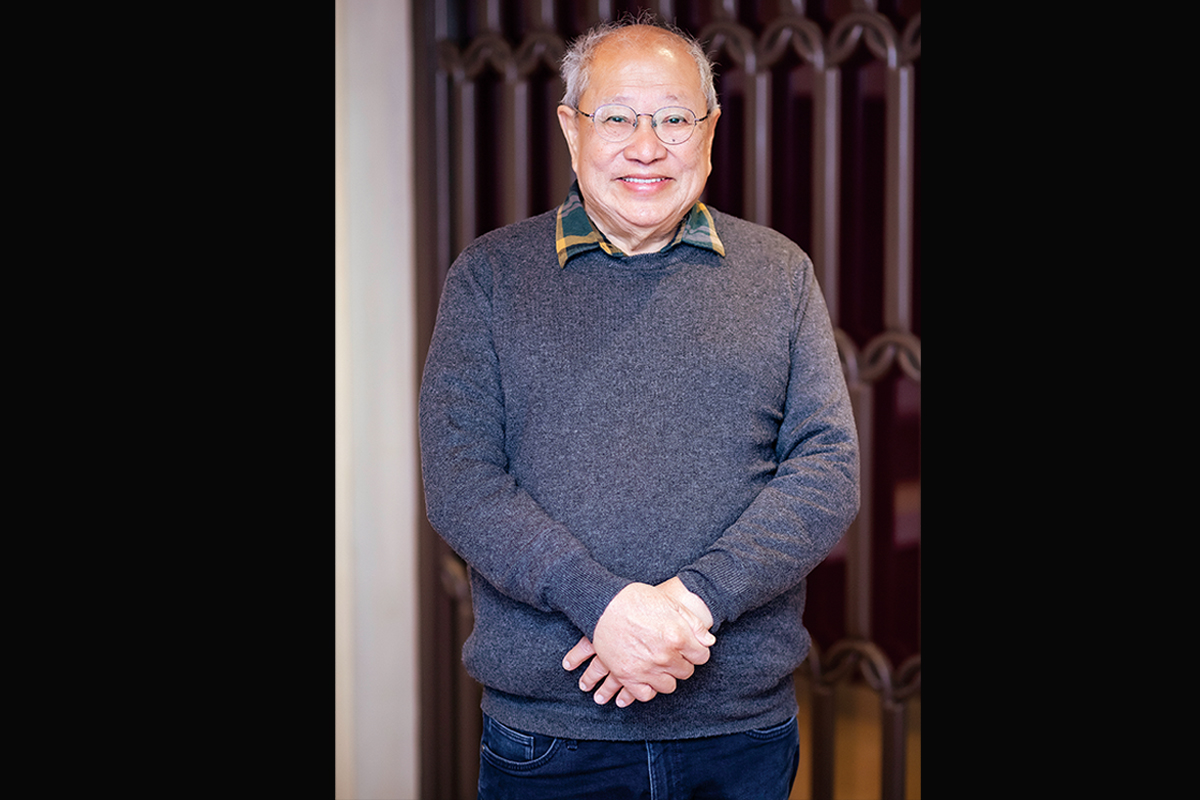
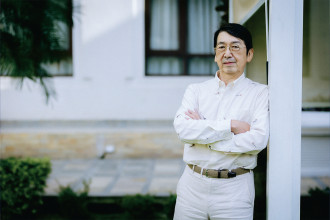
Robert Kee
Chairman, Himalayan Hideaway Resort Pokhara, The Centara Collection
Robert Kee is an engineer and entrepreneur who transitioned from a career in the technology and electronics sectors to humanitarian work and social enterprise. After studying in New Zealand and Singapore, he held leadership roles in several firms before founding the Operation Hope Foundation (OHF) in 2001. His approach to charity focuses on applying engineering principles to ensure high levels of accountability and transparency in aid delivery across Asia, including Nepal and Cambodia.
In Nepal, Kee’s work evolved from disaster relief following the 2015 earthquake to a specialised model of hospitality. He developed low-cost, earthquake-resistant housing using local soil and rice bags for remote villages. More recently, he established the Himalayan Hideaway Resort in Kaskikot, Pokhara, which is managed under the Thai luxury brand Centara. The resort is designed as a social enterprise, where profits are intended to support the long-term sustainability of his foundation’s humanitarian programmes.
Kee’s design for the resort emphasises practical comfort and local integration, such as using large room sizes, accessible paths for the elderly and innovative energy-saving systems. He advocates for shifting Nepal’s tourism toward a high-end destination model that can accommodate families and international travellers while preserving the country’s natural environment. In a conversation with Business 360, Kee shares his perspectives on luxury, innovation and the future of Nepali tourism. Excerpts:
What first drew you to Pokhara and Kaskikot as the location for Himalayan Hideaway, and what did you feel this place could offer that Nepal’s tourism landscape was still missing?
I have been coming to Nepal for 20 years and during that time, I noticed a gap in what was being offered to travellers who expect a certain standard. Coming from Singapore, we are accustomed to a very high level of service, food and innovation. I found that many places in Pokhara were offering more or less the same thing, the same Indian food, the same pasta, all at a very reasonable price. While affordability is great, I want people to come to Nepal for an experience, not just because it is cheap.
We chose Kaskikot because it strikes a perfect balance. At the time we started, it was quite remote and untouched, yet it is not too far away from the lakeside area. We wanted to elevate the tourist experience to a higher level by offering something more sophisticated while staying connected to the heart of Pokhara.
Himalayan Hideaway is positioned as a luxury property with a strong social purpose. How do you personally define luxury in the Nepali context, and how is it different from global resort destinations?
To me, luxury begins with space. In many hotels, rooms are quite cramped, maybe 140 to 200 square feet. Our standard rooms are 400 square feet, and our suites are 500 square feet. We even provide a private garden for every standard room, which is something you typically only see in high-end villas or suites.
But beyond the square footage, luxury is about the small things that prioritise guest comfort. I am an engineer, so I look at the mechanics of a stay. For instance, I have always been annoyed by luggage racks that only fit one suitcase, forcing me to put mine on the floor while my wife uses the rack. In our rooms, we have racks designed to hold two full suitcases completely open. We also separate the toilet from the bathroom because no one wants to brush their teeth in a room that smells like their partner’s business.
Then there is the sleep quality. We spent a significant amount of time ensuring we have the right size and firmness of pillows. Global luxury often focuses on the show, but in Nepal, I believe luxury should be defined by thoughtfulness, space and a level of comfort that makes you want to stay for weeks rather than just a night.
Nepal is often seen internationally as a trekking and backpacking destination. From your perspective, what needs to change for Nepal to be taken as a high-end tourism destination as well?
We need to shift the mindset from hotel rooms to resorts. A resort is a destination in itself where you stay to enjoy the facilities, food and the atmosphere. Right now, many people stay one night and then head out for trekking. We want to encourage people to stay longer and enjoy a proper holiday.
To do that, we must become more family-friendly and elderly-friendly. Often, parents want to trek but do not know what to do with their children or the grandparents. We have designed our property so that every room is accessible by a buggy. This means older guests do not have to struggle with steep walks, which is a common problem at other resorts in the region. We also have multi-purpose spaces that can be converted into children’s playrooms. If we can accommodate the whole family, we can attract a different calibre of traveller.
The resort brings Centara’s first Thai luxury brand to Pokhara. What has that partnership meant for Nepal’s visibility and what lessons can local hoteliers take from this?
Thailand is world-renowned for its hospitality and its spa culture. By bringing Centara here, we are marrying that Thai excellence in service with Singaporean innovation and efficiency. Centara is growing rapidly and their presence in Pokhara puts Nepal on the map for a much wider audience in Southeast Asia and beyond.
I think local hoteliers can learn a lot from the integration of technology and service. For example, as an engineer, I designed a system where the air conditioning automatically switches off when a guest opens the sliding doors or windows. Usually, you need a very expensive HVAC (Heating, Ventilation and Air Conditioning) system for that, but I designed a way to do it with standard equipment. This kind of innovation improves the guest experience while being conscious of energy use.
Local employment and skills development are central to your model. How challenging has it been to build internationally benchmarked hospitality skills locally?
It is certainly a challenge to find workers who are already trained to international standards. However, our approach is to treat our staff like family. If you create a happy, family-like ambiance, the staff will stay longer, and they will care more about the guests. We rely on our operators to maintain those standards but the core of it is building a culture where local people feel invested in the success of the property.
Infrastructure remains a major concern for investors in Nepal. From your experience in Pokhara, what gaps most urgently need attention?
Electricity is the most immediate problem. The frequent blackouts are a major hurdle. Running generators is incredibly expensive and not sustainable in the long run.
But beyond that, the international airport in Pokhara is the real game-changer. Currently, most tourists have to fly into Kathmandu and then take a domestic flight to Pokhara. These domestic flights are often delayed. I have waited five hours for a flight myself. High-net-worth individuals and international tourists cannot afford to waste time like that.
Furthermore, I have been told that many American and European travel insurance policies do not cover travel on propeller planes. This keeps a large segment of wealthy tourists away from Pokhara. An international airport with automatic landing systems would bypass the weather delays and safety concerns, opening the floodgates for high-end tourism.
Your work after the 2015 earthquake focused on low-cost, earthquake-resistant housing. How has that experience influenced the design of Himalayan Hideaway?
After the earthquake, I realised that many villages were destroyed because they used stone and mud. They used these materials simply because they could not carry bricks up the mountains where there were no roads. I adapted a method using rice bags filled with local soil to build walls. We built 155 of these houses, and they were not only earthquake-resistant but also naturally insulated, cool in summer and warm in winter.
This taught me the importance of building in harmony with the environment and being resourceful with what the land provides. At the resort, this translates to our water management. We have massive tanks to collect 200,000 to 300,000 litres of rainwater so that during the monsoon, we do not have to use the underground water. We want to ensure that the local villagers always have enough water for themselves. We are even planning to provide a pipe to the village to share our water supply during certain times of the day.
In your view, what are the biggest policy or mindset shifts needed for tourism to become a national growth engine for Nepal?
Nepal should look at the model China used years ago. When China wanted to grow, they did not open everything at once. They opened specific areas like Shenzhen for foreign investment. If the government is afraid of foreign investors, they should start by opening one province or one industrial park.
Foreign investors do not just bring money. They bring technology and access to world markets. We should not be afraid of foreigners because, in time, the local population will learn those skills and eventually do it even better. If you stop foreign investment, you stop the flow of capital and the progress of the nation. Open the door slowly and Nepal will prosper almost immediately.
Looking ahead ten years, how do you hope Himalayan Hideaway will have shaped the way Nepal thinks about responsible and purpose-driven hospitality?
I want Himalayan Hideaway to be a true destination where people come for weddings, birthdays and wellness retreats. I want it to be a place where people from stressed cities like Singapore can come for two or three weeks every year just to relax and enjoy the weather.
My dream is to create a ‘Micro-Davos’ in Kaskikot. I want to create a vibe where high-net-worth individuals and thinkers can gather, network and meet new friends in an alfresco dining setting.
Further down the road, I also want to innovate in the trekking sector. Many guest houses on trekking routes are not very comfortable. I have this idea to bring insulated container hotels up the mountains. They are easy to set up, provide hot water and warmth, and can even be dismantled to protect the environment. Nepal’s tourism potential is huge. We just need to provide the right facilities to match the majesty of the mountains.