"I Encountered Capable Entrepreneurs Struggling Without Mentors" – Shraddha Shakya


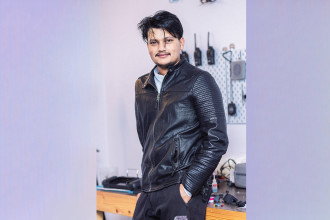
Shraddha Shakya
Managing Partner, Byapar Briddhi Bikalpa
Shraddha Shakya is an entrepreneurship ecosystem enabler in Nepal and the managing partner of Byapar Briddhi Bikalpa (Briddhi). Through her leadership, Briddhi has emerged as Nepal’s first fully structured private mentorship platform dedicated to bridging the gap between aspiring entrepreneurs and seasoned business leaders. Her work spans entrepreneurship development, incubation design, mentor-mentee matchmaking, policy advisory and ecosystem strengthening across Nepal and Bhutan.
“The idea behind Byapar Briddhi Bikalpa was born out of a clear and recurring pattern,” observes Shakya, adding, “I encountered capable entrepreneurs who were not lacking ideas, motivation or effort but were struggling because they lacked access to experienced mentors who could guide them through real business challenges.”
Mentorship has always been central to her work in incubation and entrepreneurship support programmes. For many years, she and her former supervisor and mentor, Niraj Khanal, served as representatives for PUM Netherlands Senior Experts in Nepal. PUM connected international senior experts with local businesses, providing structured advisory support. And when PUM exited Nepal in December 2024, it created a significant gap in structured expert mentorship within the country.
“Recognising the urgency of this vacuum, my colleagues and I realised that Nepal needed a locally anchored yet globally connected platform to institutionalise mentorship,” says Shakya.
A key conversation with Suraj Vaidya, President, Vaidya’s Organisation of Industries and Trading Houses, gave them further confidence to formalise the vision into a private company. His encouragement reframed mentorship from a side activity into a core pillar of business growth. Under his guidance, and with the collective support of leaders such as Kush Kumar Joshi, Samata Prasad and Niraj Khanal, each driven by a strong belief in giving back, Byapar Briddhi Bikalpa was launched.
“The company’s goal is clear: to bridge the gap between experience and aspiration by connecting entrepreneurs with seasoned business leaders through a structured, credible platform designed specifically for Nepal’s context,” says Shakya. “Establishing Briddhi was not without challenges. One of the most significant hurdles was building everything from scratch.”
Shakya and her team had to design a sustainable revenue model and an operational framework tailored to Nepal’s business realities rather than simply replicating international mentorship models.
Another challenge was the limited understanding of structured business mentorship in Nepal. Mentorship has often been perceived as voluntary or informal. Aligning mentors around a shared philosophy, set of values and commitment required time and effort. Incentivising mentors while preserving the spirit of giving back is a delicate balancing act.
Equally important was preparing entrepreneurs themselves. Many mentees were unfamiliar with how structured mentorship works.
“Establishing clear expectations regarding roles, responsibilities and outcomes became essential,” shares Shakya. “Bridging these gaps between structure and culture, mentors and mentees ultimately shaped the foundation of Briddhi’s model.”
At Briddhi, growth is defined holistically. While financial progress is important, Shakya emphasises that growth is often intangible. It can be seen in successful market linkage meetings, stronger financial systems, improved human resource structuring, better team management, and, most importantly developing resilient and confident leadership.
“Sometimes growth is deeply personal, such as when an entrepreneur shares that mentorship helped save a business partnership or provided clarity during a difficult period,” states Shakya, adding, “For me, addressing these foundational yet often overlooked issues represents the most meaningful form of growth.”
Briddhi focuses on helping businesses get the fundamentals right: building system-driven, standardised enterprises that comply with government regulations and are prepared for sustainable, long-term success.
Briddhi’s mentorship model is grounded in more than a decade of hands-on experience working with entrepreneurs in Nepal and Bhutan.
“Niraj Khanal worked with PUM Netherlands Senior Experts for over 10 years, and I was closely involved for five. Our exposure to international best practices helped us understand what makes mentorship effective,” shares Shakya.
Briddhi stands out as Nepal’s first private organisation operating a fully structured mentorship platform. “The team received intensive training in the Netherlands from PUM Senior Experts, who continue to serve as advisors,” says Shakya. “This allows Briddhi to combine global standards with deep local relevance.”
The organisation’s mentor pool includes seasoned business leaders, including former presidents of the Federation of Nepalese Chambers of Commerce and Industry. Their practical understanding of Nepal’s policies, constraints and opportunities ensures that mentorship is grounded, credible and immediately applicable.
“The process begins with a ‘Business Health Check-up’ conducted by Briddhi’s secretariat to assess an entrepreneur’s situation, identify gaps and prioritise needs,” says Shakya. “Based on this assessment, entrepreneurs are matched with mentors whose expertise aligns with their challenges. Introductory meetings ensure chemistry and alignment before formal engagement begins.”
Briddhi operates both cohort-based programmes and one-on-one mentorship. Fellows, trained Bachelor’s and Master’s level students, support documentation, coordination and follow-up. They also facilitate communication and ensure accountability. Comprehensive reports are then reviewed by the management team for evaluation and process improvement.
“Collaboration is central to Briddhi. We partner with local and international institutions to embed structured mentorship within entrepreneurship programmes,” says Shakya. “For example, we collaborated with The Bridge International to support returnee migrants from South Korea in starting and stabilising businesses in Nepal.”
The organisation also partners with ICIMOD and We Are Change Makers, as well as local ecosystem actors such as KGS Inc and Antarprerana. Regionally, Briddhi is a member of the GIREE Alliance, which strengthens entrepreneurship across the Hindu Kush Himalayan region. Through partnerships with international mentors and organisations like SES, Briddhi ensures globally informed and locally grounded support, including on-site mentorship when needed.
“Briddhi is committed to inclusivity. Some mentors travel to rural areas to provide hands-on guidance. Fellows assist with local language translation, documentation and market research to ensure that geographical or educational barriers do not limit entrepreneurial potential,” says Shakya.
In her view, aspiring entrepreneurs in Nepal must cultivate resilience, discipline, humility and coachability. The critical mindset shift begins with acknowledging that one does not know everything about one’s own business. “Mentors help entrepreneurs identify blind spots, challenge assumptions and avoid costly mistakes. A growth mindset, combined with a problem-solving and continuous learning attitude, is essential for long-term sustainability,” says Shakya.
Briddhi’s model embeds sustainability through knowledge transfer. Experienced leaders mentor emerging entrepreneurs and those who succeed are encouraged to give back as future mentors. This cycle fosters innovation, responsible growth and shared learning. Shakya identifies sustainability, surviving, stabilising and scaling, as the biggest systemic challenge for Nepali enterprises. Many businesses struggle after the initial phase due to weak systems and limited strategic guidance.
“Briddhi addresses this through long-term capability building, structured mentorship, incubation support and initiatives like The CEO Factory, a platform where CEOs connect with peers facing similar challenges,” says Shakya.
She advocates for stronger bridges between research and entrepreneurship, better access to market data, specialisation over overextension and embedding mentorship within government policies. Stronger collaboration among government, the private sector, financial institutions and academia is essential for practical policies and resilient enterprises.
Shakya envisions a private sector defined by sustainable businesses, ethical practices and genuine collaboration. By making mentorship accessible, she hopes to make entrepreneurship less lonely, less trial-and-error driven and more efficient for the next generation. Her long-term vision includes nurturing a strong giving-back culture, where successful entrepreneurs reinvest their wisdom and networks into emerging founders.
“I envision a closer alignment between government, the private sector and academia, creating a more informed, ethical and resilient entrepreneurship ecosystem,” states Shakya.
Through her leadership at Byapar Briddhi Bikalpa, Shakya is not only building businesses, she is building a culture of mentorship, collaboration and sustainable growth that she believes will contribute to long-term prosperity for Nepal.''