
Upcoming budget to prioritise ongoing projects, mandate cost-benefit analysis for new ones

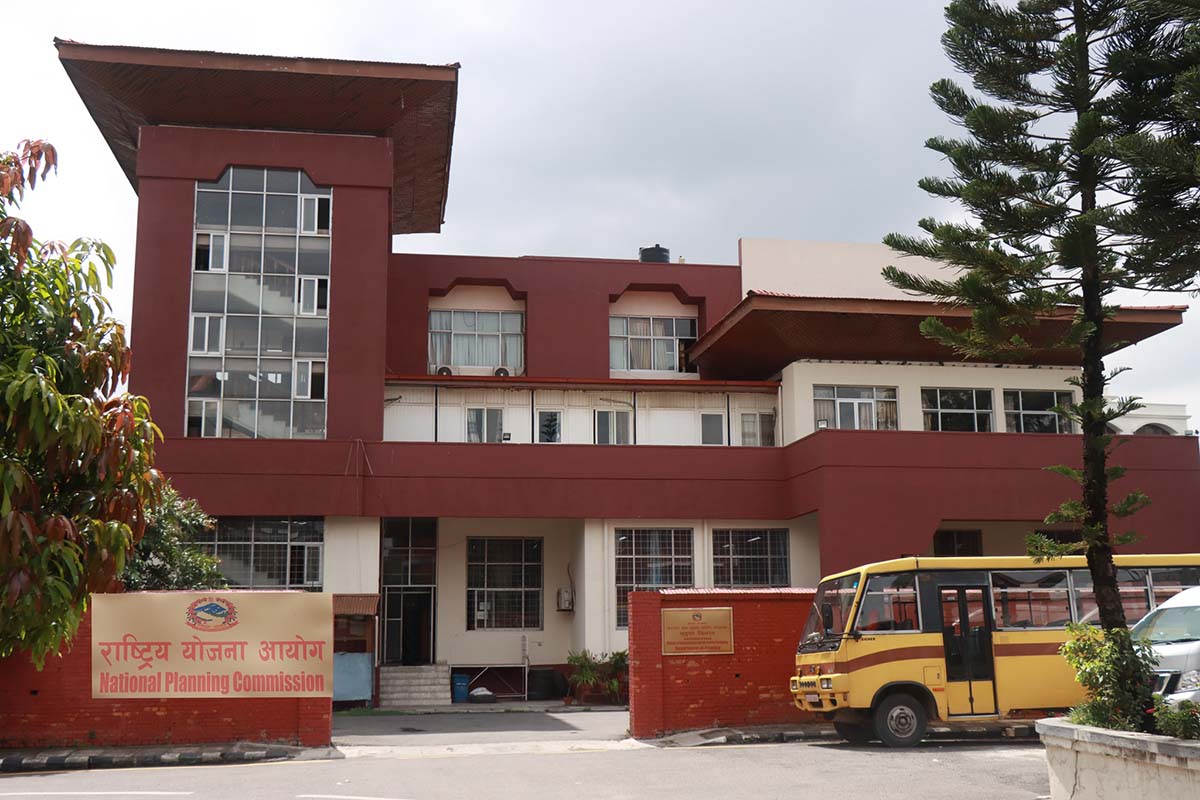
KATHMANDU: National Planning Commission (NPC) has begun preliminary discussions with line ministries on the formulation of budget for upcoming fiscal year 2026/27.
The discussions will prioritise ongoing and multi-year projects. New proposals will be accepted only if they are fully prepared for immediate implementation and include a mandatory cost-benefit analysis.
The NPC has prepared a budget formulation checklist aimed at making the budget process for fiscal year 2026/27 more disciplined, result-oriented and realistic. NPC Assistant Spokesperson Dibakar Luitel said the commission’s schedule for the day includes discussions with the Office of the Prime Minister and Council of Ministers, Ministry of Federal Affairs and General Administration (MoFAGA), Ministry of Culture, Tourism and Civil Aviation (MoCTCA), and Ministry of Health and Population (MoHP) on projects and programmes to be considered for the next fiscal year.
Luitel said discussions on proposals from the Ministry of Forests and Environment (MoFE), Ministry of Labour, Employment and Social Security (MoLESS), Ministry of Physical Infrastructure and Transport (MoPIT), and Ministry of Urban Development (MoUD) are scheduled for Wednesday, April 1. Earlier in the preliminary stage, the NPC concluded discussions on Monday with the Ministry of Home Affairs (MoHA), Ministry of Land Management, Co-operatives and Poverty Alleviation (MoLMCPA), Ministry of Youth and Sports (MoYS), and Ministry of Women, Children and Senior Citizens (MoWCSC), and held discussions on Sunday with the Ministry of Finance (MoF), Ministry of Foreign Affairs (MoFA), and Ministry of Law, Justice and Parliamentary Affairs (MoLJPA).
Under the new checklist, thematic ministries and agencies are required to propose only those projects supported by a detailed basis and that have completed all implementation preparations so they can deliver immediate results. Ministries must include physical and financial progress reports for current fiscal-year projects and provide an analysis of problems and challenges encountered during implementation.
The checklist also requires clear disclosure of the current status of National Pride Projects and major programmes in the project bank to help evaluate projects with long-term significance. Proposals must align with the 16th Periodic Plan and set out transformative strategies and major programmes for the coming year, with realistic resource and expenditure projections according to the budget ceiling for 2026/27–2028/29 provided by the MoF and the Medium-Term Expenditure Framework.
The Financial Procedures and Fiscal Responsibility Act, 2076, mandates that proposed projects include feasibility studies, environmental studies, Detailed Project Reports (DPR), designs, cost estimates, land acquisition status, implementation schedules, procurement plans and clearly defined expected returns. Details of resource assurance for National Pride Projects and multi-year projects must also be submitted to enhance transparency of budget commitments.
The government has adopted a policy of giving special priority to projects that yield quick results, can be completed within specified time and cost, and are set for completion within the upcoming fiscal year. Ongoing programmes and projects must be classified by priority, with proposals listing projects to be continued, reviewed or scrapped. Projects requiring restructuring or review, including incomplete or stalled projects, must be presented separately, and proposals must disclose whether past financial liabilities have been addressed.
Finance Minister Dr Swarnim Wagle has said the government will introduce a transformative budget for the upcoming fiscal year. In coordination with the MoF, the NPC has instructed thematic ministries to determine clear priorities during these discussions and to propose projects only after those priorities are set.
On the deadline for submissions, Assistant Spokesperson Luitel said, “We had initially asked for projects and programmes to be entered into the LMBIS by March 29, but the MoF will be flexible in this regard.” The MoF extended the deadline to allow time to incorporate provisions from ruling parties’ election manifestos, the 100-point action plan for governance reform approved by the cabinet on March 27, and the Good Governance Blueprint, 2082.
(With inputs from RSS)
-1790953895.jpeg)
-1790952398.jpeg)
-1790946272.jpeg)