
FNCCI urges finance minister to present transformative budget for FY 2026/27

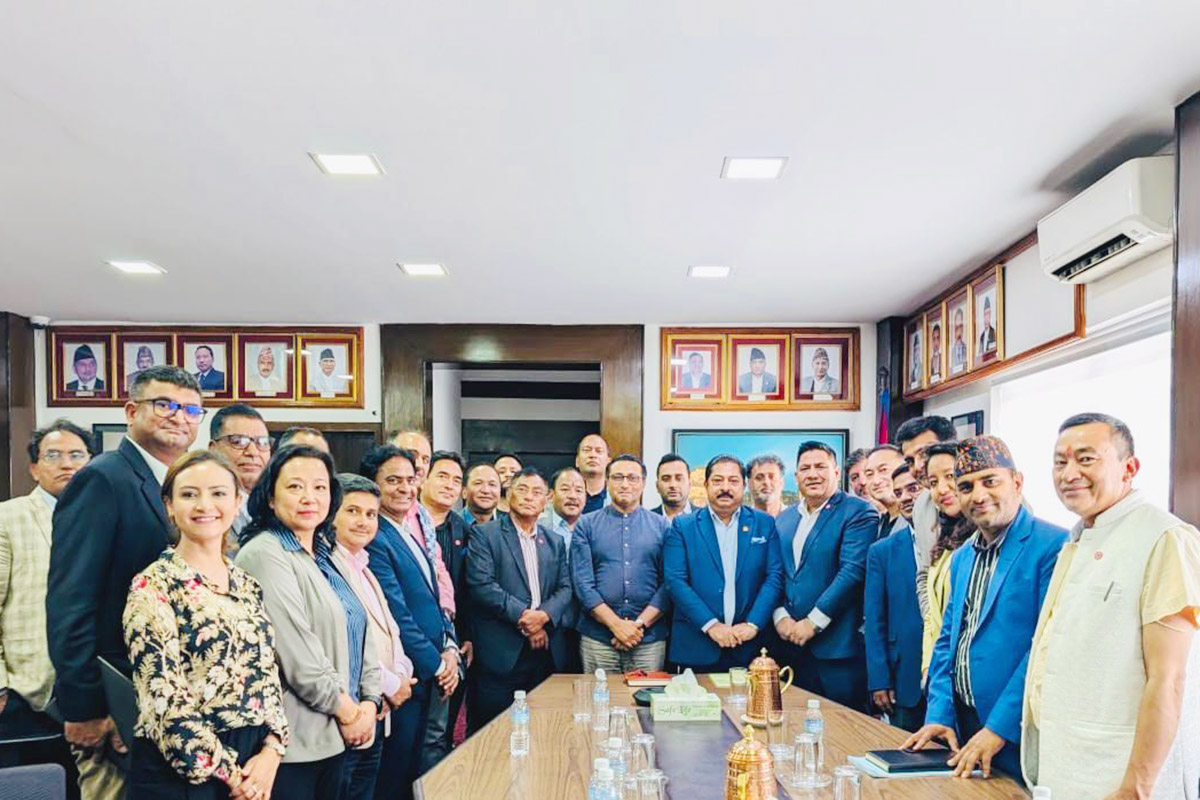
KATHMANDU: Federation of Nepalese Chambers of Commerce and Industry (FNCCI) has urged Finance Minister Dr Swarnim Wagle to present a budget for fiscal year 2026/27 aimed at transforming Nepal’s economic model and reversing a slide in private-sector confidence.
FNCCI submitted recommendations to the Ministry of Finance on Sunday, calling for 'radical change' to the current economic approach and for policies to revive business morale, stimulate market demand, re-attract stalled investments and create jobs. The delegation said the budget should go beyond routine measures because it comes at a 'distinct turning point in Nepal’s economic history.'
FNCCI President Anjan Shrestha told the finance minister the chamber’s national framework, 'Six Pillars, 60 Initiatives,' complements government programmes and can support policy implementation. He said investor confidence has eroded because tax rules change every year and urged a single revenue code with clear explanations and the establishment of an empowered revenue board. “Furthermore, clear guarantees are required that tax laws will not be applied retroactively,” Shrestha said.
Responding to the delegation, Finance Minister Wagle said the government plans structural reforms and called the coming year 'transformative.' He said the administration views the private sector as a principal partner and acknowledged falling private sector morale and weakening market demand. “We have brought changes in politics. Now we must bring changes to the economy. As this is the first full budget of the government with a new mandate, it must break old traditional frameworks,” he said. He added that many reforms can be implemented over the next five years and urged the private sector to remain optimistic.
FNCCI highlighted several indicators that need urgent attention. Industrial production capacity is limited to 40%. The construction sector is at a difficult turning point. The private sector’s share in gross domestic capital formation has fallen from 28% to 16% over the past four years.
FNCCI said Nepal’s average economic growth over the last two decades has been about 4%, tax growth reached 11% and revenue as a share of GDP exceeded 19%. It said this represents one of the highest tax burdens in South Asia and has encouraged informal transactions, illegal trade and the flight of enterprises.
Likewise, FNCCI warned the crisis in the Middle East could reduce foreign employment, remittances, foreign exchange reserves and overall economic performance by about 1.8%.
FNCCI President Shrestha urged an immediate shift from a remittance-dependent economy to one based on production, saying Nepal’s demographic dividend that began in 2045 BS will gradually end. He asked the finance minister to prioritise a “Swadeshi Mana, Swadeshi Bhana, and Swadeshi Bana” approach and called for a long-term integrated policy for export-oriented industries such as textiles, carpets, garments, pashmina and felt. He warned that graduation from least developed country status risks eroding preferential market access.
Among FNCCI’s proposals were legal provisions allowing Nepali companies to invest a portion of export earnings abroad to expand regionally and internationally; measures to stop illegal smuggling across the open border; and remedies for what it called an anomaly under the South Asian Free Trade Area (SAFTA) where finished goods can be cheaper to import than raw materials.
The chamber recommended making BOOT (Build-Own-Operate-Transfer) and public-private partnership (PPP) models effective for reviving sick industries and for projects in energy, transmission lines, pump storage, tunnels and industrial zones. It suggested a viability gap fund to encourage private investment.
FNCCI President Shrestha said the private sector expects concrete budget steps to turn Nepal from a consumer market into an exporter of goods and services. He listed priority sectors as agriculture, tourism, herbs, tea, coffee, information technology and service exports. He also urged measures to improve business-environment security and to remove criminal penalties that hinder entrepreneurship.
Minister Dr Wagle reiterated the government’s commitment to working with the private sector and said the budget will aim to uphold good governance, strengthen private sector development and boost employment by encouraging investment.
-1790953895.jpeg)
-1790952398.jpeg)
-1790946272.jpeg)