Dr Chiranjibi Nepal’s Journey of Purpose and Public Service

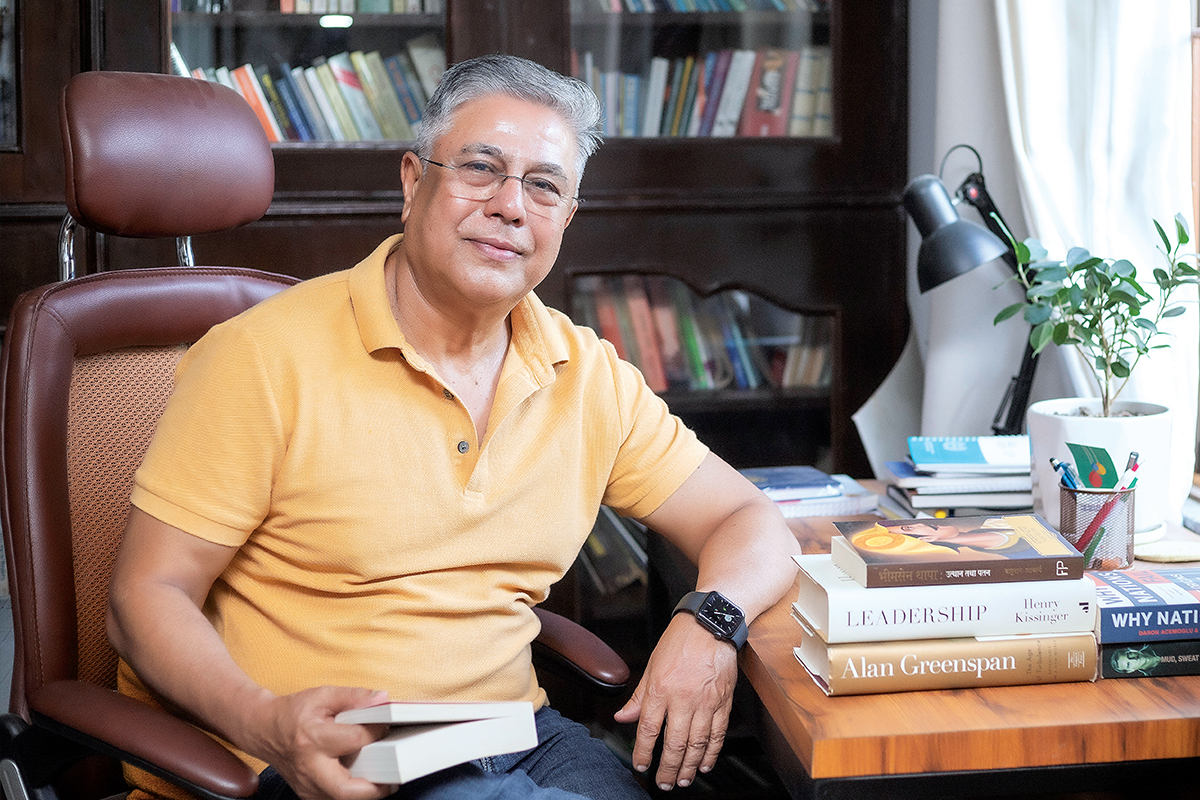
As for positions and appointments, I have been offered more than I have accepted. There is something equally important in knowing when to walk away. If the work does not mean anything, the title is just a word.
Dr Chiranjibi Nepal, Former Governor, Nepal Rastra Bank
The first time Dr Chiranjibi Nepal saw his signature printed on Nepal’s currency, it carried an unmistakable charge. The realisation was immediate: his name would circulate across the country - slipped into wallets, exchanged over shop counters, and held by farmers, traders, and schoolchildren who would never know the man behind it. What began as exhilaration gradually settled into familiarity, becoming, in time, a quiet routine, another artifact of institutional life.
A former governor of Nepal Rastra Bank, Dr Nepal devoted much of his professional life to understanding the mechanisms that drive an economy, and the rest to easing its pressures. His journey began in academia, teaching economics at Tribhuvan University, a familiar entry point for many of Nepal’s most influential economic minds.
Over the decades, his career expanded beyond the classroom into advisory roles across government ministries, policy formulation, corporate governance and leadership positions in institutions ranging from the Securities Board of Nepal to the Office of the Prime Minister. While each appointment demanded a different skill set, they were bound by a consistent focus: translating economic theory into the practical functioning of financial systems.
In 2015, he was appointed the 16th Governor of Nepal Rastra Bank. His five-year tenure coincided with one of the most turbulent periods in Nepal’s recent history - a devastating earthquake, the promulgation of a new constitution, a trade blockade, and the long, complex process of economic recovery that followed.
Since completing his term, Dr Nepal has returned to academia and public discourse, continuing his work as an economist shaped by lived experience at the highest levels of policy and governance. His perspective reflects a rare duality: proximity to power and the clarity to recognise its limits.
In this edition of Business 360, Nepal reflects on the defining experiences that quietly shaped his life. Excerpts:
A childhood chasing cinema and songs
My earliest childhood memory is from kindergarten at Shishu Niketan, where I watched my very first Hindi film, Dosti. I was only six years old but something about that movie felt so emotionally overwhelming that it made me cry. As a budding movie buff, I already loved singing. Influenced by all those films and songs, I decided to raise my hand one day to sing a Nepali song, since no one ever sang them at my school. I stood up and sang ‘Hoho Maale Hoho’ in front of the whole class, and just like that, everyone praised me. That moment built my confidence.
Moving from Shishu Niketan to Laboratory School for fifth grade marked my first real turning point. Everything shifted from there. Academically, I was above average but nothing extraordinary. However, I was an extrovert to my core. I constantly talked in class, cracked jokes and sang. I was just that kid. At Lab School, everyone started asking me to sing. Teachers, classmates and even ninth and 10th graders would seek me out and say, ‘Bhai, come on, sing something’. I never trained or took a single music lesson but singing felt like it completely belonged to me.
Sports pulled me in the same way and films were everything. I would line up outside Bishwojyoti Cinema at two in the morning just to secure a first-day-first-show ticket. Back then, tickets for those opening shows were usually scalped in the black market. That was just how it worked and honestly, as a passionate movie buff, I did not care about any of that. Because of that dedication, I caught the first-day-first-show of almost every movie. The sheer craze I had for cinema and singing back then was completely unbeatable.
A quiet shift and lifelong habits
Life changed when my father left the police force. We packed up everything and moved to Bhairahawa, all of us together, and that city became home for a while. He had served his years and now circumstances were pulling the family in a new direction.
Being the eldest son, something quietly shifted inside me. Nobody sat me down and said anything, it just settled in on its own. The life I had known, running around freely, playing and laughing without a second thought, was still there but I was seeing it differently now. I wanted to show up for my family. I wanted to be someone they could lean on.
My father opened a shop to keep things moving. Watching him do that, just quietly getting on with it, taught me more than I can put into words. I finished high school at Bhairahawa Madhyamik Vidhyalaya, and then came to Kathmandu and Tri-Chandra College for my ISc. It was my first real taste of being on my own. There were no parents down the hall and no home-cooked meals waiting. I did everything myself, cooking, managing and figuring it out, day by day.
It was somewhere in that quiet independence that I started exercising. If I did not take care of myself, I would not be able to take care of my family. Health mattered, just as my dad said.
That voice never went quiet. Even now, every single morning, I exercise for two hours. Some habits stay for life.
The fire of a student movement
For my Bachelor’s, I went to Palpa. I had always felt a pull toward the democratic movement, even from 2035 BS. But it was in Palpa that things got real. I became President of the Free Student Union that year, at just 17 or 18 years old. Nobody handed it to me. Circumstances brought me there and I accepted it fully.
Something about holding responsibility at that age feels different. You stop thinking only about yourself. You start carrying people in your mind, their problems, their hopes and what they need from you. That weight made me grow in ways nothing else could have.
The movement was alive and loud in those days. Our house in Bhairahawa became a gathering point. People would come, plans would be made and then we would go out, village to village, town to town, speaking to students, rallying people and giving speeches across 40 or 50 different places spanning Rupandehi and Palpa. I walked into the rural municipalities and gave speeches for the movement. There was tension everywhere, and yes, there was danger too. But honestly, I never felt afraid. Something just kept me going.
After my BA, I came back to Kathmandu for my Master’s, this time joining the economics department at the university. It was a new chapter but the fire that Palpa lit in me never dimmed.
An anchored life and finding my footing
Marriage was another turning point. I was 23 years old, already deep in politics and carrying more responsibility than most people my age. Then, suddenly, there was a home to tend to, a wife to build a life with, and a whole new kind of accountability that politics never quite prepares you for. Balancing both worlds was something I had to figure out as I went.
Our families were close. My father and my father-in-law were old friends, so in many ways, the match felt natural. My wife was teaching English at a school then and she went on to become a professor. I have always admired that about her.
There is an old saying used a lot: if a son is going astray, get him married and he will improve his habits. I laugh at it now but I think there is something stramgely true in it. I was already responsible but marriage truly anchored me.
My father had his own reasons for wanting me married young. His brother, my uncle, never married, and that worried him. He did not want the same path for me, so he moved things quickly.
My father was a remarkable man in his own right. He rose through the police ranks to become a chief inspector, serving as the first Nepali in Nepal’s counter-intelligence. Even today, there is an award in his name, the Kulananda Smriti Puraskar, which awards Rs 50,000 every year to the top candidate of the inspector cadre, keeping his memory alive in that small but meaningful way.
After marriage came the question of work and I knew one thing clearly about myself. I cannot work under someone else. I need room to move, room to think and room to be my own person. That has always been true of me. When I looked at what fit that needed, teaching was the answer. You walk into your classroom, you give everything you have, and you are entirely your own person while doing it.
So, I started teaching. First in Palpa, and then from 2046 BS onward, at the Central Department of Economics in Kathmandu. That is where I truly found my footing.
The price of entry and doors unlocked
In academia, a PhD is not optional. It is the price of entry if you want to be taken seriously. But what struck me when I looked around at my colleagues was that most of them were waiting.
They were waiting until their hair turned grey, waiting until they were past 50, as if a PhD was something you only earned after a lifetime of service. Some had been sitting on that dream for decades.
I was in my 20s and I was not going to wait. Tribhuvan University had a good system at the time, actively encouraging faculty to pursue doctorates and offering up to five years of leave, both paid and unpaid, to make it possible. So, two years after joining the university, I applied for a sabbatical and left for Banaras Hindu University to begin my doctoral studies.
I finished in two years and three months. The minimum required time was two years, yet some people took eight or nine. Finishing in just over two years made me the fastest anyone had ever submitted their thesis there. Back home, it caused quite a stir. People were genuinely puzzled and some were even suspicious. A young person finishing that quickly did not fit the expected pattern and I could see it made some uncomfortable. They would ask, half curious and
half sceptical, why I had done it so fast.
But finishing early opened doors I could not have imagined. The respected Devendra Raj Pandey was putting together Nepal’s first Human Development Report and needed a secretary general. He reached out to me. That single opportunity led to many others. Over the years, I worked with the World Bank, UNDP, SEBON, NRB, GTZ, ADB, private enterprises and ministries, and even served as an advisor to prime ministers. I was also appointed as the first chief of the IT Park.
That was nearly 30 years ago now and I still say the same thing to anyone who will listen. If you want to study, do not stop in the middle. Keep going. The time you lose trying to pause and restart is worth more than any short-term gain. Time is the one thing you cannot buy back.
And then there was Sushil Koirala. During his tenure as Prime Minister, he asked me to be his advisor. I laughed, genuinely thinking he was just being polite. He was not. He followed up and appointed me as his finance advisor and I realised then that some offers are not really offers at all. They are decisions someone has already made about you.
As for positions and appointments, I have been offered more than I have accepted. There is something equally important in knowing when to walk away. If the work does not mean anything, the title is just a word.