The Missing Middle Has the Budget Delivered for SMEs?


If Nepal's economy has a growth problem, it also has an SME problem.
Small and medium enterprises account for more than 90% of businesses in Nepal and employ an estimated 1.7 million people. They are the country’s largest source of non-agricultural employment, the backbone of local economies, and a critical pathway for innovation, entrepreneurship, and private sector-led growth. Yet, despite their importance, SMEs remain trapped in what economists call the ‘missing middle’ – too many businesses remain small, too few successfully scale, and even fewer become competitive exporters or nationally significant enterprises.
This year’s national budget arrives at a particularly important moment. Economic growth remains below potential, private sector confidence is fragile, domestic demand has yet to fully recover, and youth migration continues to drain talent and entrepreneurial ambition from the economy. While liquidity has returned to the banking system, many businesses continue to report difficulties accessing affordable credit. Investment remains cautious. Consumption remains subdued. Growth, while positive, lacks momentum.
Against this backdrop, the government has unveiled a budget that promises tax rationalisation, investment promotion, industrial development, digitalisation, startup support and incentives for domestic production. On paper, the direction is clear: create a more business-friendly environment and stimulate private sector activity.
But for SMEs, the question is not whether the budget is pro-business. It is whether it is pro-growth.
The distinction matters. Most SMEs in Nepal are not struggling because of a lack of incentives. They are struggling because of structural barriers. Access to finance remains collateral-driven and restrictive. Regulatory compliance continues to consume disproportionate time and resources. Export readiness remains weak. Integration into government procurement systems and larger supply chains is limited. Business development support is fragmented across institutions, while implementation of existing SME policies has often fallen short of intent.
The budget addresses some of these concerns indirectly but stops short of presenting a coherent strategy for helping businesses move from survival to scale. There is no transformative financing mechanism for growth-oriented SMEs. No significant overhaul of the regulatory environment. No bold roadmap to integrate smaller firms into national and global value chains. There is little evidence of a coordinated effort to turn Nepal’s entrepreneurs into exporters, innovators and job creators at scale.
Ultimately, the success of this budget will not be measured by the number of incentives announced but by whether it helps create a new generation of growth companies. For a country seeking higher productivity, stronger exports and sustainable job creation, the real challenge is no longer starting businesses. It is helping them grow.
In this Opinion section, we asked entrepreneurs and ecosystem builders like Kailash Panday, Managing Director, Nepal Invests; Vidhan Rana, Freelance Artist; Sushama Sharma, Founder and CEO, Phool Prasad; Nisha Taujale, Co-founder, Kathmandu Organics; and Ramila Nemkul Shrestha, Founder & Managing Director, KASA whether this budget has moved the needle for Nepal’s SMEs or does the country’s missing middle remain its biggest untapped economic opportunity?
Excerpts:
The budget focuses on tax rationalisation and production incentives, but access to affordable capital remains the single biggest constraint for many SMEs. Did the government miss an opportunity by not introducing a dedicated SME credit guarantee mechanism or alternative financing framework? What would that have changed for businesses like yours?

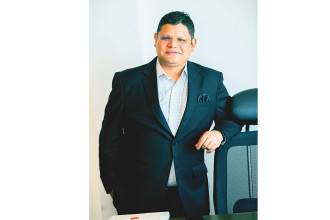
KAILASH PANDAY, Managing Director, Nepal Invests
Kailash Panday: Of course, it missed these aspects. I have been pushing for a simple change to section 12C of the Income Tax Act that could open new ways of seed funding for startups. The provision requires a simple addition of two words, ‘or investment’, so that the deduction under the section is not just allowed only when the taxpayer gives any startup seed funding as a grant, but more so when it is given as an investment.
Another irony is that the provision has been on paper for the past couple of years but no effort has been made by any government to push it towards implementation. The implementation requires the Inland Revenue Department (IRD) to specify guidelines regarding recognition as ‘startups’. My point is that there are so many good things on paper that are looking for some minor pushes towards implementation but this government has also overlooked this aspect.
Vidhan Rana: The Fiscal Year 2083/84 budget makes some good strides in reducing operational costs. We see positive moves like expanding the personal income tax exemption limit and simplifying the customs duty structure. However, the absence of a dedicated SME credit guarantee mechanism is a major missed opportunity, especially for the creative and digital sectors.
From my experience working with startups and SMEs over the years, the biggest hurdle has always been financing. As I have noted before, banks in Nepal simply do not do project financing. If you need a loan for your business, the only way to get it is if you have property to put up as collateral. Unfortunately, most entrepreneurs running creative studios, digital media companies or heritage projects do not have land to pledge. They have intellectual property, skills and solid project concepts.
When we were incubating businesses, we often saw great ideas remain just ideas because of this exact problem. A government-backed credit guarantee fund would have fundamentally changed how banks look at risk. It would allow them to look past hard collateral and start lending based on a business’s cash flow or project viability. For a creative business trying to scale, or an art gallery seeking working capital to mount a high-value exhibition, this is the difference between staying small and actually growing. Until we have a financial system that supports asset-light businesses, the creative sector will struggle to reach its potential.
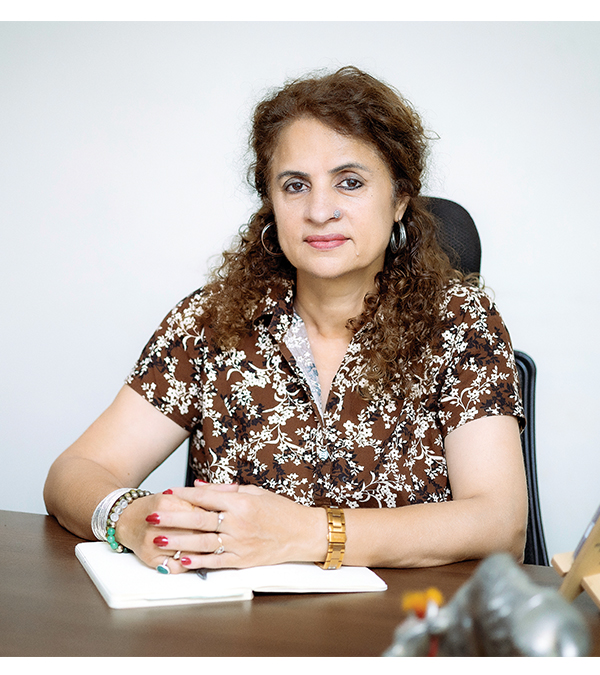
Sushama Sharma: Nepal still relies heavily on collateral-based lending. A dedicated SME Credit Guarantee Scheme and project or cash flow-based financing would enable viable businesses without assets to access affordable credit. It would help enterprises like Phool Prasad invest in technology, expand production, create jobs and improve export readiness.
Nisha Taujale: The government deserves credit for focusing on tax rationalisation and production incentives in this budget. These are highly encouraging policy steps that provide immediate relief. However, a dedicated SME credit guarantee mechanism would have been the perfect complementary piece.
In Nepal, SMEs contribute roughly 22% to the national GDP and generate over 1.7 million jobs, yet the sector faces a massive $3.6 billion financing gap. While tax cuts help on the backend, the primary challenge for small or women-led enterprises is securing initial capital without pledging large property collateral. Introducing alternative frameworks like credit guarantees or revenue-based financing would change everything. It would allow growth-oriented SMEs to secure bank funds based on cash flow, enabling them to upgrade machinery, hire workers and fully capitalise on the government’s production incentives.
Ramila Nemkul Shrestha: From my own experience as an entrepreneur, I believe access to finance is still the biggest challenge for SMEs in Nepal. Starting and growing a business requires continuous investment but most SMEs cannot access loans because banks still ask for high collateral. Many entrepreneurs have good ideas, strong products and market demand, but they do not have enough property to secure financing.
A dedicated SME Credit Guarantee Scheme could have made a huge difference. Instead of depending only on collateral, banks could also look at the business potential and future growth. Businesses like KASA could invest more confidently in production, technology, exports and job creation. I do not think SMEs need subsidies forever. We need opportunities to grow. If entrepreneurs can access affordable finance at the right time, they can build sustainable businesses, create employment and contribute much more to Nepal’s economy.
Has the government adequately recognised SMEs as a productivity and export issue, or does policy still treat them primarily as a social and employment issue?
Kailash Panday: In practice, still an employment issue. Everyone calls SMEs the growth engine of an economy like ours but that recognition lives in speeches, not in policy design. When SMEs are framed as a source of jobs rather than as a productivity and export base, that framing decides where the money actually goes, and it does not go towards making them competitive enough to export.

VIDHAN RANA, Freelance Artist
Vidhan Rana: In Nepal, there has always been a tendency to look at SMEs, and the creative sector in particular, primarily to keep people employed rather than as a serious engine for economic growth and exports. The recent budget does show signs that this mindset is slowly changing. The 50% tax exemption on IT service exports and tax relief on sweat equity are great steps in the right direction. It shows the government recognises the export potential of our digital economy.
However, when it comes to the broader arts, culture and heritage sectors, the focus is still largely on preservation and basic social employment. We need to start looking at a curated art collection, a digital media archive or a heritage restoration project as a high-value export product.
To make this shift, we need policies that go well beyond basic tax cuts. If we want our creative SMEs to compete globally, the government should be subsidising international intellectual property registrations and radically simplifying the export process for physical artworks. Right now, exporting a piece of art involves navigating too many bureaucratic hurdles. When policymakers begin treating the creative and heritage sectors with the same export-oriented focus that we apply to traditional manufacturing or agriculture, we will finally see this sector become a true economic engine for the country.
Sushama Sharma: The budget is moving in the right direction but MSMEs are still largely viewed as employment generators. They should be recognised as drivers of productivity, exports, innovation and sustainable growth. Policies must prioritise technology, quality certification, market competitiveness and export promotion alongside entrepreneurship support.
Nisha Taujale: It is very encouraging to see the budget formally recognise SMEs as vital drivers of innovation and export growth through R&D grants, digital transformation support and management training. This marks a forward-thinking shift in policy language.
Historically, our system has treated SMEs primarily as a social safety net for job creation and basic survival. While that social role is essential, SMEs represent over 90% of all registered businesses in Nepal, making them our primary engine for economic scaling. The budget sets the right tone but operational guidelines must now evolve from ‘business survival’ to ‘aggressive competitiveness’. By pairing employment goals with robust incentives for automation and international quality standardisation, the government can transform small local operations into fierce global competitors.
Ramila Nemkul Shrestha: I think Nepal is slowly moving in the right direction but there is still a long way to go. Most discussions around SMEs are still focused on employment generation which is important but SMEs are much more than that. We are producers, innovators, exporters and brand builders.
As someone working in the fashion industry, I believe Nepal has huge potential to build international brands. Our local products, craftsmanship, textiles and creativity can compete globally if we receive the right support. SMEs should be recognised as drivers of productivity, exports and economic growth. When an SME grows, it not only creates jobs but also strengthens local supply chains, supports rural communities and brings foreign currency into the country. I would like to see future policies focus more on helping SMEs become globally competitive rather than simply helping them survive.
The government wants to boost domestic production and import substitution. Yet many SMEs struggle less with production and more with market access. Does this budget do enough to help SMEs sell whether through exports, public procurement, e-commerce or supply-chain integration, or is it still too focused on incentives at the production end?
Kailash Panday: I think the government is looking into these two aspects as cause and effect. It seems to assume that boosting domestic production will directly result in import substitution. That is simply not the case, even though it may look like that on the surface. Also, one may not need to totally call for import restrictions to boost domestic production. They may be serving different customers altogether.
Therefore, what is important, as you highlighted is access to market and shorter payment cycles to manage their cash flow better. There indeed is a problem with production, including the availability of quality raw material and manpower; the greater problem lies with longer credit cycles and the recovery of payment. Even if you are competitive on production, you will not sustain long if your finance cost eats up that margin. And it is a vicious cycle. You cannot rely on your own money or the bank’s money just to keep your production running.
Vidhan Rana: The government’s plan to eliminate excise duties on hundreds of items and cut tariffs on industrial raw materials will definitely help boost domestic manufacturing. But for many SMEs, especially those in the digital and creative spaces, producing the work is rarely the hardest part. The real struggle is market access, finding reliable ways to sell what we create to regional and global buyers.
The budget talks about promoting digital exports but the practical infrastructure is still missing. For example, creative businesses in Nepal still struggle with something as basic as receiving international payments. If a local digital artist, a musician experimenting with AI, or a gallery wants to sell their work overseas, the lack of a seamless, two-way international payment gateway makes it incredibly difficult to do business smoothly.
Instead of just focusing on the production side, we need policies that help businesses integrate into global supply chains. The government could introduce guidelines that encourage large corporate bodies and public institutions to source a certain percentage of their design and media work from local SMEs. Additionally, we need active government support to help local creative businesses onboard to major global e-commerce and international art platforms. Making it easier to produce is only half the battle; we need the practical tools to reach the buyers.
SUSHAMA SHARMA, Founder & CEO, Phool Prasad
Sushama Sharma: Market access remains the biggest challenge. Along with production incentives, government procurement should prioritise local products while stronger support for exports, e-commerce, branding, logistics and supply-chain integration is needed. Corporate CSR can also strengthen women-led enterprises through procurement and market linkages.
Nisha Taujale: The budget does a wonderful job supporting the ‘Made in Nepal’ vision by offering lower-interest loans and tax benefits to boost domestic production. Building a strong manufacturing base is a vital first step. However, for most local entrepreneurs, the primary hurdle is not making the product, it is successfully reaching the market. Many SMEs struggle to navigate public procurement, integrate into larger corporate supply chains, or break into export networks. While the budget makes admirable strides regarding export promotion funds and B2B matchmaking, we need an equally aggressive market-access strategy. Mandating a fixed percentage of public procurement from local SMEs and funding cross-border e-commerce logistics would create a sustainable, high-demand ecosystem where local production can truly thrive.
Ramila Nemkul Shrestha: I always say that producing a product is only half of the journey. The bigger challenge is finding the right market. Many Nepali SMEs are already producing quality products but they struggle to reach customers beyond Nepal or even across the country.
The budget talks about increasing production, which is good, but I believe more attention should also be given to market access. We need stronger export promotion, easier participation in international exhibitions, better digital infrastructure for e-commerce, and more opportunities for SMEs to participate in government procurement. Nepal also needs stronger branding for ‘Made in Nepal’. If we can help SMEs sell their products in larger markets, production will automatically increase. Market access creates confidence for entrepreneurs to invest, expand and employ more people.
Bank lending remains concentrated among a relatively small group of established borrowers. What structural reforms are needed to ensure that growth-oriented SMEs can access capital without relying heavily on collateral?
Kailash Panday: We need a specialised government institution dedicated to this. My proposal is for a Nepal Innovation & Startup Authority (NISTA) to fill the structural gaps, working across three functions.
On the regulatory side, it would issue registration and recognition certificates across all eligible sectors, maintain a public registry, and hold enforceable inter-ministry MoUs with the IRD, Nepal Rasta Bank, and the relevant line ministries, escalating non-compliance to the Chief Secretary level.
On investment, NISTA Capital would act as a sector-neutral equity co-investment arm, deploying from its own corpus alongside certified partners, with all decisions routed through an Investment Committee and exit proceeds flowing back into the corpus.
And on funding, a NISTA Seed Fund, replacing the current Startup Loan Programme, would be a Section 12C (Income Tax Act)–eligible pooled vehicle open to high networth individuals, the diaspora and corporate CSR contributors, using the same co-investment model.
The point is collateral-free access to capital through a certified, accountable structure, rather than the same handful of borrowers cycling through the banks.
Vidhan Rana: The banking system in Nepal is heavily biased toward legacy businesses and individuals who own a lot of real estate. This collateral trap leaves out an entire generation of growth-oriented SMEs, especially in the knowledge and creative economies where the real value lies in human capital and intellectual property.
To break this cycle, we need some serious structural reforms from the central bank. First, we need clear regulatory directives that encourage cash flow and project-based lending. Banks should be required to allocate a portion of their SME lending based on the viability of a business plan, active contracts or digital licensing agreements, rather than just asking for land ownership documents.
Second, we need a system to formally value alternative assets. If a business has a verified historical collection, copyrighted digital media or a strong brand, banks should have a framework to accept these as collateral. Finally, we need to utilise alternative credit scoring. By looking at a business’s digital payment history and tax compliance records, banks can build reliable credit profiles for entrepreneurs who do not have a traditional financial track record. These structural reforms are essential if we want our creative SMEs to access capital and scale their operations.
Sushama Sharma: Banks should gradually adopt cash flow and project-based lending supported by a government-backed credit guarantee scheme. Alternative financing such as blended finance, venture capital and SME investment funds should also be expanded. Finance should be based on business potential, not only asset ownership.

NISHA TAUJALE, Co-founder, Kathmandu Organics
Nisha Taujale: The government and central bank have laid a solid baseline by promoting digital financial services and directing institutions to ease credit access. To turn this vision into reality, we must confront the traditional ‘collateral syndrome’ in our banking system, where lending is heavily concentrated among a small circle of asset-rich corporate borrowers.
True structural reform requires shifting toward cash-flow and project-based lending, where banks evaluate creditworthiness based on active revenue and digital transaction histories rather than physical property. Additionally, expanding credit guarantee programmes, integrating fintech for alternative credit scoring, and supporting venture capital will give dynamic startups flexible financing options, reducing total reliance on traditional real estate collateral.
Ramila Nemkul Shrestha: I believe we need to change the way banks evaluate SMEs. Today, the first question is usually about collateral instead of asking about the business model, sales performance or future growth potential. That makes it difficult for many genuine entrepreneurs.
Banks should gradually move toward cash-flow-based lending and business performance assessments. At the same time, the government can introduce a stronger SME credit guarantee system that shares some of the lending risk. I also think Nepal needs more startup funds, venture capital and alternative financing options. Every successful business starts small. If we continue supporting only businesses that already have large assets, many innovative entrepreneurs will never get the opportunity to grow. Supporting SMEs is not only supporting individual businesses, it is investing in Nepal’s future economy.
What is the single biggest risk facing Nepal’s SME sector and what is the single biggest opportunity policymakers are overlooking?
Kailash Panday: The biggest risk is manpower: both people willing to start SMEs and people willing to work for them. The overlooked opportunity, which also addresses unemployment and brain drain, is to actively incentivise both through grants, tax exemptions and the removal of compliance hurdles.
Imagine a government scheme that pays a stipend of Rs 25,000 a month for 12 months to any fresh graduate who wants to work on their idea. Once the idea is validated, the government offers seed funding and comes in as a partner. It removes the early compliance burden, like withholding taxes and return filing, and gives a tax break to people who choose to work for such ventures. When the venture scales, the government recovers its money not just through taxes but through dividends as a shareholder. Even if 1% of these worked out, it would do wonders. Either way, it gives our youth a real reason to try something here, to stay employed, and to generate employment for others.
Vidhan Rana: For SMEs in the creative and digital sectors, the single biggest risk right now is the combination of outdated intellectual property laws and bureaucratic red tape. As Nepali creators increasingly work on a global scale, using tools like AI, producing digital media and engaging in cross-border collaborations, our local laws are falling behind. Without modern frameworks to protect digital assets and enforce copyrights quickly, our businesses risk losing out to international competitors. Add to that the huge administrative hurdles required just to verify and export physical art, and you have a system that actively discourages commercial growth.
On the flip side, the biggest overlooked opportunity is the commercial monetisation of Nepal’s cultural and historical archives. We have an incredible wealth of uncatalogued heritage and traditional art. Right now, the government treats these mostly as passive preservation projects. However, there is massive economic potential in public-private partnerships to digitise, archive and commercially license this heritage to the world.
If the government provided clear, legal pathways for creative businesses to collaborate with institutions like the Department of Archaeology, we could build a thriving industry around digital heritage tourism and educational licensing. It is a chance to turn our history into a sustainable and highly profitable export industry.
Sushama Sharma: The greatest risk is that promising enterprises remain small due to limited finance and market access. The biggest overlooked opportunity is investing in women-led and circular economy enterprises, which create employment, promote local production, reduce waste and contribute to exports and sustainable economic growth.
Nisha Taujale: The single greatest risk facing our SME sector is stagnant productivity paired with a lack of competitiveness against cheap, mass-produced imports. Limited access to funding forces many local businesses to rely on older technology and face specialised labour shortages, making it difficult to scale.
Conversely, the biggest opportunity lies in the digital economy and niche exports. Policymakers are on the cusp of unlocking this but a focused push on digital literacy, internet-based export setups, and international quality standards would yield monumental returns. Treating digital tools and global supply chain integration as core economic pillars will rapidly elevate our sector’s 22% GDP contribution and build a resilient economy.

RAMILA NEMKUL SHRESTHA, Founder & Managing Director, KASA
Ramila Nemkul Shrestha: The biggest risk is that many talented entrepreneurs lose confidence because of limited financing, policy uncertainty and slow implementation. Running an SME is already challenging and when support systems are weak, many businesses stop growing or never reach their full potential.
At the same time, I think the biggest opportunity is Nepal’s own identity. We have beautiful local products, talented artisans, agriculture, tourism, fashion and creative industries that have strong international potential. Around the world, people are looking for authentic, sustainable and ethical products. Nepal already has these strengths. We simply need better branding, better market access and stronger support for entrepreneurs. Instead of competing only on price, Nepal should compete through quality, craftsmanship and storytelling. That is where I see our greatest opportunity.
If implementation remains weak, which announced budget measure is most at risk of becoming another headline without impact?
Kailash Panday: Capital expenditure. It is the perennial failure. Ambitious on paper, under-spent in practice, and it is the measure most likely to become another headline without impact. This is an ambitious, over-optimistic budget overall, and my hope is simply that we see improvement in actually hitting targets like the capex figure, where we fall short almost every year.
Vidhan Rana: The budget measure most at risk of failing during implementation is the ‘Investment Express’ single-window system. The idea of unifying company registration, tax, banking and visas into one online platform within 90 days is a great concept. It is supposed to bypass the need for secondary clearances from different line ministries for projects vetted by the Investment Board.
But from my experience observing government operations over the years, the reality of inter-departmental bureaucracy in Nepal is very stubborn. Even if you simplify the initial company registration, a creative business trying to organise an international exhibition or convert a historical building into a heritage museum still has to deal with the Department of Archaeology, Ministry of Culture, and complex customs rules.
Historically, single-window systems here have struggled because individual ministries simply do not want to give up their authority. Unless this new system is backed by strong legislation that forces all the relevant ministries to integrate their approval processes into the single platform, it will not work. Without real inter-agency coordination, the Investment Express risks becoming just another website that adds a layer to the bureaucracy rather than solving it.
Sushama Sharma: The commitment to promote domestic production and import substitution risks remaining symbolic unless supported by effective implementation. Without stronger public procurement of local products, easier access to finance, improved logistics and coordinated execution, these announcements will have a limited impact on MSMEs.
Nepal’s MSMEs contribute significantly to employment, local production and economic growth but they need an enabling ecosystem to scale. The government should prioritise: (1) a dedicated SME credit guarantee scheme and cash flow-based lending, (2) public procurement policies favouring locally produced goods, (3) targeted support for women-led enterprises, (4) export and digital market access, and (5) strong implementation with measurable outcomes. Also, we need to create an entrepreneurship environment and mindset to flourish and scale the small businesses. These reforms will help MSMEs become engines of productivity, innovation, exports and sustainable economic transformation rather than remaining survival businesses.
Nisha Taujale: The budget features genuinely promising declarations regarding digital transformation and export promotion subsidies. These plans have all the right ingredients to serve as a massive catalyst for growth.
However, the bridge between policy and ground-level execution is where great ideas often face friction. If implementation mechanisms remain complex, these highly anticipated schemes run the highest risk of stalling. When programmes are buried under administrative red tape, busy small business owners simply cannot access them. To ensure success, the government must prioritise radical simplification: digitising application processes, providing hands-on technical training and tracking progress transparently to turn brilliant headlines into real-world results.
Ramila Nemkul Shrestha: In Nepal, we often see very good policies announced but implementation becomes the biggest challenge. Personally, I think many of the measures related to domestic production and export promotion could face this risk if there is no proper follow-up.
Policies alone do not create economic growth. We need coordination between government agencies, financial institutions and the private sector. We also need clear timelines, accountability and regular monitoring. Entrepreneurs make investment decisions based on confidence. If policies are delayed or procedures remain complicated, businesses lose that confidence. I believe Nepal does not need more announcements. We need consistency, execution and long-term commitment. Once entrepreneurs trust that policies will actually be implemented, they will invest more, expand their businesses and contribute even more to the country’s economy.
-1792067001.jpg)
-1789293497.jpg)