Nepal’s Electric Mobility Dilemma: Fiscal Policy, Governance and Ecosystem Growth

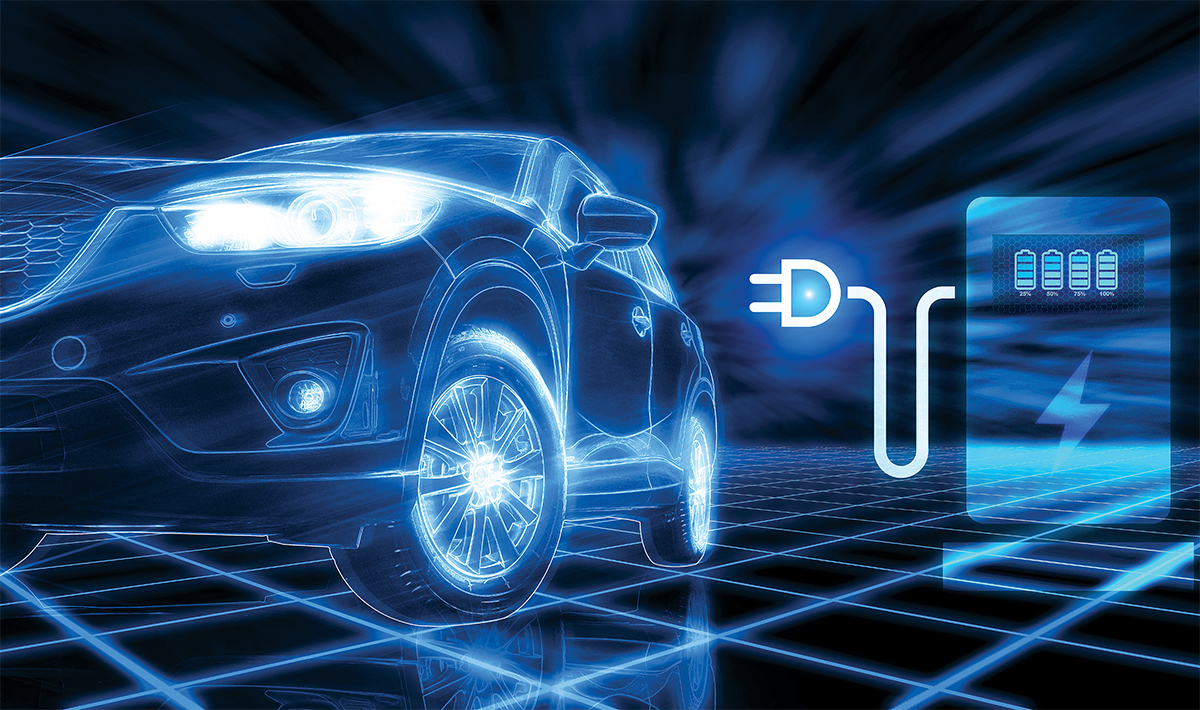
Nepal’s electric vehicle sector is no longer just an environmental success story, it has become a test case for the country’s economic governance. The latest budget has fundamentally altered the tax landscape, triggering immediate price increases across several EV brands and reigniting debate over whether fiscal policy is encouraging sustainable growth or simply maximising short-term revenue. At the same time, public scrutiny over customs valuation practices and allegations of tax irregularities involving some EV imports have exposed deeper questions about transparency, regulatory oversight and the consistency of Nepal’s tax administration.
The challenge extends beyond this year’s budget. Across South Asia, governments are competing to attract EV investment through stable policies, local manufacturing, battery ecosystems and infrastructure development. Nepal, despite being one of the region’s fastest-growing EV markets, remains heavily dependent on imports and highly vulnerable to abrupt policy shifts.
The critical question is no longer whether Nepal supports electric mobility, but whether it has the institutional and policy maturity to build a competitive, transparent and future-ready industry.
In this Opinion section, we spoke to autopreneurs Karan Chaudhary, Managing Director, CG Holdings; Jai Golchha, Director, Shangrila Motors; Ritu Singh Vaidya, President of NAIMA; and Gaurav Sharda, Director, Sharda Group on business and policy aspects surrounding the EV industry.
The government says the revised tax regime creates fairness and protects revenue, while the industry argues it penalises consumers and discourages investment. Is this budget correcting distortions in the EV market, or is it risking the momentum of one of Nepal’s fastest-growing industries?
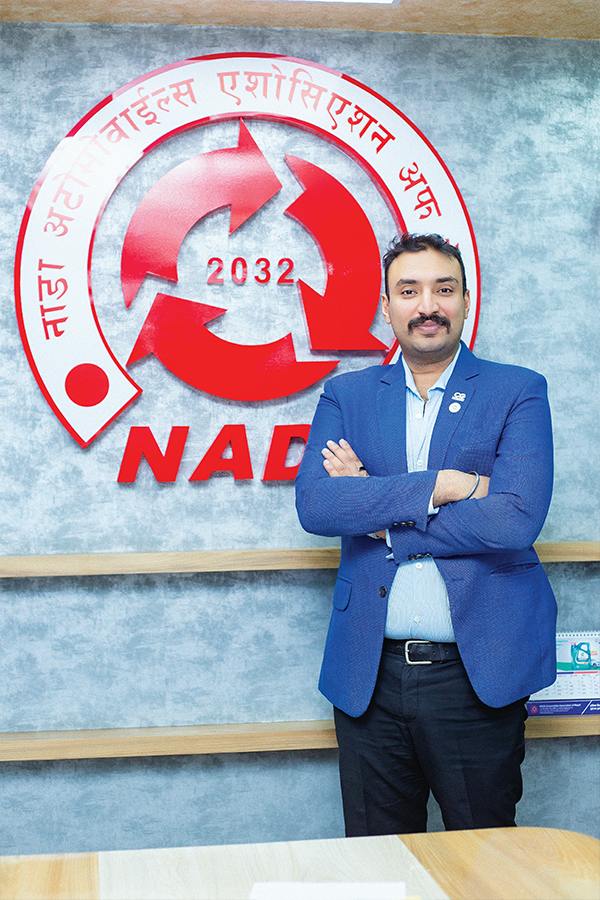
Karan Chaudhary, Managing Director, CG Holdings
Karan Chaudhary: The honest answer is that this budget does both, and pretending otherwise, in either direction, is where the debate loses its usefulness.
Start with what is defensible. The old regime taxed an electric vehicle by the peak power of its motor, in kilowatts. On paper that sounds technical and neutral; in practice it was arbitrary and as the Auditor General has now documented, easy to game. A modestly priced car with a strong motor was taxed heavily, while an expensive vehicle with a smaller motor was taxed lightly. Worse, because a single kilowatt reading could move a vehicle from one duty bracket into a far cheaper one, the system effectively rewarded whoever was most willing to understate a specification on a customs form. Moving the tax base from motor power to the vehicle’s value is therefore not, in principle, an attack on electric mobility. It is an attempt to tax what a buyer actually pays rather than a number that could be quietly adjusted on paperwork. That intent deserves acknowledgement before it deserves criticism.
The problem is not the principle. It is the execution. The new Clean Infrastructure Investment Fee jumps from 2.5% to 20%, then to 35%, then to 90%, and finally to 130% across five value slabs. Those are not gentle steps; they are cliffs. A vehicle whose customs value rises by a small margin – or simply drifts across a slab because the exchange rate moved between the day it was ordered and the day it cleared customs – can suddenly carry lakhs of rupees in additional tax. That introduces exactly the volatility the industry has spent years asking the state to remove. When a dealer cannot quote a firm price to a customer because the final tax depends on a currency movement still to come, that is not fairness; it is a new form of unpredictability dressed in the language of reform.
So, my position is precise. The shift to value-based taxation is a correction worth making. The slab design, with its steep cliffs and its exposure to exchange-rate swings, risks throttling the very momentum the correction was meant to protect. The evidence is already visible: entry models rising by a lakh or so are absorbable, but premium and mid-premium vehicles now facing an additional one to two million rupees in tax are being pushed toward commercial unviability. The fix is not to abandon value-based taxation and return to a discredited system. The fix is to smooth the slabs into a gradual curve and to fix the tax on the value at the time of order, so that a family and a dealer can both know the price with certainty. Get that right, and this becomes a genuine reform. Leave it as it is, and a good idea will have done avoidable damage.
Jai Golchha: Although there is merit to both arguments, with a long-term vision in mind, the revised taxed regime makes sense. Considering Nepal’s terrain, high-peak power EV models are a necessity. Previously, the tax regime was based on peak power production. This led to the entire sector having to focus on importing lower motor peak power models to have their products placed in lower tax brackets. This in turn paved the way for importers to be able to price their products in ranges that would be ‘accepted’ by the market.
Now, products are taxed based on their actual values. Although exchange rate fluctuations do make the tax slabs a little difficult to manoeuvre around for products that have Cost, Insurance and Freight (CIF) values that lie on the cusp of two slabs, it does make more sense. The previous system indirectly discredited the hundreds of hours of R&D companies were pouring into developing cars by Nepal playing around with the peak power. Now, although not perfect, the regime is more straightforward and a value-based playing field with little room for manipulation.
Gaurav Sharda: Every government has the responsibility to protect revenue and maintain a fair taxation system. At the same time, the private sector requires predictability to make long-term investments. The challenge is not whether taxes should change, but how frequently and how significantly they change. There should be a clear roadmap laid out along with the vision of the government. This will encourage the private sector to align its investments with the government’s vision.
Nepal’s EV sector has grown rapidly because there was a clear policy direction that encouraged consumers and businesses to invest with confidence. Sudden fiscal adjustments inevitably affect consumer purchasing decisions, inventory planning and investment strategies. A stable and transparent policy framework is therefore more valuable than short-term incentives or frequent revisions. The objective should be to strike a balance between revenue generation, consumer affordability and long-term industry development.
Ritu Singh Vaidya: The government has a responsibility to protect revenue and maintain fairness across vehicle categories. At the same time, tax changes should not weaken consumer confidence or slow investment in clean mobility.
Official Department of Customs data for the first eight months of FY 2082/83 show imports of 6,398 electric cars, jeeps and vans under the relevant HS 870380 categories. Their total import value was approximately Rs 14.96 billion, while import-related revenue was approximately Rs 9.11 billion. This shows that EV growth is already making a significant contribution to government revenue.
Nepal’s Nationally Determined Contribution (NDC) 3.0 also reports that battery electric vehicles represented 46% of private four-wheeler passenger vehicle sales in 2024. The national target is to increase battery electric vehicles to 90% of all private passenger vehicle sales by 2030.
It is still too early to make a final evidence-based assessment of the new tax system because sufficient post budget market data are not yet available. The best approach is to monitor sales, revenue, affordability and investment over a reasonable period.
The NAIMA Nepal Mobility Expo 2026 happening on August 11-16 at Bhrikuti Mandap can support this process by bringing vehicles, technologies, consumers, financial institutions and policymakers together. It offers a practical opportunity to understand how policy changes are affecting prices, product choices and consumer demand.
The controversy surrounding customs valuation and alleged tax irregularities has raised concerns about governance. Does this expose isolated compliance failures by individual businesses, or does it reveal systemic weaknesses in Nepal’s customs administration and regulatory oversight? Who should ultimately be held accountable?
Karan Chaudhary: This is the most important question in the set and it deserves an answer that resists the easy satisfaction of naming a villain.
The temptation is to frame this as a story about a few importers who broke the rules. That framing is comfortable but incomplete. The Auditor General’s own findings point to something more structural. Vehicles were cleared, year after year, based on an invoice and a declaration, with no independent means of verifying whether the motor power written on the form matched the motor in the vehicle. The country’s testing facility can measure power at the wheel; it cannot certify the installed capacity of a motor. In other words, the state built a tax system that depended entirely on a number it had no capacity to check. When you create a rule that can only be enforced on the honour of the person being taxed, you have not created a compliance problem for individuals; you have created a governance vacuum for the system.
That is why I am cautious about the language of individual accountability here. Where specific, proven wrongdoing exists, it should of course be pursued through due process – consistently and without political shelter. The fact that earlier findings appear to have been set aside and are only now being revisited is itself part of the problem. But the deeper accountability lies with the design of the system. A verification gap this wide is not the fault of any single company. It is a failure of institutional capacity that sat unaddressed while the market grew explosively around it. To pin it entirely on importers is to let the more consequential failure – the absence of technical verification at the border – escape scrutiny.
So, my answer on accountability is layered. Individuals who are proven, through a fair process, to have deliberately misdeclared should bear the consequences the law prescribes. But the state must simultaneously hold itself accountable for having run a specification-based tax with no ability to verify specifications. The most useful outcome of this controversy would not be a list of names; it would be the permanent closing of the verification gap – dynamometer testing, manufacturer certification and a customs process that no longer relies on trust alone. Accountability that produces better institutions is worth far more than accountability that only produces headlines. And there is one further discipline worth naming: the shift to value-based taxation only removes the old loophole if customs valuation itself is verified rigorously because a system that cannot check a declared value simply relocates the same weakness from motor power to price.

JAI GOLCHHA, Director, Shangrila Motors
Jai Golchha: Nepal is a leader in four-wheeler EV adoption and has been at the forefront of the space for the last two to three years. There is no definitive blueprint the country can follow for the industry.
Since our import taxes for ICE vehicles hinge on engine size/power, lawmakers continued the same for EVs. This was the most logical thing to do at the time. With time, it became apparent that peak power is easily changeable by Original Equipment Manufacturers (OEMs), bringing to light a glaring loophole on the premise on which the taxation is based. Considering all of this, rather than revealing systemic weaknesses in governance, it seems the country needed to address a flawed tax structure, which can be the case in any industry at the beginning.
Gaurav Sharda: Transparency and accountability are fundamental to any healthy industry. If there are instances of non-compliance, they should be investigated thoroughly, fairly and in accordance with the law. At the same time, regulatory systems must be robust, transparent and consistent enough to minimise ambiguity and ensure that businesses are treated uniformly.
One of the challenges the industry has faced is the ambiguity in the interpretation of tax classifications and the inconsistent application of globally recognised technical documentation. In the absence of accredited local testing and certification facilities, regulatory agencies should either rely on internationally accepted manufacturer certifications and technical documents that formed the basis for import approval, or establish an independent mechanism to physically test and certify vehicles where there is a genuine concern. This would provide greater certainty for both regulators and businesses.
It is also important to recognise that repeated allegations of tax fraud, before investigations are concluded, can have a significant impact on the reputation of businesses operating in good faith. Strong governance is not only about enforcing compliance. It is equally about creating transparent processes, ensuring due process and maintaining a level playing field that protects both public interest and legitimate businesses.
Ritu Singh Vaidya: Individual cases should be investigated by the responsible authorities using verified documents, applicable law and due process. It would not be fair to treat an allegation involving one business as evidence against the entire automobile industry. It would also be unwise to ignore genuine compliance concerns.
Responsibility exists on both sides. Importers must provide complete and accurate documents. Customs authorities must apply valuation procedures consistently, transparently and within a reasonable timeframe.
The Department of Customs announced in May 2026 that international market prices had been included in its Customs Valuation Database System. This is a positive step towards stronger and more consistent valuation practices.
Accountability should therefore be based on evidence. Where a business has violated the law, that business must be responsible. Where procedures or institutional systems are unclear, the concerned public authority should improve them.
The NAIMA Expo can contribute to greater transparency by allowing consumers and regulators to obtain official information on vehicle specifications, technology, authorised distributors, prices and after-sales services directly from participating companies.
Nepal has relied heavily on tax incentives to drive EV adoption but incentives alone do not build an industry. Where has the government fallen short in developing charging infrastructure, financing, battery recycling, technical skills, grid preparedness and local value creation? Has policy focused too much on vehicle sales and too little on ecosystem development?
Karan Chaudhary: Correct, and this, for me, is the heart of the matter. Nepal has been generous with the demand side of the EV story and largely absent on the supply side. You cannot build an industry on incentives to consume while neglecting the capacity to produce and sustain.
Consider the gaps honestly. Charging infrastructure remains thin and unevenly distributed, concentrated in a few urban corridors while the terrain that most needs confidence – the hills and the long inter-city routes – is where range anxiety is most acute. The grid itself has not been prepared, in a serious and planned way, for a future in which a meaningful share of the fleet draws power from it at the evening peak. Financing has moved in the wrong direction: the down-payment requirement on EV loans has been raised to 40%, which lands hardest on precisely the middle-class first-time buyer who drove the adoption story in the first place. Battery recycling and end-of-life management barely exist as a policy conversation, even as the first large cohorts of batteries approach the end of their useful life. Technical skills – mechanics, high-voltage technicians, diagnostic capability – have not been built at anything close to the scale the vehicle numbers demand. And local value creation, whether assembly, component manufacturer or a genuine ancillary ecosystem, remains marginal.
Put plainly, policy has been almost entirely about the moment of sale, and almost silent about everything that must exist before and after the sale for an industry to be real. Selling a vehicle is a transaction; building the charging network, the grid capacity, the service skills, the recycling chain, and the domestic value addition is what turns a transaction into an industry. We have optimised the former and neglected the latter, and the bill for that imbalance is now coming due.
The encouraging part is that the current budget at least gestures in the right direction – a 1% duty on charging-station equipment and a five-year tax holiday for that segment are sensible first steps. But an ecosystem needs a decade-long, funded plan, not a line item. If the next phase of policy does not shift decisively from incentivising purchase to building capability, we will remain what we are today: one of the region’s largest EV markets, and one of its smallest EV industries.
Jai Golchha: With regard to the ecosystem for EVs, the charging infrastructure in the country is second to none. Because a lot of investment has been poured in from the private sector, EV charging stations have become readily available in most parts of the country over the last year or so. Despite frequent shifts in EV financing regulations over the last few years, the government has consistently maintained support for the sector.
The biggest failing of the government lies in the battery recycling sector for this industry. Currently, the only way to recycle batteries is to send them abroad. This is tedious and costly. Since EV technology is still relatively new, very few batteries have had issues, and the lack of battery recycling is not a readily apparent problem. In three to four years from now, when EVs will have spent more than a decade on the road and face significant battery health degradation, the country might have a huge problem to deal with.
Gaurav Sharda: The rapid growth in EV adoption is encouraging but developing a sustainable mobility sector requires much more than increasing vehicle sales. The next phase must focus on strengthening the entire mobility ecosystem rather than measuring success solely by the number of EVs on the road.
One area where we have seen encouraging progress is charging infrastructure. The private sector has already made significant investments in establishing charging networks across the country. Going forward, the government and Nepal Electricity Authority can play an even more important role by facilitating the expansion of this network through timely power connections, ensuring the availability of reliable and uninterrupted electricity, and providing transformers and other supporting infrastructure wherever required. This kind of public-private collaboration will accelerate the development of a robust charging ecosystem.
At the same time, I believe the government’s biggest priority should now be skill development. As Nepal’s mobility sector evolves, we need a new generation of trained technicians, engineers and service professionals who can be readily absorbed by the industry. Alongside this, continued focus on battery lifecycle management inside Nepal rather than exporting the used batteries outside for recycling, financing solutions like changing the loan-to-value ratio from the current 60% to 80% for all passenger vehicles and two-wheelers, after-sales capabilities, and consumer awareness will ensure that Nepal builds not just a successful EV market, but a resilient and sustainable mobility ecosystem for the future.

RITU SINGH VAIDYA, President, NAIMA
Ritu Singh Vaidya: Tax incentives helped create the EV market but incentives alone cannot complete Nepal’s mobility transition. The next stage requires charging infrastructure, trained technicians, financing, reliable service centres, technical standards, battery management and grid preparedness.
Nepal’s NDC 3.0 recognises these requirements. It calls for sufficient charging infrastructure, EV standards, trained technical human resources and dedicated service centres. It also proposes vehicle fitness centres, a national motor-vehicle research centre and pilot programmes for sustainable battery recycling by 2030.
This shows that the policy direction is becoming broader. The main challenge is timely and coordinated implementation. The government, electricity authorities, educational institutions, banks and the private sector must work together.
NAIMA believes that the government and private sector must move forward together. The government can provide policy direction, infrastructure and clear standards, while NAIMA can bring together automobile companies, charging providers, banks, educational institutions and technical experts. This cooperation is essential for developing charging networks, skilled human resources, reliable after-sales services and responsible battery-management systems.
Through its Mobility Sambaad programmes, policy engagement and industry activities, NAIMA is working to improve coordination among key stakeholders. As an organisation, NAIMA can help connect policy objectives with the practical experience of automobile companies, technology providers, financial institutions and consumers.
The Learning Sessions at the NAIMA Nepal Mobility Expo 2026 are particularly important in this context. They can connect policymakers with automobile companies, charging providers, financial institutions, engineers, academics and students to discuss practical solutions beyond vehicle sales.
Frequent changes in taxation create uncertainty for investors, importers and consumers alike. What kind of long-term fiscal and industrial policy framework does Nepal need to provide certainty for the next decade, and how can it be insulated from annual budget politics?
Karan Chaudhary: The single greatest handicap our industry carries is not high tax. It is that the rules change every year. Capital can price a high tax; it cannot price uncertainty. An industrialist deciding whether to commit to local assembly, a bank deciding whether to lend against an electric vehicle, and a family deciding whether to buy one all need the same thing: a credible belief that the terms they plan around today will still exist in three, five and 10 years. Right now, no one can hold that belief because everything is rewritten each budget.
What Nepal needs is a multi-year automotive and clean-mobility policy – ideally legislated, not merely budgeted – that fixes the trajectory of duties, incentives and infrastructure commitments over a defined horizon of at least five years, with a transparent, pre-announced glide path for any change. If the state intends to taper an incentive, it should say so years in advance and taper it gradually, so the market adjusts smoothly rather than lurching. The tax base should be stable and predictable; where value-based valuation is used, the applicable rate should be locked at the point of order, so that neither buyer nor dealer is exposed to a currency movement they cannot control. And the framework should be built with the industry in the room, not delivered to it as a surprise on budget night.
Insulating it from budget politics is the harder task and I will not pretend it is simple. Two things help. The first is to place the core commitments in a dedicated, cross-party industrial-policy instrument rather than in the annual finance bill, so that changing them requires a deliberate, visible act rather than a single line in a budget speech. The second is transparency as discipline: if every proposed change must be published, justified against stated national goals, and consulted upon before it takes effect, the political cost of arbitrary tinkering rises, and stability becomes the path of least resistance rather than the exception. Predictability, in the end, is the cheapest and most powerful incentive a government can offer. It costs the treasury nothing, and it unlocks the long-term capital that no amount of one-year tax relief ever will.
Jai Golchha: Of course, taxation is not immune to changes and hinges on a multitude of factors. However, the government should commit to a framework and, if required, change taxes as minimally and as uniformly across the sector as possible. For instance, now that the framework relies on CIF, it should continue to be the same in the future as well. No one segment in the industry should benefit or face drawbacks that are seemingly disproportionate overnight. Any changes in policy should be phased in or phased out over a three-four-year period with prior dissemination of information about what is being planned to cater to a healthier business environment.
Gaurav Sharda: The mobility industry plans investments years in advance. Whether it is infrastructure, dealership networks, technology or human resources, these decisions require confidence in long-term policy direction.
Nepal would benefit from a multi-year mobility roadmap that outlines clear taxation principles, infrastructure priorities and industrial objectives beyond the annual budget cycle. Such a framework should be developed through consultation with government, industry and other stakeholders. Consistency does not mean taxes can never change but it does mean changes should be gradual, predictable and aligned with long-term national objectives.
Ritu Singh Vaidya: Nepal needs a national mobility roadmap covering at least the next 10 years. The roadmap should provide a clear direction for taxation, clean-energy use, public transportation, charging infrastructure, technical standards, skills development and battery management.
Policy certainty does not require the government to keep every tax rate unchanged. It requires clear principles, a published review schedule, advance notice of major changes and a reasonable transition period.
The roadmap should also be aligned with Nepal’s official targets. NDC 3.0 aims for battery electric vehicles to represent 90% of private passenger vehicle sales and 70% of public passenger vehicle sales by 2030.
Implementation should be coordinated among the ministries responsible for finance, transport, energy, industry and environment. Progress should be reviewed regularly using reliable data on sales, revenue, charging coverage, public transport and technical capacity.
NAIMA can serve as a long-term institutional partner of the government in developing and reviewing Nepal’s mobility policies. As an organisation representing automobile importers and manufacturers, NAIMA can provide market information, technical knowledge and industry feedback while encouraging its members to follow national standards and responsible business practices.
A formal consultation mechanism between the government, NAIMA and other stakeholders would help ensure that policy decisions are practical, transparent and based on reliable information. This would also reduce misunderstandings and allow the government and industry to address emerging challenges together.
The NAIMA Nepal Mobility Expo can become an annual platform for reviewing this progress. It can help government and industry evaluate new technologies, market conditions and infrastructure needs before major policy decisions are made.
If Nepal’s ambition is to become South Asia’s clean mobility leader, what are the three most difficult reforms that neither government nor industry has been willing to confront? Are vested interests, weak regulation and short-term revenue priorities preventing the country from realising its full potential?
Karan Chaudhary: If we are serious about clean-mobility leadership rather than clean-mobility marketing, three reforms have been avoided precisely because each one costs someone something today for a benefit the whole country only collects tomorrow.
The first is to end the annual re-litigation of tax policy and accept a binding, multi-year framework. This is hard because unpredictability is useful to whoever benefits from discretion - it preserves the ability to grant relief, to extract negotiation and to reward proximity. A fixed, transparent framework removes that discretion, which is exactly why it is resisted and exactly why it matters. Certainty is not a technical adjustment. It is a transfer of power away from the annual budget and toward the market, and that transfer has to be chosen deliberately.
The second is to build the enforcement and verification capacity of the state, even where it is inconvenient. The entire misdeclaration episode happened because the border had no way to verify what it was taxing. Fixing that – real technical testing, manufacturer certification, rigorous valuation – is unglamorous; it requires investment, and it discomforts anyone who benefited from the gap. But a tax system the state cannot enforce is not a policy. It is an honour system with penalties attached. You cannot lead a clean-mobility transition on a foundation you are unable to audit.
The third, and most demanding, is to move real public and private capital from importing vehicles to building the domestic ecosystem – charging, grid, skills, batteries and local value addition. This is hard because importing is fast, profitable and low-risk, while building capability is slow, expensive and patient. The commercial incentive will always favour the next shipment over the next factory. Left to itself, the market will keep choosing imports, and we will remain a market rather than becoming an industry. Breaking that pattern requires policy that deliberately rewards patient capital and the harder path.
So yes, vested interests, weak regulation and a short-term revenue reflex are, together, what stand between Nepal and its potential. But I would frame it without cynicism, because the same honesty that names the obstacle also points to the opportunity. None of these three reforms is beyond us. Each is simply a choice between a cost we can see today and a country we could build tomorrow. We have the demand, the clean hydropower, and the young population to lead South Asia in clean mobility. What we have not yet chosen is the institutional patience to match our ambition and that choice, far more than any single tax rate, will decide whether we lead or merely consume.
Jai Golchha: The three biggest reforms the country has not been able to confront yet are: 1. Lack of clear plans to cater to battery recycling issues that will arise in the future. 2. Constant duty structure changes which cause disruptions in the natural demand and supply cycles of vehicles, putting immense pressure on importers and buyers alike. 3. Lack of clarity on long-term future plans, very short-sighted governance and legal implications.
In short, a lack of long-term thinking has curbed the extent to which Nepal can benefit from using EVs.

GAURAV SHARDA, Director, Sharda Group
Gaurav Sharda: First, we need long-term policy consistency. Sustainable industries cannot be built on frequent changes in taxation and regulations. Investors, businesses and consumers all make decisions based on confidence, and that confidence comes from predictable and transparent policies.
Second, Nepal’s focus should be on strengthening the entire mobility ecosystem. This includes expanding charging infrastructure, investing in skill development, improving financing accessibility, developing battery lifecycle management capabilities, enhancing after-sales support and building the institutional capacity needed to support the industry’s long-term growth. These are the foundations of a sustainable mobility sector.
Third, there must be stronger collaboration between government, regulators and industry. The transition to modern mobility should not be viewed through the lens of competing interests but as a shared national opportunity. Regular consultation and evidence-based policymaking will result in better outcomes for consumers, businesses and the country.
Nepal has already demonstrated that consumers are willing to embrace new technologies. The next challenge is creating a stable policy, regulatory and investment environment that encourages innovation, builds investor confidence and allows the entire mobility ecosystem to grow in a transparent, competitive and sustainable manner over the long term.
Ritu Singh Vaidya: The first reform is to expand electric mobility beyond private passenger cars. Public buses, taxis, delivery fleets and commercial vehicles travel longer distances and can produce greater economic and environmental benefits. Nepal’s NDC 3.0 targets battery electric vehicles at 70% of public passenger vehicle sales by 2030 and 90% by 2035.
The second reform is to establish a complete battery lifecycle system. This should cover battery-health testing, reuse, collection, transportation, second-life applications and recycling. NDC 3.0 specifically calls for sustainable battery-recycling practices and pilot programmes by 2030.
The third reform is to establish reliable national mobility data and stronger coordination among government agencies. Policies on taxation, infrastructure, energy demand and public transport should be based on consistent data rather than short-term market movements.
Rather than assigning the problem only to vested interests or one institution, the priority should be better coordination, transparent regulation and long-term implementation. Government and industry both have responsibilities.
Nepal’s clean-mobility transition cannot be achieved by the government or industry working separately. Government institutions must provide stable policies, effective regulation and public infrastructure, while NAIMA and its members must support investment, consumer awareness, technical capacity, safety and responsible market development.
NAIMA is prepared to work hand in hand with the government, development partners, financial institutions, academic organisations and technology providers. Its role should not be limited to representing business interests. NAIMA can also help build trust, promote industry standards, support responsible business practices and create a common vision for safe, sustainable and accessible mobility in Nepal.
The NAIMA Nepal Mobility Expo 2026 reflects this wider organisational role. Along with displaying vehicles and technologies, the expo brings policymakers, industry leaders, experts, students, financial institutions and consumers onto one unified platform. It combines product showcases with Learning Sessions, policy dialogue, education and stakeholder collaboration.
As a unified platform for Nepal’s automobile and mobility sector, the NAIMA Nepal Mobility Expo 2026 can help begin these difficult conversations, present practical technologies and build partnerships for a safer, cleaner and more accessible mobility system.
-1789293497.jpg)