The Cost of a Clean Slate: One Month into Nepal’s Institutional Paralysis

One month after Prime Minister Balendra Shah’s administration executed a scorched-earth administrative purge via executive ordinance, the initial euphoria of ‘cleansing the state’ had curdled into a severe governance crisis. Issued on May 2, the ordinance summarily decapitated nearly 1,600 political appointments across more than 110 statutory laws. Driven by the fierce anti-corruption mandate of the late 2025 Gen Z protests, the move aimed to permanently break bhagbanda – the corrupt system of partisan patronage. Instead, by failing to deploy an immediate replacement blueprint, the government has induced a state of system-wide administrative paralysis.
Four weeks later, the commercial and institutional fallout is undeniable. Vital state-owned enterprises, capital market regulators, and public utilities remain entirely leaderless. At the Securities Board of Nepal (SEBON), critical IPO pipelines and regulatory approvals are frozen. Inside the Nepal Electricity Authority (NEA), multi-billion-rupee infrastructure tenders, transborder energy trade negotiations, and power purchase agreements (PPAs) have ground to a halt due to the total absence of authorised executive signatories. From grounded commercial aircraft awaiting high-level compliance clearances to stalled procurements in national health academies, the ‘act-first, plan-later’ approach of the administration has created a high-stakes bottleneck.
For the business community and economic experts, the narrative has rapidly shifted from a celebration of reform to deep anxiety over systemic stability. Unilateral executive ordinances have bypassed parliamentary scrutiny, raising uncomfortable questions about constitutional overreach and institutional predictability. As the weeks tick by without verified, merit-based appointments, private operators and foreign investors are forced to calculate the mounting cost of a non-functional bureaucracy.
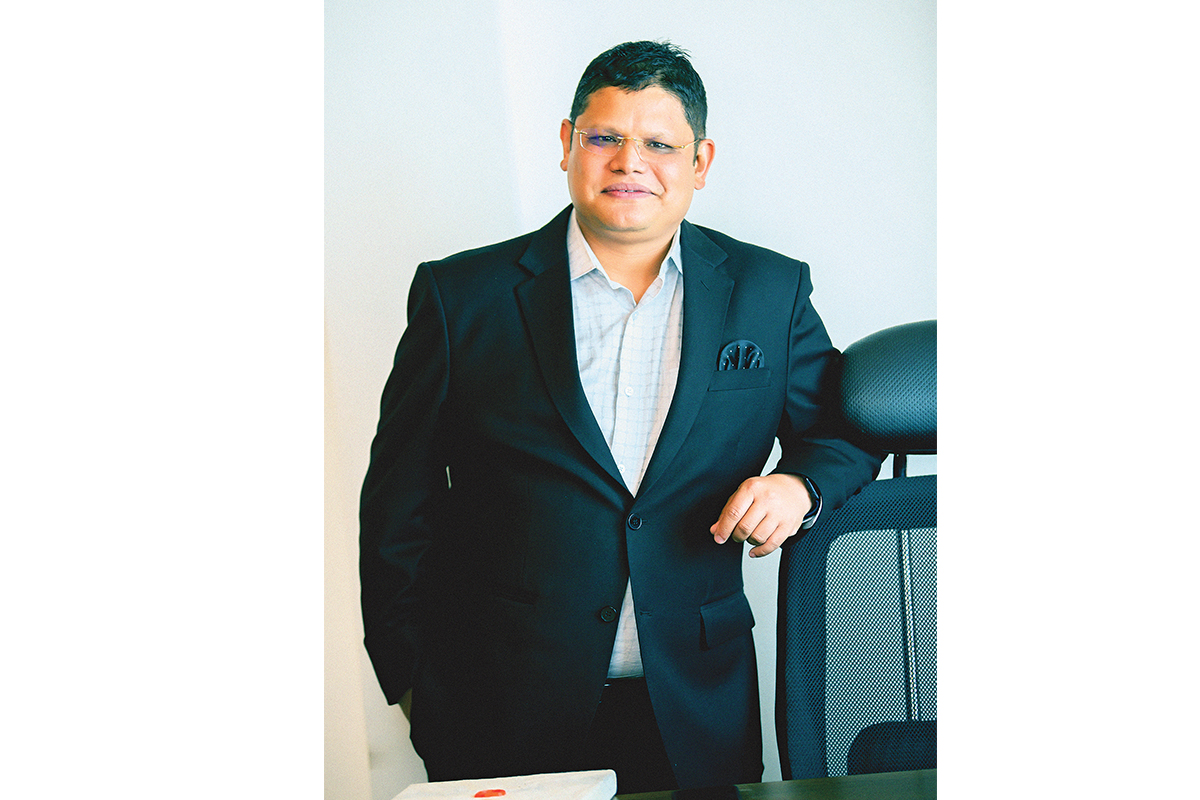
In this Opinion segment of Business 360, Manish Thapa, PhD, Managing Director of Global Equity Fund, shares his insights on whether a modern economy can survive a prolonged structural vacuum in the name of political purification.
For the business community, the stakes are exceptionally high. Will this shock therapy finally build the stable, rules-based regulatory environment that private investors have long demanded? Or will the prolonged institutional vacancies and structural friction stall economic momentum, raising fears of executive overreach?
Manish Thapa: The September 2025 Gen Z uprising that toppled Nepal’s government was not simply a political protest – it was a structural rejection of the patronage-based, rent-seeking governance model that has frustrated private investors for three decades. Nepal has experienced political transitions before as well – 2006, 2008, 2015 – and in each case, the window of reformist momentum closed faster than investors could act. The structural incentives of Kathmandu’s political economy – the bureaucratic capture of regulatory processes, the role of customs and land revenue as patronage instruments – have proven remarkably resilient to political upheaval.
Institutional vacancies are not a neutral condition. When the Securities Board, the Investment Board Nepal, and other regulatory bodies operate with acting or vacant leadership for extended periods, investment decisions stall. Legal agreements cannot be signed, clearances cannot be issued, and project timelines elongate, not because of ideology but because of simple administrative paralysis.
The business community’s anxiety is not irrational. The real determinant is not whether the new government is reform-minded – it almost certainly is – but whether it can institutionalise reforms before the political clock runs out. The 1,600 vacancies are not an aberration. They are a mirror. What they reflect is a public administration architecture that was always more fragile than it appeared, held together not by institutional design but by the continuous presence of politically appointed individuals whose departure, for any reason, triggers precisely the paralysis we are now witnessing.
With nearly 1,600 leadership positions suddenly left vacant, how can vital service-delivery organisations and state enterprises maintain routine business operations without critical authorised signatories?
Manish Thapa: Nearly 1,600 leadership positions vacant simultaneously is not a governance stress test. It is a governance stress fracture. Nepal’s public sector architecture is extraordinarily dependent on designated signatories for even routine operational decisions. Unlike mature bureaucracies where institutional authority flows through documented processes and delegated frameworks, Nepal’s public administration has historically concentrated decision-making authority in named individual positions – board chairs, MDs, executive directors, and department heads who are politically appointed and whose signatures are legally required for everything from procurement approvals and bank transactions to loan disbursements and regulatory clearances. When those positions become vacant simultaneously, the cascade of paralysis is not linear, it is exponential. A single vacant position at a state enterprise can freeze not just that institution’s operations but every downstream transaction, every supplier payment, every partner organisation waiting on a countersignature.
Nepal’s public administration has several legal mechanisms – imperfect and contested – that kick in during leadership vacuums: The most common immediate response is that the next senior officer in the organisational hierarchy is designated as acting authority, typically by the parent ministry. The legal problem is that acting authority under Nepal’s Civil Service Act and the respective institutional charters carries significant limitations – acting officers can authorise routine expenditure within pre-approved budgets but generally cannot execute any decisions. For state enterprises with large capital programmes, this is operationally crippling.
Beyond the immediate operational crisis, the 1,600-vacancy situation exposes a structural flaw in Nepal’s public administration architecture that predates the uprising and will outlast it: the over-personalisation of institutional authority.
The technically correct response to 1,600 simultaneous vacancies is not to fill them quickly with political appointments – that simply restocks the patronage system. It is to use the crisis as a forcing function for three structural reforms:
First, emergency delegation frameworks – legally gazetted documents for each major state enterprise that define exactly what decisions can be made by the next-tier officer in the absence of the designated authority, with specific thresholds and accountability mechanisms.
Second, fast-track technocratic appointments for the 10 to 15 positions whose vacancies pose systemic risk – Nepal Rastra Bank, Nepal Electricity Authority, Employees Provident Fund, Citizen Investment Trust, Securities Board of Nepal, Investment Board Nepal, etc – prioritising individuals with demonstrable professional track records and publicly committing to fixed, non-renewable terms insulated from electoral cycles.
Third, process documentation and digitalisation – moving signature-dependent decisions onto digital platforms where authority can be delegated, tracked and audited without depending on the physical presence or continued tenure of any single individual.
Unlike mature bureaucracies where institutional authority flows through documented processes and delegated frameworks, Nepal's public administration has historically concentrated decision-making authority in named individual positions – board chairs, MDs, executive director and department heads who are politically appointed and whose signatures are legally required for everything from procurement approvals and bank transactions to loan disbursements and regulatory clearances. When those positions become vacant simultaneously, the cascade of paralysis is not linear, it is exponential.
What specific, legally sound mechanisms must the government introduce to ensure that the upcoming appointments are genuinely merit-based and protected from becoming rewards for a new circle of political loyalists?
Manish Thapa: Nepal has attempted merit-based public appointment reforms repeatedly – in 2007, in 2015 post-constitution, and in the various civil service reform packages supported by Asian Development Bank and World Bank. Each attempt has ultimately been captured by the same structural dynamic: the appointing authority (Cabinet, parent Ministry, or Council of Ministers) retains discretionary override power at the final selection stage, and that discretion is always exercised in favour of political alignment over technical qualification.
The lesson from Nepal’s own history and from comparative experience in South Asia, Southeast Asia and sub-Saharan Africa is that merit-based appointment systems fail not because they lack good processes on paper but because they lack binding enforcement mechanisms that make political override costly rather than costless.
The current government’s unique advantage is that it is not a coalition government and has an absolute majority. It does not owe appointments to faction leaders, party general secretaries or regional power brokers in the conventional sense. This window is a perfect opportunity. The question is what can be institutionalised – legally, structurally and practically – before that window closes.
The government should amend and draft a new Public Enterprises Act and the Public Appointments Commission within six months with clear executive authority and genuine reformist intent. The donor community – ADB, World Bank and other donors – has financing and technical assistance ready for exactly this type of governance reform and will move quickly if the political commitment is credible.
The difference between Nepal’s new political actor and every previous one can be expressed in a single question: will the reforms be process-deep or outcome-deep?
Process-deep reforms look good on paper and collapse under political pressure. Outcome-deep reforms – the ones described here – change the incentive structure permanently, making capture costly rather than costless, and transparency the default rather than the exception.
How will this sudden leadership vacuum in regulatory bodies like the Securities Board of Nepal and the Electricity Regulatory Commission impact domestic business confidence and foreign direct investment pipelines?
Manish Thapa: This is perhaps the most directly consequential question for Nepal’s investment community because regulatory bodies are not simply administrative institutions. They are the legal interface between private capital and the state. When that interface goes dark, the consequences for investment pipelines are immediate, measurable and asymmetric, far easier to destroy than to rebuild.
Investors, domestic and foreign, do not simply pause when regulatory leadership is absent. They recalibrate their entire risk model for the jurisdiction. A vacancy at a regulatory body is not a temporary inconvenience to be waited out. It is a data point that updates an investor’s Bayesian estimate of the probability that any future regulatory decision will be technically sound, procedurally consistent and legally defensible. A single prolonged vacancy compounds every pre-existing concern about Nepal’s institutional reliability and that compounding effect is not linear.
Regulatory leadership vacuums do not simply pause investment. They reset the clock on trust-building that Nepal’s investment ecosystem has spent the better part of a decade constructing. The country’s first licensed PE fund, the first green bond, the first infrastructure bank, the first fintech unicorn in waiting, these are not just business milestones. They are proof points in a narrative about Nepal’s investability that the international capital community was beginning to take seriously.
That narrative cannot survive an extended regulatory vacuum. It can survive a short, well-managed transition, provided the response is fast, technically credible and accompanied by the structural reforms that make the next political transition less catastrophic than this one.
Does executing such a massive administrative overhaul via a presidential ordinance – rather than through rigorous parliamentary debate – risk setting a problematic precedent for executive overreach, despite the government’s strong popular reform mandate?
Manish Thapa: The honest answer is simultaneously yes, it sets a problematic precedent, and no, it was not entirely avoidable – a structural dilemma to be managed with institutional care, not a contradiction to be resolved. Nepal’s 2015 Constitution establishes a clear legislative hierarchy. Parliament is the primary lawmaking body. Presidential ordinance power under Article 114 is explicitly an emergency instrument for urgent situations when Parliament is not in session – a narrow, time-limited exception, not an alternative legislative pathway.
The current stress test: a government deriving legitimacy from mass uprising rather than an electoral mandate is using ordinance power to execute a governance overhaul that would honestly require months of parliamentary debate. Constitutional history, across every jurisdiction that has faced this question, consistently delivers the same answer – popular legitimacy cannot substitute for constitutional process, and every attempt to establish that it can creates institutional damage outlasting the reform itself.
The precedent problem is neutralised neither by good intentions, nor popular support, nor the genuine failures of the system being bypassed. It is neutralised only by ensuring the ordinance pathway remains a time-limited bridge, not the first step toward normalising executive supremacy. The Gen Z movement demanded accountability, transparency and the rule of law. A government that responds by concentrating executive power, however temporarily, however well-intentioned, risks delivering the precise opposite of what the movement demanded.
How should the boundary between a ruling party’s policy vision and the executive autonomy of state enterprises be redrawn to prevent future governments from completely purging leadership every time a transition occurs?
Manish Thapa: Under Nepal’s current institutional architecture, state enterprise and regulatory body leadership positions are simultaneously three things: policy instruments, patronage resources and commercial assets. They are policy instruments because a government that controls the MD of NEA controls electricity tariff negotiations, grid expansion priorities and PPA approvals – decisions with enormous economic and political consequences. They are patronage resources because the appointments themselves are rewards that can be distributed to loyal party cadres, allied technocrats and coalition partners whose support was instrumental to electoral victory. They are commercial assets because the individuals appointed to these positions often use them, directly or indirectly, to direct contracts, licences and approvals toward businesses and individuals connected to the appointing political network.
When a leadership position functions simultaneously as a policy instrument, a patronage resource and a commercial asset, every incoming government faces an overwhelming structural incentive to purge it and repopulate it with its own network. The cost of leaving an opposition-aligned appointee in place is not just political, it is the surrender of all three functions to a potential enemy. Under these conditions, purging is not irrational political behaviour. It is the structurally rational response to the institutional design.
This means the solution is not to moralise about purging or to design better appointment processes in isolation. It is to redesign the institutional architecture so that the three functions are separated, so that policy direction, patronage value and commercial leverage cannot all flow simultaneously through the same leadership appointment.
The foundational boundary that must be redrawn is between the government’s legitimate authority to set policy direction and the state enterprise’s operational autonomy to execute within that direction. This boundary exists in theory in Nepal’s existing legal framework – the Public Enterprises Act 2049 nominally distinguishes between ministerial policy oversight and board-level operational governance. In practice, it has never been enforced because no mechanism exists to make violation of the boundary costly.
What immediate, short-term stopgap measures should the administration deploy to minimise systemic damage to highly sensitive public sectors like national health academies and aviation safety?
Manish Thapa: Most state enterprise leadership vacancies create economic friction – delayed decisions, frozen procurement, stalled investments. The damage accumulates gradually and is, in principle, reversible. Health academies and aviation safety institutions are different in two fundamental ways.
The latency problem. Safety failures in both sectors do not announce themselves immediately. A hospital losing its quality assurance leadership produces harm not on day one, but six months later, when the audit that would have caught a systematic medication error was never conducted, when rising surgical infection rates went unmonitored, when junior doctors received no supervised practice. Aviation safety works identically: a leaderless authority does not produce an accident immediately. It produces uninspected aircraft, unreviewed licences and unmonitored maintenance records that compound silently until they intersect with bad weather or a fatigued crew. By the time damage is visible, it is already done.
The compliance dimension. Both sectors operate under international frameworks with zero tolerance for institutional dysfunction. Nepal’s civil aviation operates under ICAO standards; its health sector under World Health Organisation frameworks and bilateral qualification-recognition agreements. A leadership vacuum triggering International Civil Aviation Organisation (ICAO) non-compliance can result in a category downgrade, effectively grounding international flights and devastating tourism. A vacuum, causing the Nepal Medical Council to lose accreditation, can invalidate thousands of medical degrees, with consequences taking a generation to repair.
Stopgap measures are insufficient. What is needed is a permanent delegated-authority mechanism that activates automatically when senior leadership is absent.
The difference between Nepal’s new political actor and every previous one can be expressed in a single question: will the reforms be process-deep or outcome-deep? Process-deep reforms look good on paper and collapse under political pressure. Outcome-deep reforms – the ones described here – change the incentive structure permanently, making capture costly rather than costless, and transparency the default rather than the exception.
In your experience, what are the primary structural and bureaucratic hurdles that could cause this ambitious anti-patronage drive to falter during the implementation phase?
Manish Thapa: The consistent failure of anti-patronage drives is not, fundamentally, a failure of diagnosis or design. It is a failure of implementation planning, the failure to anticipate predictable resistance and design explicit countermeasures before the resistance materialises. Reforms that are architecturally sound, politically mandated and internationally supported consistently fail not because their diagnosis was wrong but because the implementation encountered structural and bureaucratic resistance that was predictable, was not adequately anticipated, and was therefore not adequately designed against.
The anti-patronage drive that succeeds is not the one that encounters less resistance than its predecessors. It is the one that anticipated the resistance, designed institutional countermeasures against it, resourced those countermeasures adequately, monitored their effectiveness continuously, and adjusted the implementation strategy in real time as the resistance evolved.
Nepal has the diagnostic capacity, the international support, and, in this moment, the political conditions to do this differently from every previous attempt. The structural and bureaucratic hurdles we have in our system are not reasons for pessimism about the reform’s prospects. They are the implementation agenda – the specific, concrete challenges that must be addressed, one by one, with the same analytical rigour and institutional creativity that the reform’s architects have brought to its design.
The design phase of Nepal’s anti-patronage reform is nearly complete. The implementation phase – harder, slower, less visible and more consequential – is about to begin. Its success will depend not on the quality of the laws passed or the commissions established, but on the quality of the implementation planning that turns those laws and commissions into the lived daily reality of how Nepal’s public institutions work.
That is the most important thing that experience teaches about reforms of this ambition and this necessity. And it is the thing that reform advocates, in the excitement of the political moment, are most consistently inclined to underestimate.
-1789293497.jpg)