FNCCI finalises co‑chairpersons, members, advisers for thematic committees

KATHMANDU: Federation of Nepalese Chambers of Commerce and Industry (FNCCI) has finalised co‑chairpersons, members and advisers for its eight thematic committees.
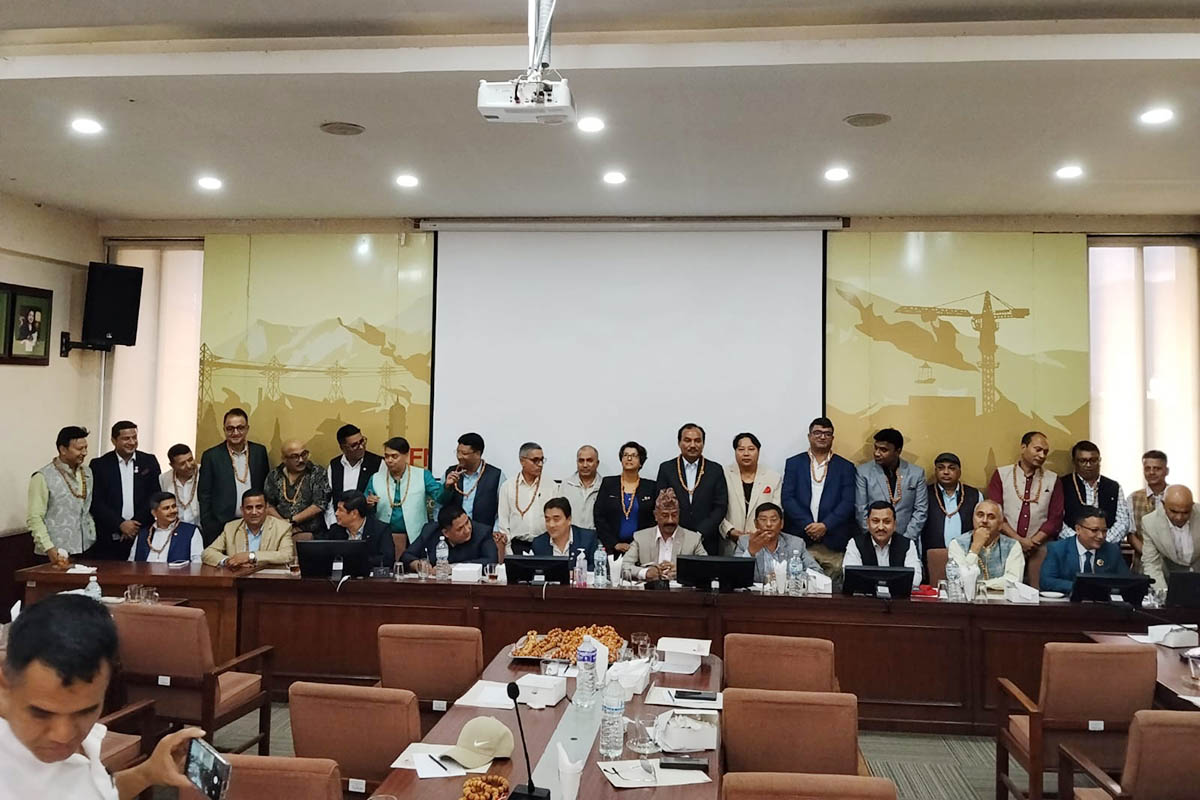
Letters of nomination were presented to co‑chairpersons, members and advisers at a ceremony held at FNCCI Secretariat in Teku on Wednesday.
Addressing the ceremony, FNCCI Acting President Sur Krishna Vaidya handed over the nomination letters and said the active involvement of the committees is essential for empowering the private sector and driving national prosperity. He added that the committees are a key mechanism for policy dialogue, problem‑solving and reform between the government and the private sector. “The members of the committee should utilise their experience, expertise, and professional skills in the economic development of the nation. The objective of the committee will be fulfilled only if they can work in a result‑oriented manner in the areas of industry, trade, investment, export, entrepreneurship, and employment expansion,” he said.
FNCCI Vice President (Commodity) Naresh Lal Shrestha said the thematic committees form a crucial basis for developing FNCCI’s policy agendas and urged their active involvement to address shared private sector issues collectively. He added that insights and recommendations from various commodity associations should reach policy decision‑makers through these bodies. FNCCI Vice President (Associate) Prabal Jung Pandey said the committees should act as a shared platform to identify new thinking, innovation and commercial opportunities, and urged them to lead reform efforts through evidence‑based dialogue with the government.
Treasurer Manish Lal Pradhan said the effectiveness of the committees would be measured by performance and called on members to focus on solving practical business challenges and expanding economic activities. He added that recommendations from the committees would strengthen FNCCI’s overall policy stance.
Nomination letters were distributed across eight specialised panels: the Industry Committee chaired by Ujjwal Kumar Shrestha; the Tax and Revenue Committee chaired by Arniko Rajbhandary; the Skill Development and Employment Committee chaired by Nani Raj Ghimire; the Export Committee chaired by Hom Prasad Ghimire; the Social Service and Disaster and Natural Calamity Committee chaired by Raj Kumar Karki; the Capital Market Committee chaired by Priya Raj Regmi; the Women Entrepreneurship Development Committee chaired by Sunita Nhemaphuki; and the Start‑up and Innovation Committee chaired by Sahara Joshi.
Following their appointment, committee chairpersons urged members to advance shared private sector concerns systematically, provide timely policy recommendations to the government, and work across industry, trade, investment, tax reform, export promotion, skill development, innovation and entrepreneurship expansion.
Industry Committee chair Ujjwal Shrestha pledged to prepare practical solutions for industrial challenges to submit to the government via FNCCI. Tax and Revenue Committee chair Arniko Rajbhandary said the committee would work towards policy reforms by building a unified private sector consensus for a simpler, transparent and business‑friendly tax system. Skill Development and Employment Committee chair Nani Raj Ghimire said special initiatives would focus on creating skilled manpower tailored to industry needs and expanding employment.
Export Committee chair Hom Prasad Ghimire said the panel would partner with the private sector to expand international market access for Nepali goods, promote exports and boost competitiveness. Social Service and Disaster and Natural Calamity Committee chair Raj Kumar Karki said planned steps would enhance the private sector’s contribution to social responsibility and disaster management. Capital Market Committee chair Priya Raj Regmi said the committee would prepare policy inputs to develop capital markets, boost investor confidence and mobilise financial resources. Women Entrepreneurship Development Committee chair Sunita Nhemaphuki committed to result‑oriented programmes aimed at promoting female entrepreneurship, economic empowerment and business growth.
Speakers at the event said the thematic committees represent the primary channel for policy formulation, identifying common private sector priorities and coordinating with the government, and urged all appointees to perform their duties responsibly and effectively.