NIICE holds 30th dialogue on France's role and China's influence in Nepal

-1764933848.jpg)
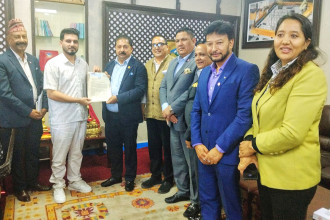
KATHMANDU: Nepal Institute for International Cooperation and Engagement organised its 30th NIICE Dialogue Series on Thursday.
The event focused on France’s strategic role in South Asia and the impact of China’s investments and the Belt and Road Initiative (BRI) in Nepal.
Lilian Pineau, a researcher at NIICE, spoke about France’s strategic approach to the region, saying France rejects the idea of nuclear-style war and emphasising sovereignty partnership. “Due to the nature of uncertain geopolitical circumstances, France has to make careful choices in the coming times with South Asian nations to ensure sustainable partnerships and to promote their regional interest in South Asia,” said Pineau.
-1764933848.jpeg "30th-NIICE-Dialogue-Series,-France's-role,-China's-influence-in-Nepal-(1)-1764933848.jpeg")
-1764933848.jpg "30th-NIICE-Dialogue-Series,-France's-role,-China's-influence-in-Nepal-(2)-1764933848.jpg")
Sidhant Kumar, a visiting fellow at NIICE, presented on China’s engagement in Nepal, arguing that Beijing has two main interests: inhibiting Tibetan dissident activities and establishing strategic influence through economic engagement, and more recent cultural investments. “The Belt and Road Initiative (BRI), which was signed in 2017 without public knowledge, needs to be spoken about more. The people of Nepal do not have a clue about it, and those who do have very little understanding of what it entails,” said Kumar.
The programme concluded with a Q&A session in which presenters and the audience discussed the role of the BRI and France’s influence in South Asia. Pineau stressed that France has been adopting a softer approach to influencing the region, while Kumar said India’s 2015 blockade created a negative perception of India that helped China build a more positive image in Nepal, contributing to the signing of the BRI.