NIICE 32nd Dialogue: Youth, Accountability and Nepal’s Future

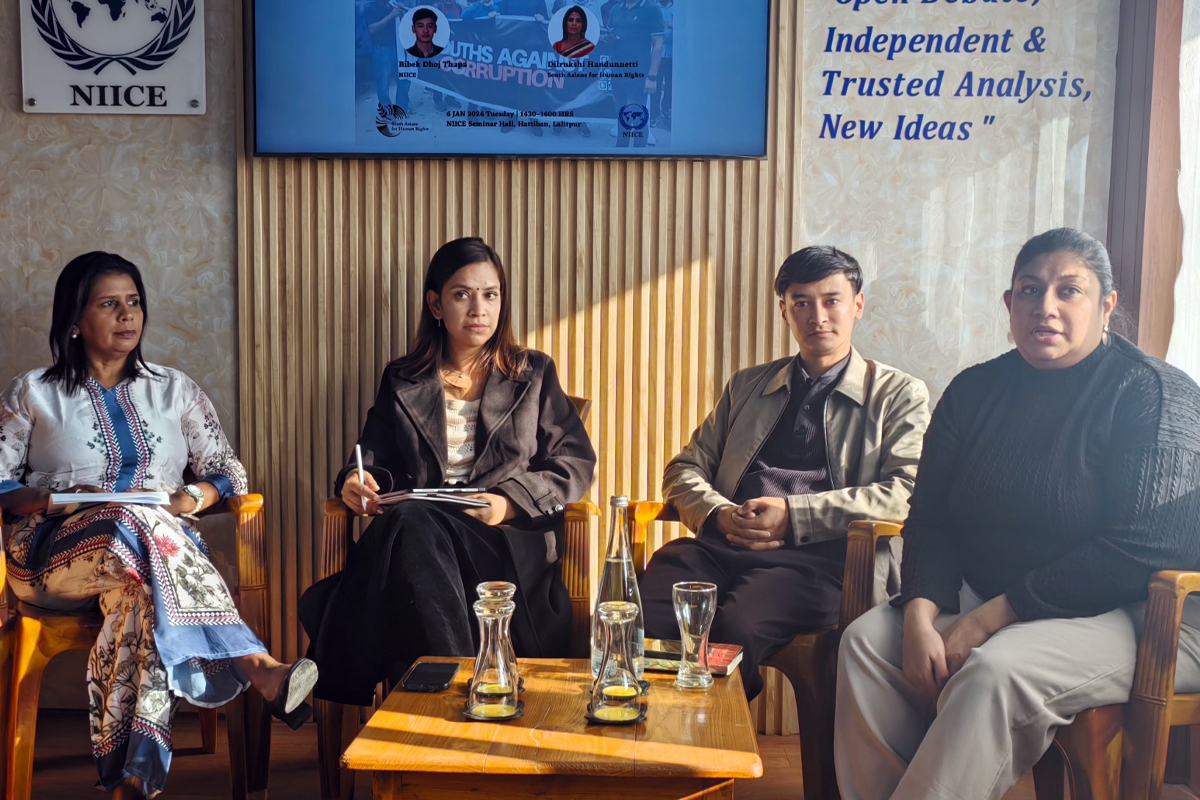
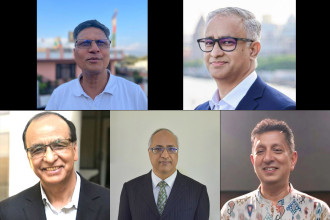
LALITPUR: Nepal Institute for International Co-operation and Engagement (NIICE) hosted its 32nd dialogue series on Youth, Accountability and Nepal’s Future on 6 January in their headquarters at Hattiban. The session was moderated by Dilrukshi Handunnetti, investigative journalist and lawyer, with Prakriti Dhakal, Gen Z activist; Bibek Dhoj Thapa, research associate at NIICE; and Deekshya Illangasinghe, executive director of South Asians for Human Rights, as speakers.
Handunnetti started the session by analysing and addressing the protest and changes in South Asia, framing the conversation around regional patterns of dissent, state behaviour and democratic transitions.
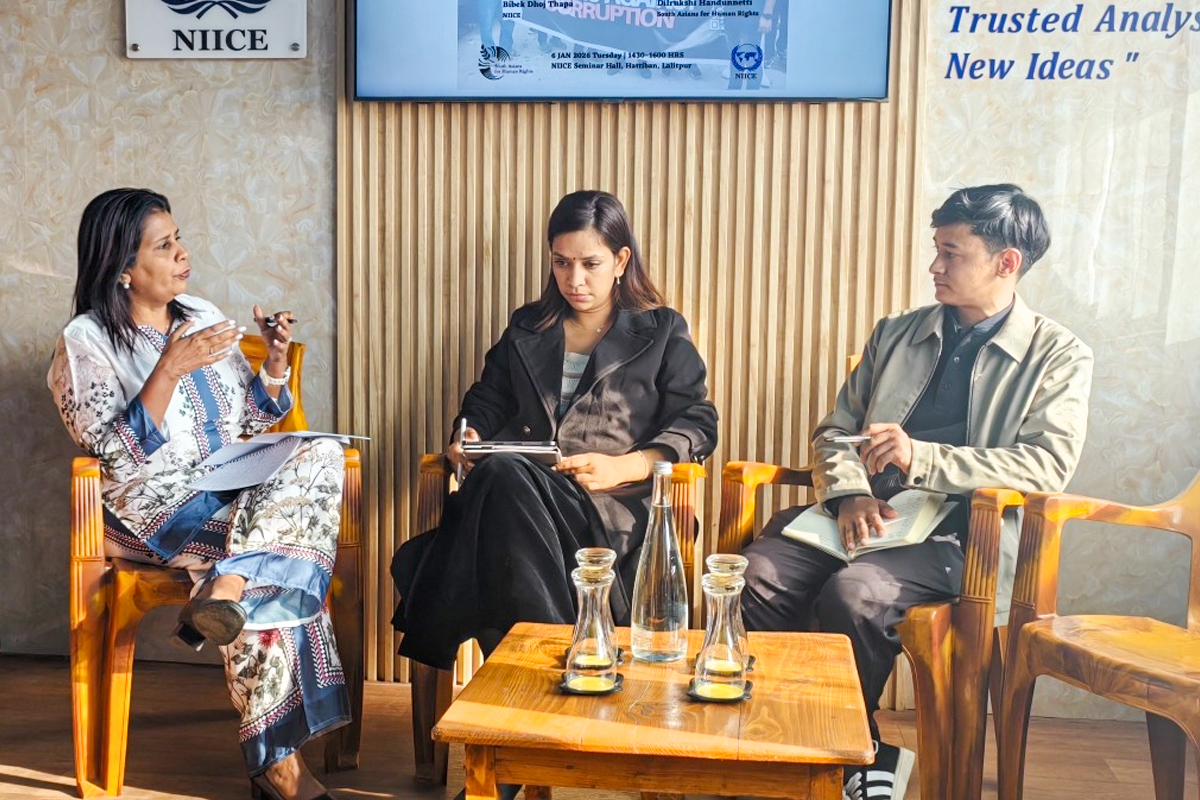
“The Gen Z protest was not spontaneous; rather, it was a culmination of long-standing grievances,” said Thapa.
He emphasised the need to understand patterns of human rights abuse by highlighting that brutal repression follows recurring patterns. He spoke about the need for alternative, non-lethal riot-control assets and strategies rather than repression.
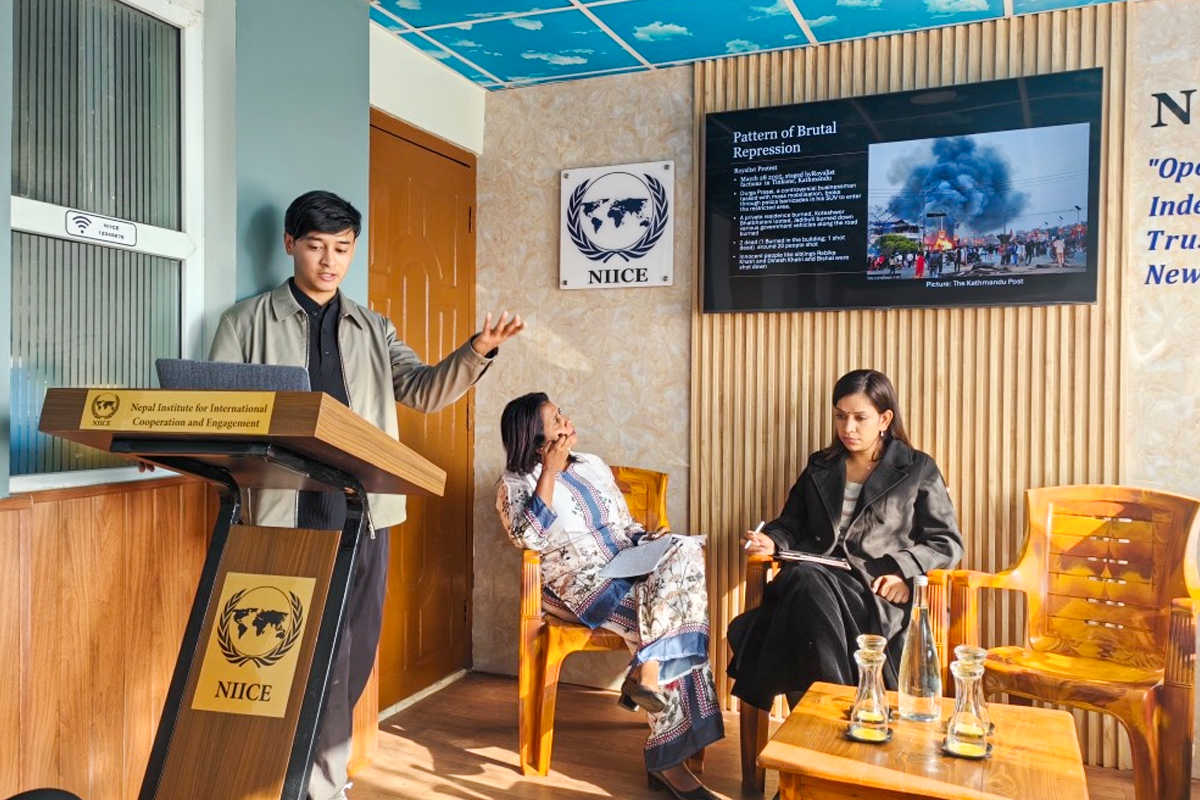
“Collective force, when united for positive change, can create a real impact,” said Dhakal.
She stated that the protests were not merely about regime change but about structural reform. She moved on to describe the movement as a reformative movement for young leadership. Dhakal also commented on the PR lists of political parties, saying that the restructuring of PR lists suggests openness to public scrutiny while also noting that the representation still remains unclear and inconsistent, particularly for women.
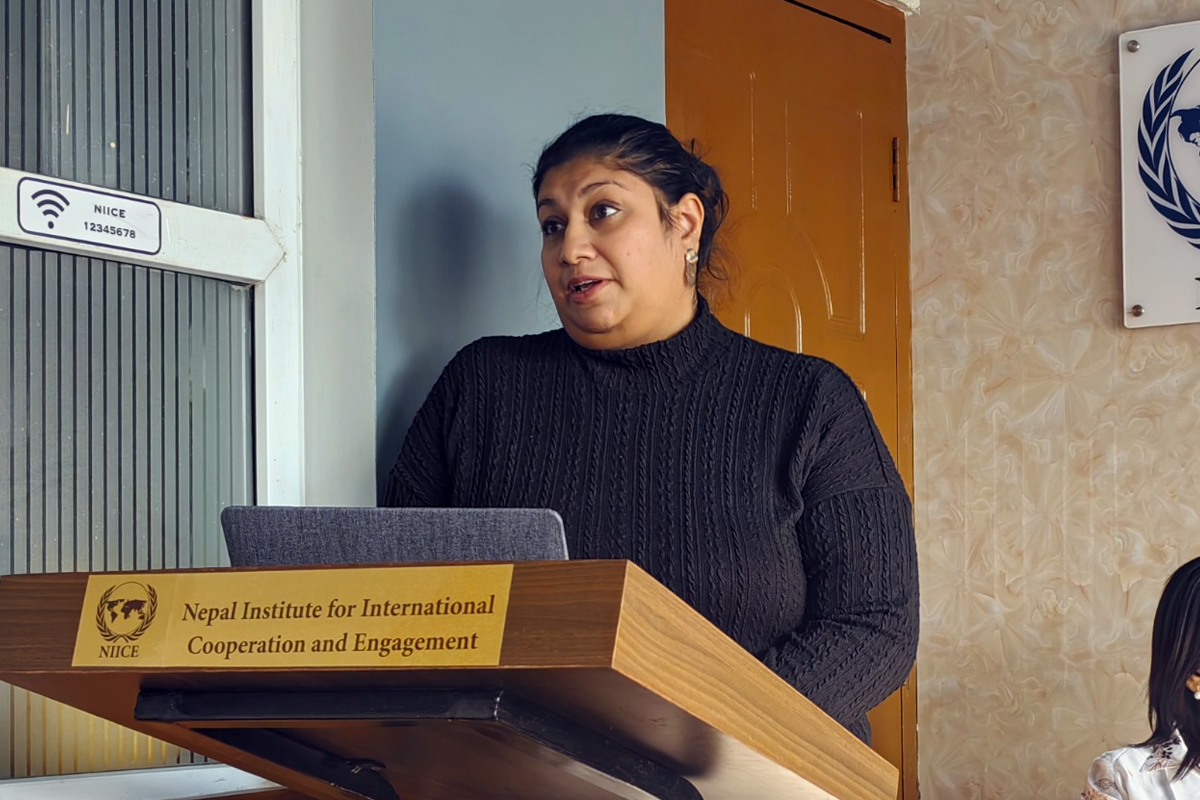
Illangasinghe identified rebuilding public trust in institutions and political parties as the foremost priority ahead of the election, reiterating that elections should remain the primary democratic pathway forward.
“There needs to be certain pressure for internal reforms to take place within political parties. The sane and constructive youths should take the lead,” she said. “If we want to ensure non-recurrence of violence and unrest, we need to address the root causes of the protest.”
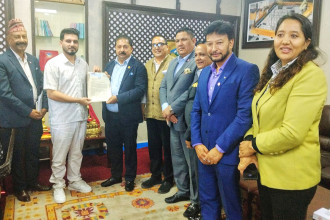
The session ended with a Q&A session and a handover of a report, Nepal at a Democratic Crossroads: A Human Rights Assessment following the September 2025 Unrest, conducted by the SAHR