Multilateralism at a Crossroads


REFORMING GLOBAL GOVERNANCE IN AN AGE OF FRAGMENTATION
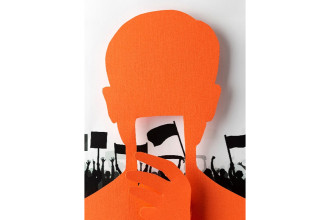
Digital advancements, including AI and IoT, have shifted global politics, enabling youth-led, IT-driven uprisings, such as a rapid 2025 uprising in Nepal. Simultaneously, the global order is shifting from multilateral cooperation toward protectionism and bilateralism, eroding the influence of institutions like the UN and WTO.
Over the past decade, the world has experienced political and economic shifts more profound than those of the previous 30 years. Rapid advances in artificial intelligence, big data, the Internet of Things, and robotics are transforming production systems, public services and governance. Healthcare, education, infrastructure and financial systems increasingly rely on digital backbones. At the same time, digital connectivity has reshaped political mobilisation, empowering citizens while also amplifying volatility.
The global landscape is further complicated by climate change, the lingering socioeconomic effects of the pandemic, energy insecurity, persistent inflation, rising debt burdens and widening inequality. These pressures are converging at a moment when the very institutions designed to manage global interdependence are weakening. The question is no longer whether multilateralism is under strain but whether it can be renewed.
From Liberal Consensus to Strategic Rivalry
The fall of the Berlin Wall and the dissolution of the Soviet Union ushered in a unipolar era dominated by liberal democratic and market-oriented principles. Institutions such as the World Bank, International Monetary Fund and World Trade Organisation anchored a global architecture built around deregulation, privatisation and open markets, often described as the Washington Consensus.
That order is now under pressure. Economic power has shifted toward Asia, particularly China and India, reinforcing a multipolar distribution of influence. Strategic competition has intensified. Geopolitical rivalries increasingly shape trade, technology and capital flows.
Ironically, many countries that once championed free trade now resort to protectionist measures under the banners of national security and economic resilience. Tariffs, industrial subsidies, export controls and strategic supply-chain realignments are reshaping global commerce. While such policies may yield domestic political gains, they risk fragmenting markets, raising costs for consumers and reducing overall efficiency.
Trade in the Balance
Rules-based trade has historically expanded consumer choice, lowered prices and incentivised innovation. Open markets enabled several developing economies to become manufacturing hubs, lifting millions out of poverty.
For countries with limited industrial capacity, trade in services – through cross-border supply, commercial presence and labour mobility – offers significant potential. Migrant workers from developing economies contribute substantially to global productivity while supporting their home countries through remittances.
Yet, migration flows and service trade have become politically contentious. The United Kingdom’s withdrawal from the European Union and the United States’ shift toward tariff-driven trade policy during the Trump administration have signalled a broader turn toward economic nationalism. Retaliatory tariffs and trade disputes have followed, weakening confidence in predictable, rules-based commerce.
These developments have accelerated the proliferation of bilateral and regional trade agreements. While such arrangements can be pragmatic, their expansion risks sidelining multilateral frameworks and eroding the universality of global trade rules embedded in the WTO.
Multilateral Institutions Under Strain
Multilateral institutions, including the United Nations and its specialised agencies, were established to manage precisely the types of cross-border challenges the world now faces. Yet, their effectiveness is increasingly questioned.
The UN has struggled to broker durable peace in major conflicts, exposing the limits of its current structure. Meanwhile, actions such as the US withdrawal (later reversed) from the World Health Organisation and the Paris Climate Accord, along with the paralysis of the WTO’s Appellate Body, have weakened institutional credibility.
The consequences extend beyond diplomacy. Businesses depend on stable trade regimes, enforceable dispute settlement, coordinated health responses and credible climate frameworks. When global governance falters, investment uncertainty rises, supply chains fragment and risk premiums increase.
At the same time, legitimate grievances persist. Within the WTO, divisions between developed and developing countries over agricultural subsidies, fisheries rules and decision-making processes remain unresolved. In the UN system, the composition of the Security Council reflects a post-World War II power structure that no longer mirrors geopolitical realities. Africa and South America lack permanent representation, and broader regional imbalances fuel perceptions of inequity.
Reform, Not Retreat
Disillusionment with multilateral institutions is understandable. But retreating into unilateralism or fragmented blocs would be economically and strategically costly.
The global response to Covid 19 demonstrated that pandemics cannot be managed through isolated national strategies. Climate change, likewise, cannot be addressed through piecemeal commitments. The negative effects of environmental degradation disproportionately affect developing and least developed countries, underscoring the need for coordinated financing, technology transfer and accountability mechanisms.
For the private sector, the calculus is equally clear. Long-term investment thrives in environments defined by predictable rules, open markets and cooperative frameworks. Fragmentation, by contrast, increases compliance costs, disrupts supply chains and undermines growth prospects.
The imperative, therefore, is reform, not relinquishment. Multilateral institutions must adapt to reflect contemporary power realities, improve representation, modernise decision-making processes and restore dispute-settlement credibility. Greater transparency, equitable burden-sharing and institutional efficiency are essential to rebuilding trust.
Multilateralism is not an abstract diplomatic ideal; it is an economic necessity in an interconnected world. A fragmented global order may serve short-term political agendas but sustainable prosperity depends on cooperation.
At this crossroads, the choice is stark: modernise global governance to meet 21st-century challenges or accept a future defined by instability, rivalry and diminished collective potential.