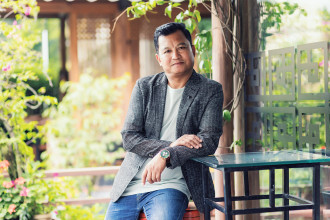
“Real leadership is building ownership, not reliance” – Deependra Chaulagain

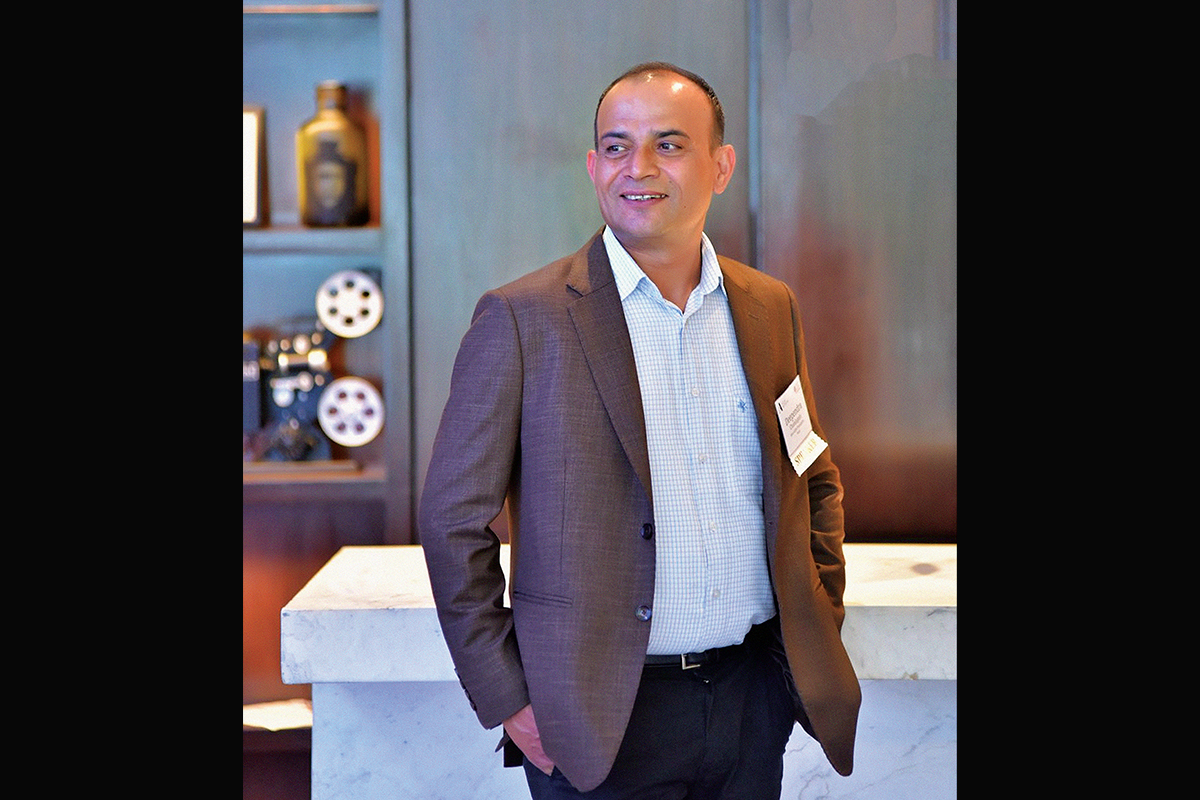
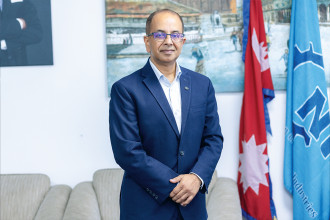
Deependra Chaulagain
Director of Operations, Samriddhi Foundation
Deependra Chaulagain is the Director of Operations at Samriddhi Foundation, where he manages the development of operational systems, processes and policies that keep the organisation running effectively. At heart, Chaulagain remains a youth activist. Over the years, he has designed and led numerous national and international programmes focused on youth participation, youth politics, volunteerism and peacebuilding.
Chaulagain joined Samriddhi Foundation in 2007 and also served as the President of Liberal Youth of South Asia, a regional network connecting liberal youth organisations across South Asia. With a Master’s degree in Political Science, he combines institutional discipline with grassroots experience, bringing both structure and heart to the spaces where policy and people meet.
An interesting fact about Chaulagain is that he spent three years running outdoor adventure and team-building training, including white-water rafting. The plot twist? He cannot swim.
In this edition of Business360, Chaulagain talks about leadership challenges, lessons and his experiences while being in a leadership position at Samriddhi Foundation.
What is leadership to you?
Leadership is taking responsibility for a shared direction. It means having a vision, making the pathway to achieving it clear, earning trust and helping people do their best work without needing the spotlight. It is less about titles and more about relationships and influence. It is about mobilising others around a common purpose, listening well and leaving people more capable than you found them.
Is leadership ‘acquired’ or ‘inborn’?
For me, leadership is mostly acquired, though people start at different points or with different advantages and disadvantages. Some traits like temperament, confidence and appetite for risk help at the beginning. But leadership itself is built through lived experience, feedback, setbacks and the discipline of learning to make good decisions under pressure. Treating it as ‘inborn’ is a trap, because it makes people focus too much on ‘natural charisma’ rather than deliberately developing judgement and working towards self-improvement.
Could you share any incident that tested your leadership ability?
The ‘Bibidhtaa ko Utsav (Celebrating Diversity)’ event that we did almost 20 years ago comes to mind. It was a 21-day musical caravan across Nepal. It was not long after the Civil War ended, and the country’s political environment was still tense and unpredictable. As we moved district to district, you could feel how quickly the atmosphere could shift.
What made it hard was not the travel or the logistics per sé; it was the sensitivity of the time where one careless decision, one wrong signal, could unravel trust and put the whole mission and the people involved at risk. There were moments when I genuinely felt that we should call it off. It would have been the safer choice. But the mission also mattered. We were promoting diversity at a time when the country had just come out of a conflict that had sharpened so many dividing lines. The whole point of the caravan was to remind people that the future could not be built only around what separated us.
It was an anxious moment but showing that anxiety was not an option. Making steady and principled decisions under pressure was important. That is what I did. In the end, we pulled off the caravan quite successfully.
When should leaders hand over their leadership position?
Leaders should hand over before the role starts to become about them. In other words, when staying risks slowing the mission, narrowing the organisation or blocking the next generation, that is when you make way. For example, if you have developed someone who can carry the work with confidence, that is success, not a threat. You should view that as an opportunity to pursue something else – something better or more valuable.
Or, if you notice you are spending more time defending the past than building the future (if you are the constraint rather than the catalyst), it is time to move. The idea is that leaders should just be temporary custodians.
Or, if you are thinking about a next phase that requires a materially different skill set, like reaching new audiences, forming new coalitions or adopting new operating models, it is often healthier for a new leader to write that chapter. So that is another opportunity to hand over the position.
The best test I have heard and seen is simple: If you can leave and the organisation gets stronger and not weaker, you have chosen the right moment.
After nearly two decades in youth activism and institutional leadership, what is the hardest leadership lesson you have learned?
The hardest lesson is that you cannot want it more than your people do.
In youth activism and institutions alike, it is tempting to carry the mission on your back by going that extra mile, doing the extra calls, smoothing every conflict, compensating for weak systems with personal effort. It works in the short term, but it quietly trains everyone else to depend on you, not the purpose.
Real leadership is learning to build ownership, not reliance. I would say you need to transfer the vision and help each individual build their own purpose and premise. Set the standard, tell the truth early, create clear roles, and let people feel the consequences of their choices, while still backing them as humans. It is a slow process but it is how movements mature into institutions that last.
In environments where political relations matter, how does a leader maintain integrity without compromising access or influence?
The only sustainable way to keep both integrity and influence is to be truthful. First to yourself and then to others. That means being clear about what you believe and why, sharing your ideas without disguising them for convenience and resisting the temptation to say whatever keeps the room warm. Say hard things. But of course, always remember to back it up with evidence and reality. This will help you build your credibility.
At the same time, if you want to work across a political spectrum, you have to tolerate disagreement and you have to make other people’s views, concerns and motivations feel heard and respected. Say hard things in a way that preserves future dialogue. Influence grows when people trust that you are not trying to trap them, embarrass them or score points.
And it also helps to protect a certain independence. Build relationships across divides but do not let proximity become dependence.
What is the biggest leadership challenge in running operations for a policy-focused organisation: strategy, people management or execution?
All three are challenging because in a policy-focused organisation they are tightly linked. Strategy sets the direction, people give it life, and execution is where credibility is either earned or lost.
Strategy is difficult because you are not just choosing what you believe, you are choosing what to prioritise in a country with infinite problems and finite attention. The hardest part is deciding what to say no to, resisting the pull of every passing problem and staying anchored to a long-term mission while still being relevant to the moment.
People management is its own test because this kind of work attracts talented and values-driven people who often join out of passion and zeal. That is a strength but it also means you have to pair commitment with craft. In the policy world, you need to give people room to lead and think independently. This means you have to be heavily invested in each person’s training and education so that good intentions do not become bad outcomes. Policy is full of unintended consequences. We often hear, even the road to hell is paved with good intentions. So, developing people means broadening their horizons, building learning habits and sharpening economic and social reasoning. The goal is to make them more rigorous, more practical and more aware, which often takes years to achieve in Nepal, where general reading habits and policy awareness are yet to be developed among younger people.
Execution is challenging because the environment is volatile. The political weather changes fast, narratives shift overnight and windows of opportunity open and close without warning. You can do brilliant analysis and still miss the moment for reform if your operations are not agile. The work demands discipline but also adaptability because you are constantly balancing long-term projects with the urgent realities of the day.
How do you lead people who are more experienced or more outspoken than you?
I lead them by treating experience and outspokenness as an asset, not a threat. In policy work, the goal is not to be the loudest voice in the room. It is to get to the best judgement. So, I try to be clear about the ‘what’ and the ‘why’, the outcome we are driving toward and the standard we need to meet and then give people real ownership over the ‘how’, because that is where their expertise should shape the work.
With outspoken people in particular, I invite challenges early, when it can improve thinking. And I make it clear that disagreement is not disloyalty. But I also set expectations. In the end,critiques should be specific, evidence-led and in service of the mission. Once a decision is made, we move as one team, not because everyone has to agree but because everyone understands the responsibility that comes with influence.
Regarding people who are more experienced, they will respect you not for pretending you know everything but for having the judgement to listen, the discipline to decide and the maturity to share credit.
What leadership habit has contributed most to your long-term effectiveness?
I think it is building a disciplined rhythm of learning and relationships. I make time to read widely and think carefully, because in policy and strategy work, judgement is your edge. It helps you test assumptions, anticipate unintended consequences and stay anchored to what matters rather than what is merely loud.
But the second half of that habit is networking in the deeper sense, investing in people and creating a space where others feel they can speak candidly. In advocacy, influence often comes from what people are willing to tell you before it becomes public: what they are worried about, what they cannot say out loud, what trade-offs they are actually facing. If you have built trust across different perspectives, people will come to you not just to agree, but to think. That ‘safe space’ for honest conversation has been invaluable because it widens your information, improves your judgement and helps you build coalitions that last.
On a personal level, I also engage a lot in reflection. I try to end most weeks with a simple check: what did we learn, what are we doing next and what are we not doing? That helps keep the mission sharp, the team aligned and importantly, keep myself honest about whether we are actually making progress or just staying busy.
Do you believe leadership is more about influence, authority or responsibility, and why?
I think leadership is fundamentally about responsibility. Authority is a tool you may be given and influence is something you can earn but responsibility is the moral core of the role: you are accountable for direction, for standards and for the consequences of decisions.
In practice, responsibility is what keeps influence honest. If you only chase influence, you start optimising for approval, headlines or access. If you only rely on authority, you may get compliance but you rarely get commitment. Responsibility forces a different posture: listening properly, choosing carefully, being willing to decide and standing behind both your people and your judgement when it matters.
Have you ever had to make an unpopular decision for the greater good of the organisation and what did that experience teach you about leadership?
Yes, and in fact, many times. At Samriddhi Foundation, where I am currently engaged, one of the most unpopular things was insisting that our work focus on what creates prosperity not simply what manages poverty. In 2006, the safer, more fashionable language was ‘poverty alleviation’. We deliberately shifted the conversation toward enterprising and profit-making. It was controversial at the time because it challenged comfortable assumptions and unsettled established interests.
The same principle led to a set of difficult choices. In a sector where visibility and funding are constant pressures, it is tempting to accept partnerships and programme money from bigger organisations, but on agendas and goals that sit slightly outside your strategic priorities. But the hidden cost is that you stop being a think tank and become a delivery arm for others’ agendas. We said no; even when it meant staying smaller, fundraising the harder way and explaining the decision internally to a team that understandably worried about momentum.
Once again, this is what taught me leadership is not popularity.