NAS-IT begins developing bachelor-level IT curriculum integrating industry work from first year

-1779170609.jpeg)
KATHMANDU: Nepal’s apex IT industry body, Nepal Association for Software and IT Services Companies (NAS-IT), has begun developing a new bachelor-level IT curriculum that will integrate industry work into students’ studies from the first year.
The move aims to tackle a widening skills gap in Nepal’s IT sector, where roughly 10,000 IT graduates enter the workforce each year but many lack the practical, industry-ready competencies employers seek. The programme will produce graduates who already possess hands-on experience and market-relevant skills when they finish their degrees.
The initiative is being implemented with financial and technical support from the Swiss Agency for Development and Cooperation (SDC) and Swisscontact. NAS-IT President Gaurav Pandey said the curriculum is being built around market needs and that the industry itself is taking the lead in designing the academic course. “Graduates often do not possess the skills the industry is looking for,” Pandey said. “That is why we are now building a curriculum based on market needs. This is possibly the first time the industry itself is taking the lead in designing an academic course.”
According to NAS-IT officials, the programme will go beyond traditional coding instruction to emphasise problem-solving, data literacy, critical thinking and the ability to work with artificial intelligence technologies. The association highlighted AI as a major driver of change in the global IT sector and said the curriculum will prepare students for evolving job requirements.
-1779170609.jpeg "NAS-IT,-bachelor-level-IT-curriculum-(3)-1779170609.jpeg")
-1779170610.jpeg "NAS-IT,-bachelor-level-IT-curriculum-(2)-1779170610.jpeg")
The curriculum development process is already underway and follows Nepal’s National Qualification Framework (NQF). IT experts, educators and other stakeholders have been involved in shaping the course, which targets emerging technologies and shifting labour market demands.
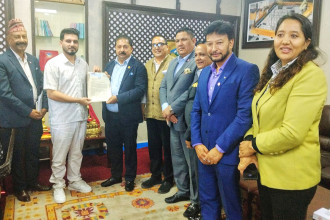
For joint development and operation of the degree, NAS-IT has partnered with Nepal Open University. The four-year programme, expected to launch in the near future, will feature a strong work-integrated learning model as a core component. According to Dr Bhoj Raj Ghimire, the curriculum will include subjects such as Artificial Intelligence, Data Science, Blockchain, Cloud Computing and Cybersecurity.
A key element of the programme is that students will have opportunities to work directly in the IT industry from the start of their studies, allowing them to graduate with both academic qualifications and practical experience. This approach should help narrow the gap between universities and employers and support the development of globally competitive IT professionals within Nepal.
Swisscontact welcomed the initiative, stating that the course will help bridge the divide between academia and industry while contributing to the development of a skilled workforce.