From Seoul’s Social Enterprise Movement to Nepal’s Circular Economy: The Journey of Chij Man Gurung

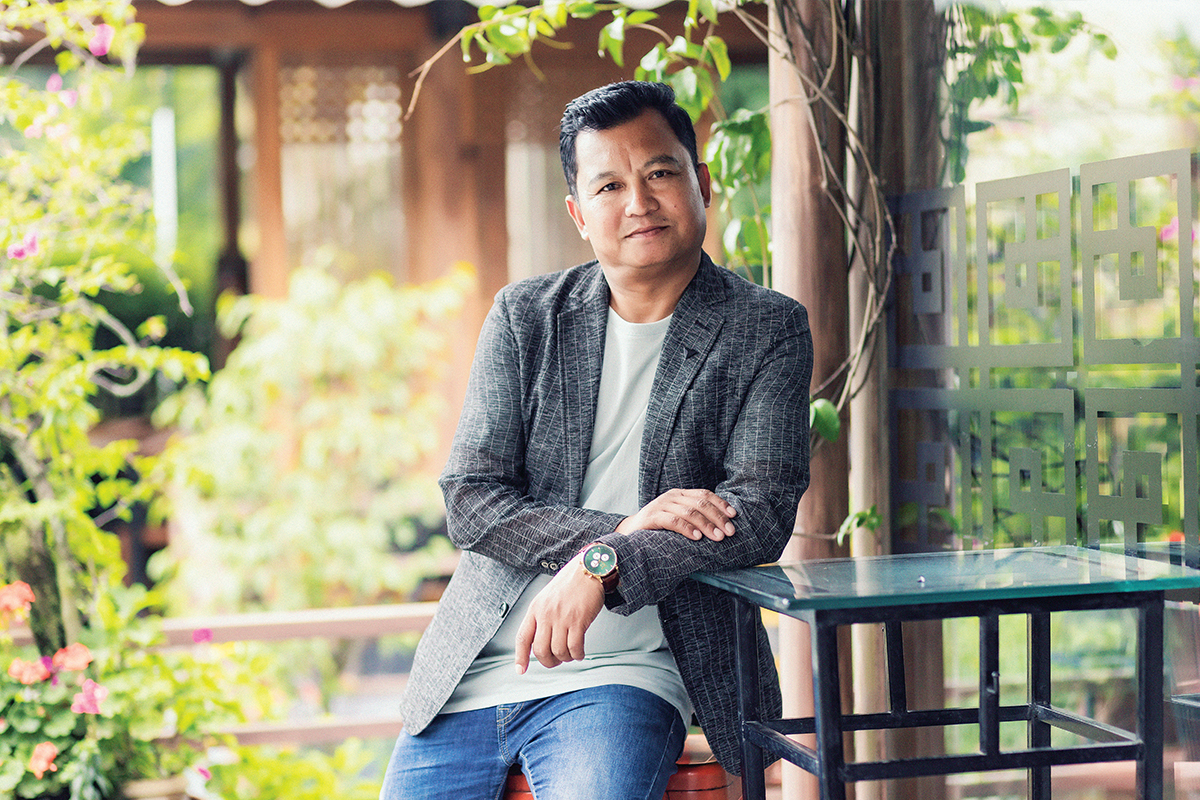
Leadership is about learning and teaching your team members and becoming a guiding force for them. It is tested many times through circumstances, but a leader should be able to bring people together, face situations head-on, and act as a shield when needed
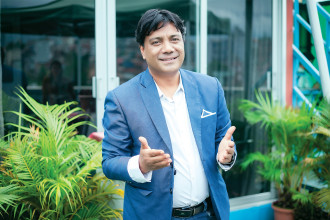
Chij Man Gurung, Founder and Director, Hankook Sarang Korean Restaurant and Founder, Sukhawati Store
Across Asia, a quiet transformation is redefining what business means. From South Korea’s expanding social enterprise ecosystem - shaped in part by late Seoul Mayor Park Won-soon and initiatives like Beautiful Store - to the rise of circular, community-driven retail models worldwide, the line between profit and social impact is increasingly blurred. Nepal is gradually becoming part of that shift.
At the intersection of this change is Chij Man Gurung, founder of Sukhawati Store and Hankook Sarang Restaurant. His journey spans migrant work in Korea, entrepreneurship in Pokhara, and the creation of one of Nepal’s early social enterprises built on reuse, dignity and community reinvestment.
Gurung first went to South Korea in 1993 in search of employment. After returning to Nepal in 2000, he established Hankook Sarang Korean Restaurant in Lakeside, Pokhara. He later returned to Korea in 2007, working at Beautiful Store, a nonprofit social enterprise that deeply influenced his thinking.
Inspired by the late Park Won-soon’s approach to social innovation, Gurung returned to Nepal with a vision: to build a system where business could directly serve society. That vision became Sukhawati Store.
Hoping to create a tangible link between commerce and social impact, Gurung established Sukhawati Store 11 years ago. The initiative runs on a simple yet effective circular model: collecting donated clothes, shoes, and household goods; sorting and sanitising them; and reselling them at nominal prices. This approach not only offers low-income communities a dignified shopping experience but also helps divert tonnes of textile waste from landfills.
Beyond retail, profits are reinvested into community development initiatives and free clothing distribution programs in remote areas. One of its notable initiatives, “Hamro Pani Dashain,” reflects Gurung’s effort to embed philanthropy into Nepal’s cultural and seasonal rhythms.
Through Sukhawati, Gurung has helped cultivate a growing culture of philanthropy and environmental awareness in Nepal, demonstrating how business models can bridge ecological responsibility with grassroots social welfare. In this edition of Business 360, he shares insights from his leadership journey. Excerpts:
What is leadership to you?
For me, leadership is more of a responsibility. A good leader is responsible and accountable. Leadership is about learning and teaching your team members and becoming a guiding force for them. It is tested many times through circumstances, but a leader should be able to bring people together, face situations head-on, and act as a shield when needed.
To me, leadership also means removing ego, not feeling superior, and continuously creating more leaders for the future.
Is leadership ‘acquired’ or ‘inborn’?
I believe leadership is acquired. It is learned through education, experience and skills. I am not highly educated but I have learned everything through circumstances. The positions I hold at Sukhawati Store and Hankook Sarang are the result of hard work and willingness to learn. So, leadership is an acquired quality.
Could you share any incident that tested your leadership ability?
Starting Sukhawati Store was the biggest test of my leadership.
The idea came when I was working at Beautiful Store in Korea. I was inspired by the late Mayor of Seoul, Park Won-soon, and the social enterprise model I observed there. I wanted to bring something similar to Nepal.
Opening the first store in Pokhara was extremely challenging. It tested me not just as a leader but as a social entrepreneur. The motive was not business but goodwill, and translating that into action was difficult.
Everything - from convincing people about the concept, especially women workers, to arranging jobs, rent, logistics and operations - took almost two years. Those two years truly tested me.
-1782204708.jpg)
When should a leader hand over their leadership position?
It depends on whether you have trained someone who aligns with your long-term vision and the organisation’s goals. In my case, even though I started the business, I did not hold the chairperson position. I felt someone else was more capable, so I stepped back. Now Kamala Gurung serves as Chairperson of Sukhawati.
In most cases, we follow a two-year tenure system. Leadership should be handed over based on experience, capability and readiness.
In Hankook, we do not rely on a strict hierarchy. It is teamwork. So, trust and collective capability matter more than titles.
Do you believe leadership is more about influence, authority or responsibility, and why?
I don’t deny that leadership involves influence and authority, but for me, responsibility comes first. In some roles, leadership is about power and authority. But in my sector, it is more about responsibility.
Authority is earned through trust. It is like driving a car - people need to trust the driver. You may trust one person but not another. So as a leader, you must take responsibility for everyone and move forward together.
As the founder of both Hankook Sarang and Sukhawati Store, how has your leadership style changed while managing two very different business cultures?
In Hankook Sarang, I give direct instructions and manage operations more closely. It is more business-focused.
Sukhawati Store is very different. It is a social enterprise with a large team, mostly women, including wives of Singaporean Army personnel of Nepali origin and women with disabilities. It is built around community impact.
Hankook is like the brain focused on business logic. Sukhawati is like the heart, it humbles me and makes me think more emotionally and socially.
What habits or routines help you stay disciplined and focused as a leader?
I don’t have fixed habits but communication has become my most important skill. When I came to Kathmandu from Pokhara, I had almost no communication skills. I couldn’t even introduce myself properly. Over time, I learned, and it built my confidence. Now, communication is part of my daily routine. In Hankook, we train employees in communication as well.
Other routines include monthly meetings, CSR discussions and business planning. In Sukhawati, my mornings often involve collecting donated and upcycled clothes.
In Nepal, many businesses are owner-centred. Do you think that limits innovation and future leadership growth?
Yes, there is still a “founder knows best” mindset in many businesses, and sometimes the ego that comes with it becomes a problem. That is why I focus on building systems rather than personality-driven businesses. The goal is to create an ecosystem that runs independently of any one person.
Sukhawati has a structured system for logistics and administration. When you trust capable people and give them decision-making power, innovation and future leadership naturally grow.
After recent youth movements, I also see many capable young people trying to enter business. They should be trusted more.
What leadership quality do you think is overrated and which underrated quality deserves more attention?
Silent leadership is underrated. These are people who work behind the scenes, contribute deeply, and help organisations grow without seeking attention or social media visibility. I respect that a lot.
On the other hand, the tendency to make big promises without execution is overrated. Some leaders focus more on image than results, and I do not value that approach.
How do you maintain authenticity as a leader while also adapting to changing business trends?
In the restaurant business, customer feedback is essential. I have lived in Korea for many years, but making Korean food suitable for Nepali customers required adaptation across taste, affordability and local context.
So, I focus on maintaining authentic products while staying close to customers. Their feedback helps us understand changing trends.
Ultimately, listening to customers is the key to staying relevant while remaining authentic.