The Future Tax Nepal’s Citizens Cannot Afford to Ignore

Accounting information should allow taxpayers to understand what the government is doing, evaluate its performance and exercise their sovereignty over it. If citizens cannot understand government finances and performance, they cannot effectively control those who govern them
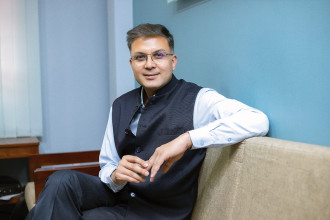
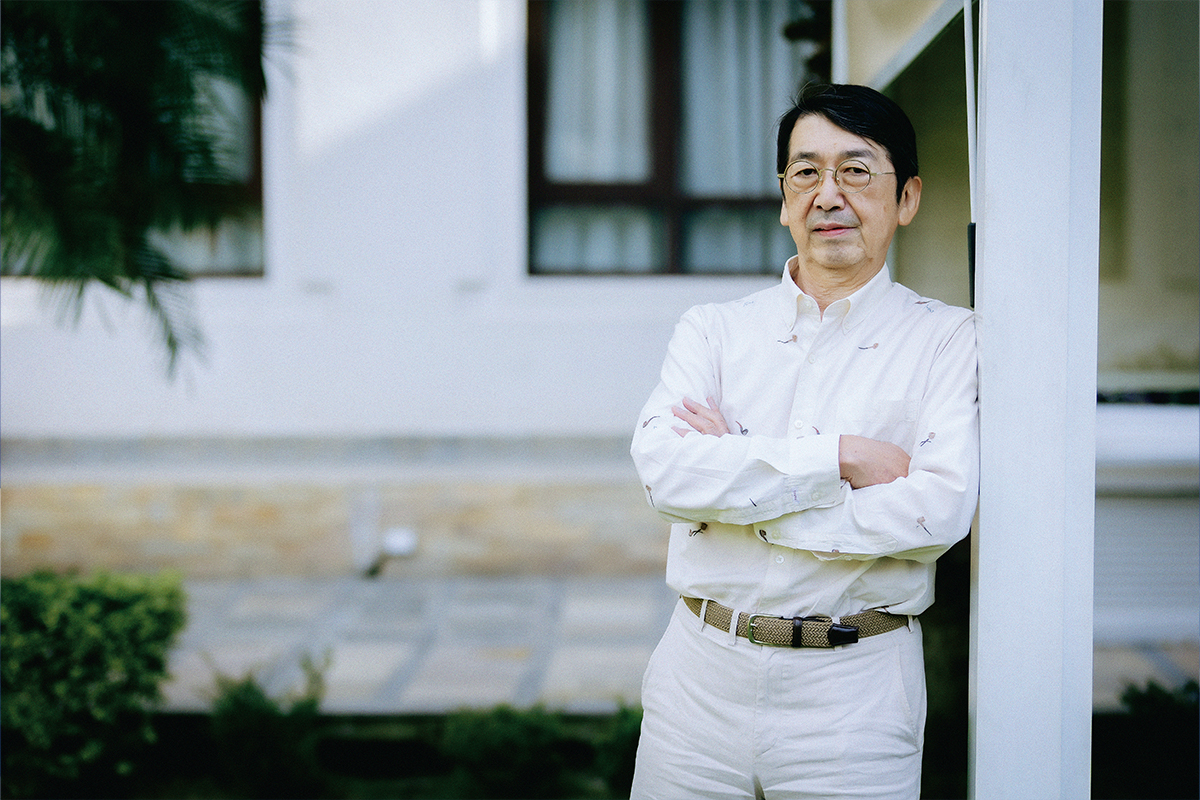
Dr Hiroshi Yoshida CPA
Tax Accountant & President, The Free Economy Institute
Dr Hiroshi Yoshida is a Certified Public Accountant, licensed tax accountant and scholar of public finance and economic policy based in Japan. He holds a PhD in Policy Studies from Chiba University of Commerce where his research centred on the intersection of fiscal policy, government accountability and public sector accounting. Combining academic scholarship with decades of practice in tax strategy and auditing, he has been widely recognised for his contributions to the accounting profession and to economic policy.
He serves as President of the Institute of Public Sector Accounting, which works to improve financial transparency, structural efficiency and reporting standards across government entities, and as President of the Free Economy Institute, a think tank researching tax reform, market-oriented economic principles and sustainable fiscal strategy in Japan.
An authority on municipal finance and national tax policy, Dr Yoshida’s work bridges technical accounting standards and broader economic theory, offering insights into how public resource management can be aligned with long-term economic vitality.
In this edition of Business 360, he talks about Future Tax in Nepal, the accounting reforms that would make government performance more transparent, and how to make tax comprehensible to ordinary citizens.
You have argued that public accounting should make the future financial consequences of government decisions visible to citizens. Nepal publishes annual budgets but citizens often have little sense of how today’s borrowing and spending will affect tomorrow’s taxpayers. What would a genuinely citizen-oriented public accounting system look like in Nepal, and what should the government be required to disclose?
Accounting is often taught as a system of recording and calculation. Its essential role, however, is to measure performance and achievement. By making clear what has been accomplished and what has not, accounting helps ensure that the right people are placed in the right positions. The same principle applies to government. Public accounting should not merely record how much money has been spent; it should show whether officials and institutions have fulfilled their responsibilities and delivered the results promised to citizens.
By ‘Future Tax’, I mean the financial burden that today’s government decisions impose on future taxpayers - tomorrow, next year or generations from now. Citizens pay taxes with their consent, and governments should maintain balanced public finances. When spending exceeds tax revenue, the government is creating a burden that will have to be borne later. Nepali citizens should be able to understand not only how much the government is spending today but how much of that spending is being charged to future taxpayers.
The annual budget should disclose how much the government spends, why it spends more than its tax revenue, and how much future tax burden or financial obligation is being created as a result. But a budget is only a plan. What matters is what the government actually achieved and what it actually cost, and governmental accounting should present that in a way ordinary taxpayers can follow.
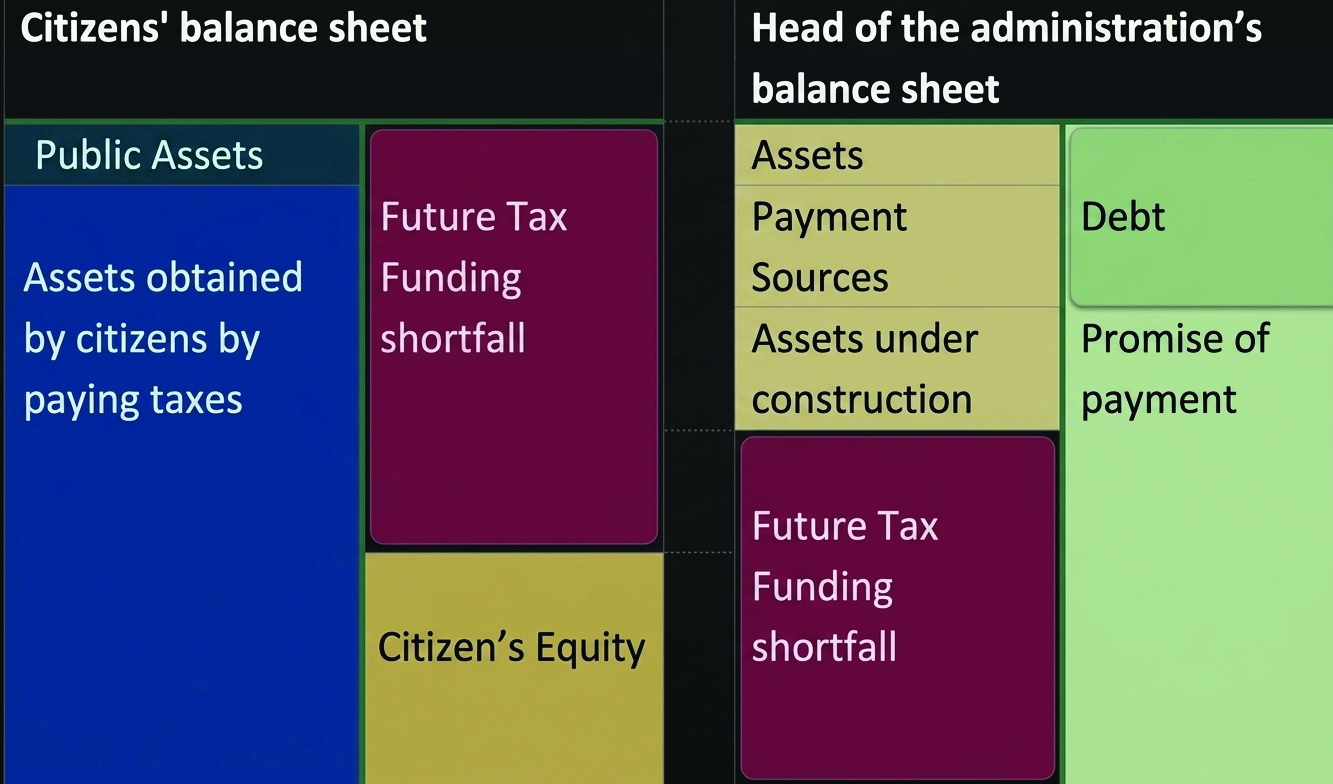
A key element is a clear distinction between the balance sheet of government managers and the citizens’ balance sheet. Public goods are generally recorded as government assets, as they are in Japan. I believe they ultimately belong to citizens. Think of a car produced by Suzuki: once a customer buys it, the car belongs to the customer, not to Suzuki. In the same way, public facilities created with resources provided by citizens should be reflected in the citizens’ balance sheet. Corporate accounting draws a clear line between management and shareholders - shareholders provide capital, while management is responsible for using it and reporting the results. A similar distinction should be reflected in public sector accounting.
Finally, accounting information should be communicated simply and visually. In Japan, I have prepared reports for several cities showing changes in Future Tax: when Future Tax decreases, the cover page is blue; when it increases, it is red. A similar system could be introduced in Nepal. The important point is that public accounting should not be intelligible only to specialists. It should show taxpayers plainly whether government decisions are increasing or reducing the burden placed on future generations. (see figure 1)
Much of your work shows the connection between deficits, taxation and the burden on future generations. Nepal’s public debt has been rising, while a significant share of the budget goes to recurrent expenditure and debt servicing. At what point should a country like Nepal become seriously concerned about fiscal sustainability, and what indicators should policymakers watch beyond the debt-to-GDP ratio?
Government accounting is fundamentally different from corporate accounting. In a company, it is relatively straightforward to consider how much revenue is generated, how much is spent, and the resulting profit or loss. But the government’s objective is not to make a profit or maximise revenue. Its purpose is to carry out its responsibilities in a way that contributes to the well-being of taxpayers.
The difficulty is that wellbeing is not easy to define or measure. What makes one person happy may not make another happy, and the same service can have a different effect depending on the circumstances. I like curry and spicy food, but eating it every day would eventually make me tired of it. Someone may love momo but eating momo daily could eventually make them unhappy. In the same way, it is difficult for a government to simply define what will make citizens happy.
So, we should not evaluate government expenditure through the profit-and-loss approach used in corporate accounting. Instead, we need to ask what the government is responsible for, what it promised to achieve, what it actually achieved, and what it cost. This is why I emphasise the performance report. It should show the purpose of each government programme, its target, the situation when it started, how that situation has changed, what was achieved and how much was spent.
The value of government expenditure lies not in how much is spent but in what is achieved with it. That is also how we should think about fiscal sustainability. We should not look only at the debt-to-GDP ratio. We should ask whether spending is producing the results promised to taxpayers, and whether today’s decisions are increasing Future Tax.
Nepal has adopted federalism with three levels of government, but fiscal federalism remains a major challenge. Provinces and local governments have received significant responsibilities without always having adequate revenue-generating capacity, and there are concerns about duplication and inefficient spending. Based on your experience with local government accounting in Japan, what lessons could Nepal apply?
Nepal should first establish a clear separation of responsibilities among local, provincial and central government. Each level should have clearly defined functions and should be assessed according to what it is responsible for delivering. Given the large number of local governments in Nepal and the significant differences in their population and size, their capacity to provide public services effectively must also be considered. The key question is whether each level has the capacity and resources to fulfil the responsibilities assigned to it.
One important lesson from Japan is the use of performance reports to make each government’s responsibilities and results visible to citizens. A performance report shows what the government is responsible for, what it promised, how much it spent and what it achieved.
Expenditure should then be evaluated against the performance achieved. If a government spends money and achieves what it promised, the expenditure can be considered a cost of providing the service. If it fails to achieve sufficient performance, the expenditure should be regarded as a loss. This makes it possible to assess whether a government has the capability to carry out a particular responsibility, and whether public resources are being used effectively.
Performance reporting should also be presented clearly to citizens. If accounting information shows whether projects are achieving their intended results, elected mayors and governors have a stronger incentive to perform — particularly when they may seek re-election. That creates a direct connection between public spending, government performance and democratic accountability.
Accounting, then, should not simply record how much each level of government spends. It should show who is responsible, what was promised, how much was spent and what was achieved. Such performance-based accounting could help Nepal identify inefficient spending, clarify responsibilities across levels of government, and make fiscal federalism more financially responsible.
Your approach essentially asks whether today’s government is leaving a bill for tomorrow’s citizens. If Nepal were to prepare a ‘balance sheet for future taxpayers’, what would you expect it to reveal about our current fiscal situation — particularly on public debt, unfunded obligations, public assets and recurrent expenditure?
I would approach this differently. I would not prepare a separate balance sheet for future taxpayers. Instead, I would separate governmental accounting into two balance sheets: the government manager’s balance sheet and the citizens’ balance sheet. The relationship between the two is what I call Future Tax.
In Japan, the government has borrowed a very large amount, including from the central bank, but taxpayers may pay little attention to this as long as they do not feel a direct connection to it. The issue becomes real when the government’s financial position becomes connected to the taxpayer’s own.
Think of a married couple. Before marriage, each person has their own balance sheet. During marriage, their finances become connected, creating a relationship between the two. Similarly, government and taxpayers have separate financial positions, but government decisions create financial consequences for taxpayers. Future Tax represents that link. (see figure 2)
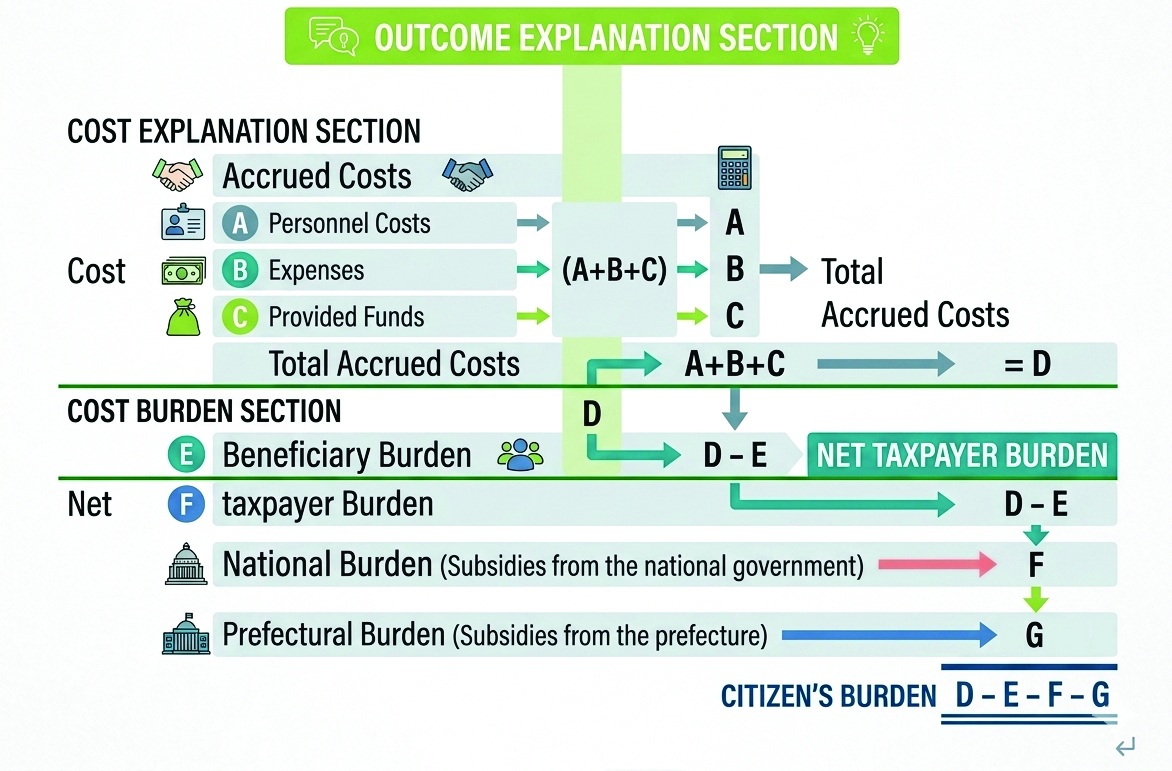
Such an accounting system should not simply show how much the government owes or owns. It should show how government assets, liabilities, borrowing and other commitments affect Future Tax. The purpose is to make visible how much of today’s government financial position may ultimately be transferred to taxpayers. In this way, citizens can better understand the consequences of current decisions for future generations.
Nepal has a relatively narrow tax base and businesses frequently complain about the complexity of the system, while the government needs more revenue for public services and development. From the perspective of economic freedom, what is a good tax system supposed to achieve? Should Nepal focus on lower rates and a broader base, fewer exemptions, simpler compliance, or some combination?
From the perspective of economic freedom, a good tax system should be simple, easy to understand and designed to reduce the tax burden over time. Japan itself has a highly complex system with many national and local taxes, so the number of taxes alone does not determine whether a system is good. The important questions are whether taxpayers can understand it and whether it can operate at lower cost.
We should also consider taxation together with expenditure. Government spending tends to grow continuously, but governments should ask what they are actually capable of doing efficiently. If a government cannot deliver particular services effectively, that expenditure should be reconsidered or reduced. Performance reports and accounting help determine whether spending is producing the promised results.
Ford’s Model T illustrates the principle. Through mass production and improved management, Ford significantly reduced the cost of producing the car, and at the same time famously doubled the daily wage of his workers. The lesson is that when productivity improves and costs fall, the benefits should not simply be absorbed by the producer; they can be returned to workers and consumers. Similarly, governments should continuously look for ways to provide public services more efficiently and at lower cost, so that the burden on taxpayers gradually falls.
Rather than focusing only on individual measures such as lower rates or a broader base, then, the starting point should be a tax system that is simple, understandable and designed to reduce the burden over time. Alongside it, governments should use performance reports to demonstrate that revenue collected from taxpayers is being used effectively. The important thing is to have a clear goal of gradually reducing the tax burden, and to make progress towards it visible.
How important is policy predictability compared with the actual level of taxation in determining whether entrepreneurs are willing to invest?
Policy predictability is very important. When making an investment, investors need to evaluate the future and assess whether the investment will be viable. Frequent changes in regulation and complicated bureaucratic procedure make that difficult. What matters most to an investor is whether they can see forward, whether they have a reasonable understanding of what government policy and regulation will look like in future.
Government policy should therefore be forecastable, stable and consistent. If investors are constantly uncertain about whether regulations or taxes will change, investment decisions become harder, particularly in sectors that require long-term planning. Frequent changes in Japan’s consumption tax policy, for example, have made it difficult for businesses - including those in the food sector - to plan and invest with confidence.
There is an important distinction here between the private and public sectors. Flexibility is necessary for the private sector, because businesses must respond to changing market conditions. The public sector, by contrast, should provide a stable and predictable policy environment and avoid unnecessary or frequent changes.
For attracting investment, then, the issue is not simply the level of taxation. Investors also need to know that the rules governing their investment will remain sufficiently stable. A government that provides a clear and forecastable policy environment makes it easier for entrepreneurs to evaluate opportunities and commit for the long term.
Japan offers an interesting warning for countries that accumulate large public liabilities over time, and you have written strongly about the burden government debt imposes on future generations. What mistakes did Japan make that a developing country such as Nepal should avoid while it still has the opportunity to build its fiscal institutions?
Japan’s experience is an important warning about allowing budget deficits and government liabilities to accumulate. Japan has faced a declining birth rate and an ageing population alongside large deficits and liabilities. When governments break the principle of a balanced budget and continue spending beyond their means, the burden is ultimately shifted to the next generation. Nepal should avoid creating such obligations for future taxpayers.
A key lesson is that the liability imposed on future generations should not be unlimited. My argument is that we should not shift today’s deficit and tax burden onto our children. This is similar to the principle of ‘no taxation without representation’, because future taxpayers cannot participate in today’s decisions that create their obligations.
Japan’s experience also demonstrates the importance of effective governmental accounting and performance reports. Without an adequate accounting system, it is difficult to determine whether officials and institutions have the capability to perform their responsibilities. Spending should be evaluated according to results achieved. The right people should be placed in the right positions, and public expenditure should not continue where government lacks the capability to deliver.
Nepal still has an opportunity to build stronger fiscal institutions before such problems become entrenched. It should maintain a strong commitment to balanced public finances, develop effective governmental accounting and performance reports, and avoid continually increasing deficits and liabilities. Japan’s post-war experience also suggests that a simple tax system and strong fiscal discipline can support economic development while helping prevent excessive liabilities from being transferred to future generations.
Nepal’s government remains deeply involved in many areas of economic activity and state-owned enterprises continue to operate in sectors where private businesses could compete. Where should the boundary between state and private sector be drawn in a developing economy?
The first question should be whether the government needs to be involved at all. If it does, its performance should be evaluated by what it actually achieves. If it is delivering sufficient results in a particular area, it should continue. If it is not, that activity should be reconsidered or withdrawn. The question is whether the government is keeping the promises it made to citizens.
Performance reports are essential to making that judgement. Governments should regularly show what they promised, what they achieved and whether public money produced the intended results. Reliability comes from keeping promises, and citizens should evaluate governments on performance rather than political slogans alone.
For a developing country like Nepal, this also means creating greater opportunity for private investment. Underdeveloped countries have a unique advantage: they still have room to grow and improve. Governments should therefore avoid becoming unnecessarily large and instead create space for entrepreneurs and private investors to contribute to development.
Private investment is particularly important for innovation and long-term growth. To attract more of it, Nepal should make its tax system easier and more predictable for business. The objective should be to remove unnecessary barriers that discourage entrepreneurs, rather than expanding the government’s role in commercial activity.
I would also distinguish between government investment and private investment. If Japan wishes to contribute to Nepal, I would rather see opportunities created for Japanese private investors than for government-led investment. Private investors have clearer accountability and stronger incentives to perform, while governments should focus on creating an environment in which productive private investment can flourish.
Young Nepalis are increasingly questioning government performance, corruption, taxation and the lack of economic opportunity. From a free-market perspective, how can economic freedom be translated into tangible opportunities for them?
Economic prosperity comes from allowing people to create surplus and use the market to turn that surplus into greater wealth. An invention such as a fishing net allows a fisher to catch more fish than he can consume. The fish beyond his own needs are surplus. If he keeps them all, they will spoil. By bringing that surplus to market and exchanging it with others, the surplus is transformed into prosperity. This is the fundamental role of the market and the same principle applies to entrepreneurship and investment.
For young Nepalis to have greater economic opportunity, they need the freedom to create, invest, start businesses and exchange the products of their work in the market. Excessive government charges and regulation slow that process. Unnecessary tax regulation should be removed, and the tax system should be designed in a way that is favourable to taxpayers.
Government performance should also be made more transparent through proper performance reports and accounting systems. If agencies clearly report what they have achieved, citizens can assess whether public resources are being used effectively. Regulation, too, should be designed to support taxpayers rather than unnecessarily restrict them.
Government should also be careful about excessive spending which can interfere with the market’s ability to allocate resources efficiently. Spending should be kept under control, and the market allowed to play a greater role in transforming people’s surplus, innovation and productive activity into prosperity.
You have spent much of your career turning the abstract idea of economic freedom into practical policy. If you were advising Nepal’s new political leadership and could recommend only three economic reforms, what would they be and why?
First, install my accounting system - a citizen-oriented governmental accounting system. Accounting information should allow taxpayers to understand what the government is doing, evaluate its performance and exercise their sovereignty over it. If citizens cannot understand government finances and performance, they cannot effectively control those who govern them.
Second, the government should commit to reducing Future Tax. Taxpayers should have a meaningful choice over whether their income is better used through government expenditure or spent by themselves. If citizens believe government spending is more effective, they can accept taxation. If they would rather use their income themselves, there is an argument for reducing taxes. Government should therefore control unnecessary expenditure and avoid shifting today’s fiscal burden to future generations.
Third, Nepal should make its tax system simple, understandable and designed to gradually reduce the burden on taxpayers. A complicated and costly system makes it harder for taxpayers to understand their obligations, and it limits economic freedom.
Together, these reforms would make government performance more transparent, strengthen taxpayers’ ability to hold government accountable, reduce Future Tax, and create a simpler, more efficient fiscal system that supports economic freedom and long-term prosperity.