When Failure Becomes Your DNA: Suman Shakya on Reinventing Life and Work

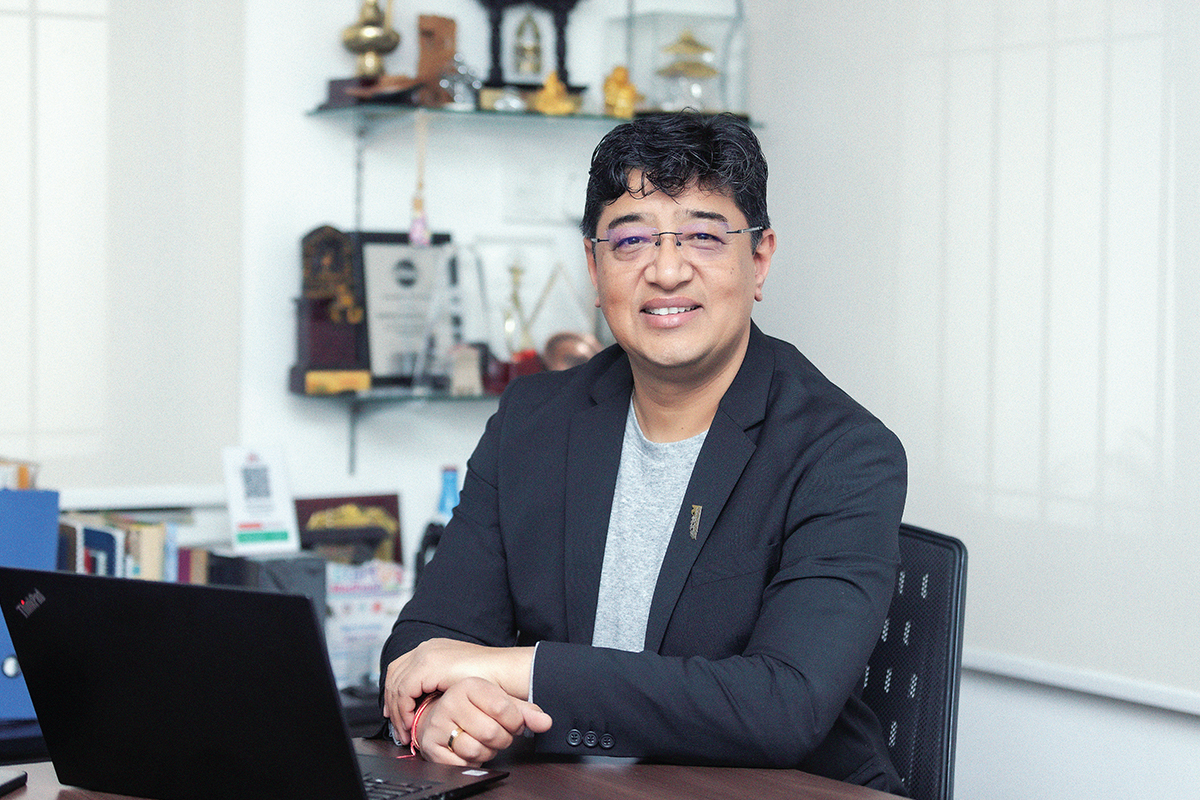
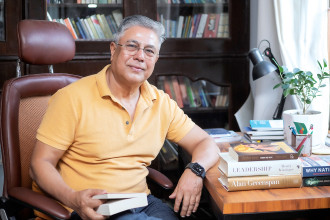
Suman Shakya
Founder, Tangent Waves
Suman Shakya, Founder of Tangent Waves and various other ventures, embarked on his entrepreneurial journey fuelled by curiosity. Recognising numerous challenges in Nepal, he saw vast potential to develop innovative solutions. Initially, his focus remained on identifying opportunities and striving for success.
Upon founding Tangent Waves, Shakya realised that entrepreneurship transcends financial gain. It is fundamentally a mindset. Over time, entrepreneurship evolved from a career into a lens through which he views the world. His transition from a dedicated entrepreneur to an educator and mentor has inspired millions. After 25 years of teaching, originally a hobby to reflect on his own work, he recognised that impact multiplies through people. He now mentors founders to scale that influence. “Building enterprises creates value but building entrepreneurs creates the future” is a core philosophy Shakya champions.
In this edition of Business 360, Shakya shares five pivotal life experiences that have shaped his personal and professional journey.
Turning failure into DNA
When you get into entrepreneurship, you want to be successful. You want to earn a lot. But what you realise is that we are humans and we do make mistakes. And sometimes even when it is not your own fault, yet the company dies. Once you encounter failure, you think that everything is lost. You feel like you have made the biggest mistake in your life. Everything becomes dark. You are in a long tunnel of darkness. You might have heard that there is ‘light at the end of the tunnel’, but when you are actually in the tunnel, you just do not see any. But I think the greatest achievement is to embrace failure and say, “Yes, I have come out of it.” Failure is part of what you do. It is part of your life. You have the ability and the courage to sweat it out and come back stronger. So that, I feel, has become part of my DNA. You no longer fear failure. Failure is part of what you do.
During such crisis, from one aspect, you are definitely depressed, and anxious. There are people calling you to tell you that you owe money and things are not going well. But on the flip side, what I tried to do was to understand ‘Why I failed’. I think that process of keeping myself engaged in learning helped a lot. And then creating new relationships with individuals who not just value fame, but also value the work and what you can do in the future. You tend to get a lot of time to reflect on yourself. There is always that huge weight pulling you down, saying, “This is done. This is not possible.” You have tried everything in your book but it does not work. So, you have a choice either to give up or to do something. So, I took to learning, got myself busy. I do not think others saw me as being so concerned or under pressure. People always find a different facade to put up. But that challenge is very, very important.
Lessons in resilience and ownership
My mentor was my uncle, Jyoti Shakya. At that time, my father had passed away. My uncle could not bend his fingers or move much. He was a person with diability, but his handwriting was one of the best I have seen. He was a scholar of Buddhist literature in Nepali, English and Pali. He translated books while lying in bed. He treated every day as a normal day. He listened to the radio, was knowledgeable, and a voracious reader. His room was full of books. Because of him, we learned to love books. He always kept himself occupied. Maybe that influenced me. When I was down, I kept myself occupied too. Because of his health issue, he lay in bed for fifty-seven years and could not move much. We might complain if we stay inside our house for a week. But he showed what resilience truly means.
When I was going through so much downfall in my life and had lost all hope, my uncle was there lying in bed but still keeping himself occupied with writing, painting, reading and drawing, He could not go out of those four walls of the house. But the way he kept himself sprightly, the way he was knowledgeable, the way he used to take small things and make sure those things were done well taught me to break down big problems into small chunks and solve them.
Once you solve the small chunks, the big things no longer remain big. His way of living, philosophy, was very instrumental. He is my mentor because he never told me ‘what to do’. He only showed me alternatives, but gave me the responsibility to choose and bear the responsibility of that choice as well. That later became very important as a mantra. Telling others what to do does not work until they take ownership. Mentorship helps to make the other person aware of their shortcomings or strengths and play accordingly. At the end of the day, whatever choice they make is a good choice. That helped me a lot.
The art of reinventing yourself
My path in life was never a straight line and the same goes for others. It has been more than 30 years since I have been doing what I do professionally. Initially, you think that a career has to be a straight line. It is not. It is a series of recalibrations. Even at my current stage, I continue to relook, reset and recalibrate and remain agile. Certain ventures struggled. With what happens in Nepal, it is not easy. You have multiple challenges posed by human interventions or natural causes like earthquakes, Covid or disruptions in civil society. These events disrupt what you do. It affects you as an individual and your enterprise. It is important to accept and move ahead. Every time, you need to stop, look back, see what worked and what did not, recalibrate and move forward.
I apply that in business and maybe in politics as well. We need to modernise ourselves, keep abreast of what is happening, and know the latest of everything. Otherwise, someone else who understands the latest will take it forward. You have to reinvent yourself again and again. That recalibration is very important. I am learning AI currently. If I do not, I will fall behind. That is how modernisation works.
From ballpoint portraits to problem solving
Times were different when we were young. You followed the path your parents set or the advice they received. If you were a strong student, you were expected to pursue science or engineering. My inclination was toward the creative arts, though I never got to pursue them formally. I used to draw quite a bit. The sketch on my office wall is of my grandmother, a creation I made thirty-one years ago using only a ballpoint pen. During my college days, I often drew portraits of my friends, having been an art student in school.
After I married in 2005, my wife discovered my talent and constantly insisted I draw her. However, work rarely affords the time. Sketching with a pen is particularly tricky, as a single mistake can ruin the entire piece. Finally, for her golden jubilee birthday last year, I made the time and gave her a portrait, my first in nearly 20 years. I always wish I had more time for it. Today, I channel that childhood creativity into finding unique solutions for founders’ problems. While I never studied art or architecture formally, I have translated that innate ability into everything I do now.
From silent watchman to motivational speaker
When I was in class five, I was terrified of public speaking, often becoming incredibly nervous and sweaty. During a school drama, I was assigned a role I felt I could not perform. When I told my teacher, Mrs Daniels, she gave me a sharp slap and insisted I continue. Eventually, I was cast as a ‘watchman’ with no speaking lines but that incident stayed with me. It ignited a deep-seated desire to master the art of addressing an audience. Throughout my studies, public speaking remained my only major stumbling block.
During my Master’s, supportive teachers pushed me to find my voice and attend interviews. In my very first interview, I only managed to answer one question, my name, and was out within 20 seconds. Upon returning, I made it my mission to become a speaker. I began with small training sessions and gradually evolved into a confident communicator. Today, I am frequently invited to give motivational speeches and talks. That early childhood encounter triggered a total transformation. Now, I lead classes on public speaking to help others overcome their fears. Communication is a premier skill for employers. You can have a brilliant product but it holds little value if you cannot articulate it.