NICCI proposes Nepal–India joint investment in fertiliser plant

-1767187513.jpeg)
KATHMANDU: Nepal‑India Chamber of Commerce and Industry (NICCI) has proposed a joint Nepal–India investment in a fertiliser manufacturing facility to tackle recurring shortages that undermine agricultural productivity across Nepal.
NICCI President Sunil KC presented the proposal during an interaction on Monday with Dr Pramod Kumar Meherda, Additional Secretary at India’s Department of Agriculture and Farmers' Welfare, who was visiting Kathmandu. KC said unreliable and untimely fertiliser supplies are a major constraint on farm output and argued that a bilateral manufacturing venture would provide a long‑term structural solution and bolster regional food security.
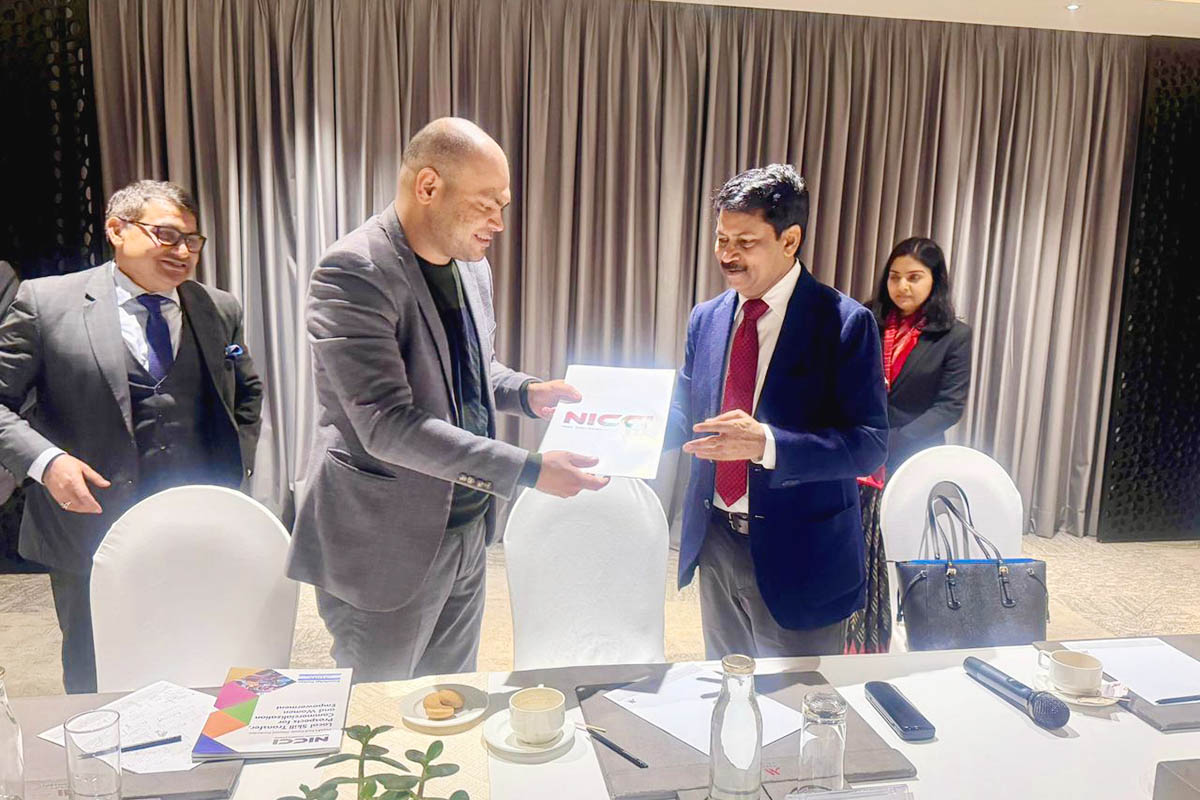
“Lack of timely access to fertiliser is one of the key factors constraining agricultural productivity in Nepal,” KC said, adding that joint investment would not only stabilise supply but also deepen economic integration between the two countries.
The meeting broadened into discussions on strengthening agricultural cooperation and enhancing bilateral trade, with NICCI members and visiting officials exchanging views on sustainable practices and productivity improvements.
Representatives from the Chamber’s Micro, Small and Medium Enterprises (MME) Working Committee and private sector firms such as Nimbus Nepal and Dabur Nepal stressed the need to reinforce the agricultural value chain, with particular focus on post‑harvest management.
Participants highlighted human capital development as essential, calling for targeted training and capacity building for Nepali farmers so that complementary agricultural ecosystems can be developed and both countries can better leverage comparative strengths.
NICCI also proposed expanded cooperation in organic agriculture, urging institutional support for organic certification to help Nepali producers access premium markets and meet international standards. In addition, the Chamber recommended joint investment in cold storage facilities in border areas, timed to seasonal and crop cycles, to reduce post‑harvest losses, stabilise prices and strengthen cross‑border trade.
Dr Meherda responded positively and asked NICCI to compile the key issues affecting Nepal’s agriculture sector and submit them to his ministry for further consideration, indicating that collaborative solutions could be explored in a mutually beneficial manner.
Dr Meherda was in Kathmandu to take part in the Nepal–India Joint Agriculture Working Group meeting.